时间:05/16/2026 05/17/2026
地点:星海禅修中心
主讲:净诚
佛法修行
难国王得度因缘(二)
难国王听了三摩竭所说赞叹世尊的话,顿时踊跃欢喜,生起景仰、渴望相见佛陀之心,于是问:「妳所奉事的佛世尊,我可以亲自见到吗?」三摩竭说:「我可以在此地为大王遥请世尊来此。」王言:「太好了!可是两地相去八千里,如何祈请佛的驾临呢?」「此事不需大王派人去请,但是需要至心诚意、虔敬的焚香遥请。佛的神通广大,不论距离多遥远,佛都能知道众人心中所思、所念,请王及夫人、太子,随我而来。」三摩竭登上高台,端身正意,向舍卫国的方向,长跪焚香,头面着地顶礼说:「今有难国王,不知天下有佛住世,现在为了国内人民的福祉,恳求世尊大慈大悲,明朝与比丘僧众们劳屈尊驾,来到难国王处所,接受斋供。」三摩竭祈请方毕,香烟已达佛所,绕佛三匝,于佛顶上方,化作香盖。
当时,佛正在为无数千人说法。阿难见此瑞相,向前长跪合掌,禀白佛:「世尊!请问是什么因缘有此瑞相?唯愿世尊慈悲开示。」佛告诉阿难:「难国王及三摩竭,明日斋请佛及诸比丘僧前往应供。三摩竭有至诚心,希望难国人民都能舍弃邪见,修学正道,以此愿求,焚香遥请佛。」世尊告诉摩诃目揵连向诸比丘僧宣达,明朝到难国三摩竭处所应供。
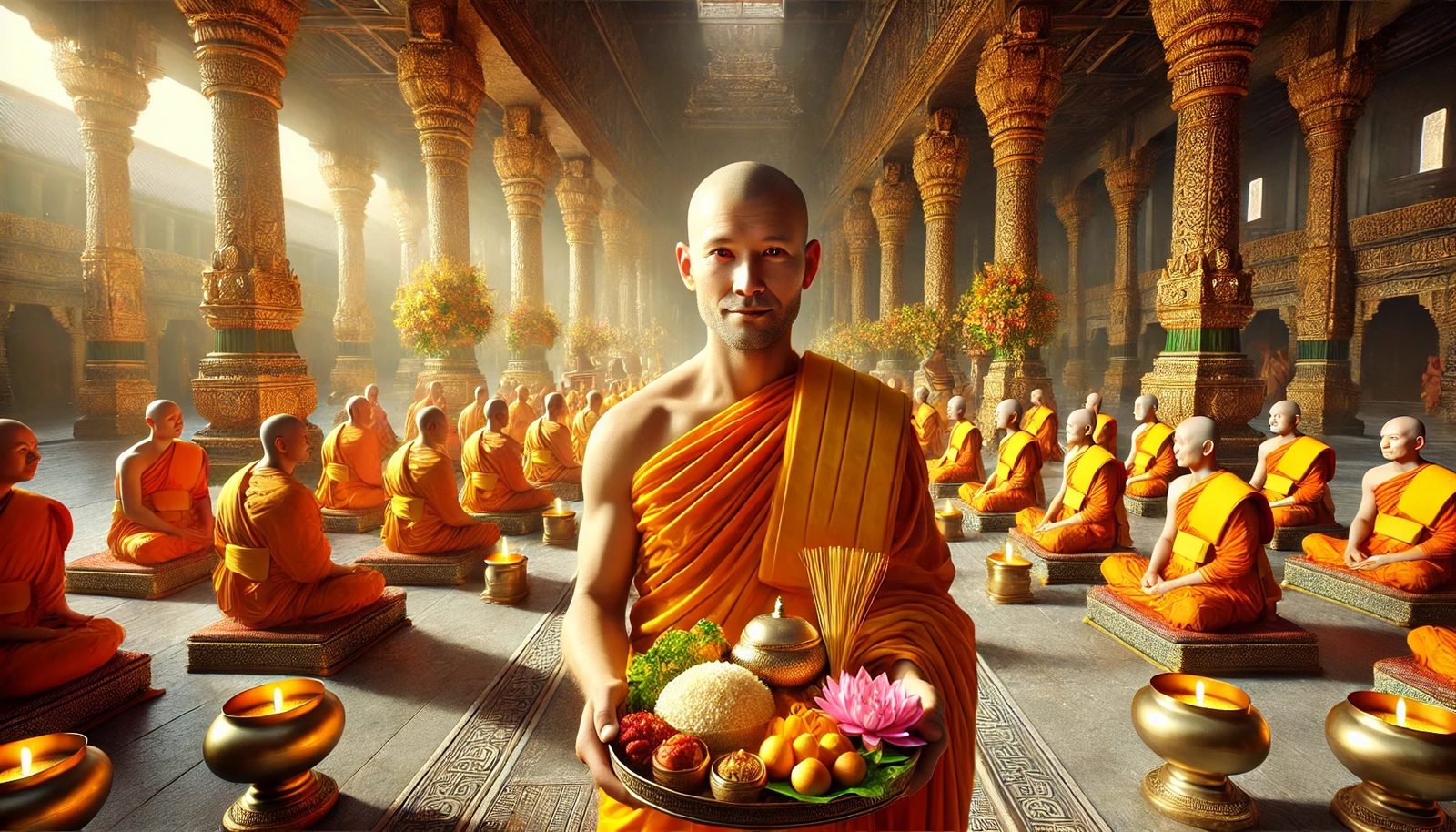
三摩竭便请国王、夫人、太子及宫内侍女们,全都斋戒焚香,布置斋供时的坐席,办妥食具及斋食。三摩竭知道佛一定会来,于是与国王、夫人、太子、婇女及诸尼揵人一起在中庭等候。三摩竭告诉国王、夫人及太子:「今天已证罗汉果位的比丘僧将会先到,佛最后到。诸位切莫惊慌害怕,请跟随在我身后,依我所做的照样做即可。」于是,三摩竭再次长跪、焚香,说道:「斋供饭食皆已准备妥当,恭请世尊慈悲应供。」
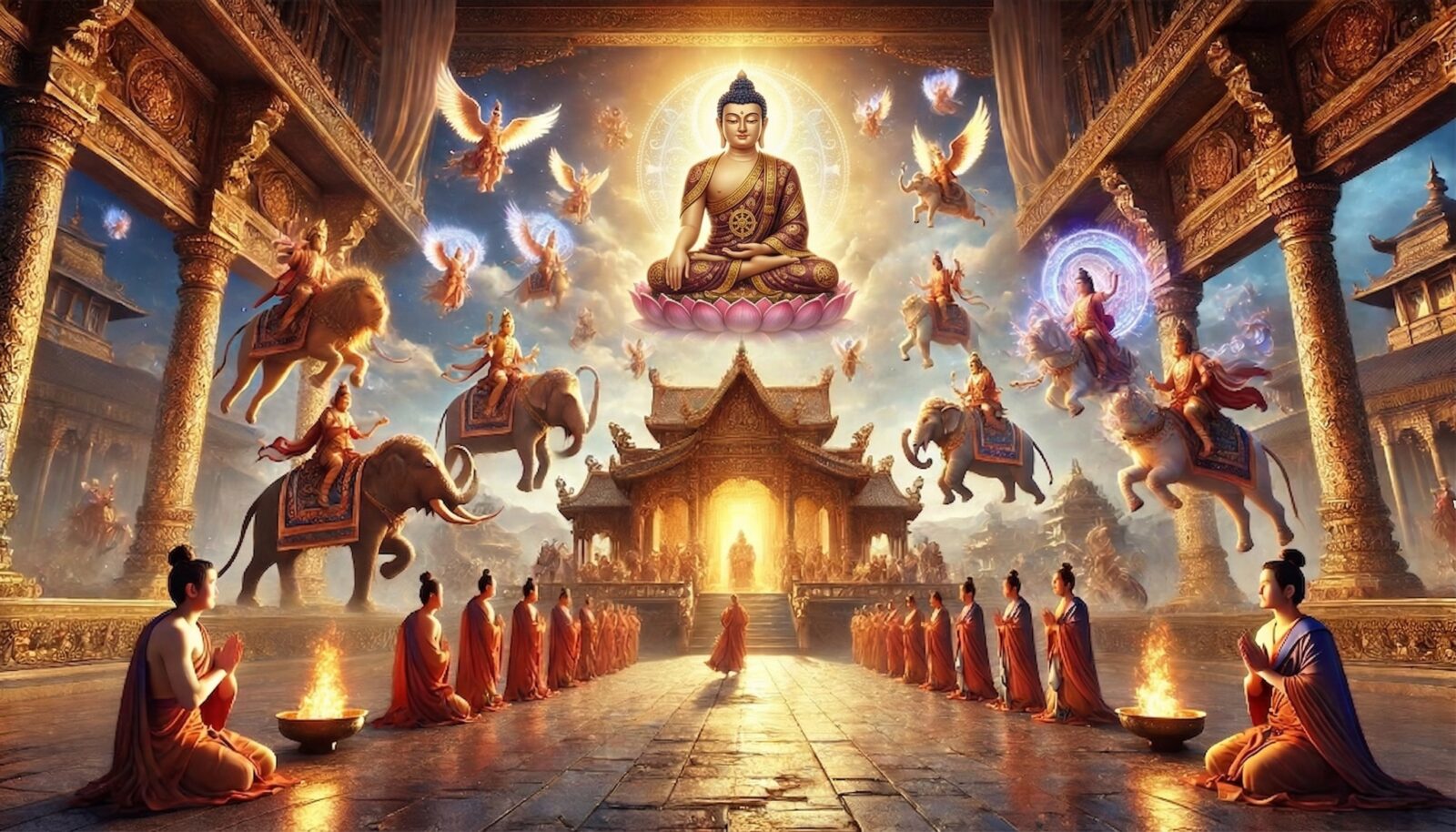
佛知三摩竭心所系念,便告诉诸位比丘:「今日将到难国应供,你们各以神通变化,自在所为。」诸位比丘承佛所教,变化作龙、虎、凤凰、孔雀、牛、鸠、鸽等百鸟、枭兽为坐骑,众比丘僧乘坐其上。世尊则以师子座为坐骑,坐于师子座帐中,与千二百五十位比丘、五百位菩萨,以及诸天、鬼王、神、龙,在虚空中飞行。到达难国时,佛放大光明,天地大为震动。
诸位罗汉比丘、菩萨先抵达难国,作各种神通变化后,下至地面。难国人民看到这种情形,非常惊讶,又叹为稀有。王问三摩竭:「他们是佛吗?」三摩竭回答:「请大王不要恐慌,他们是佛的弟子。佛在最后,身有三十二相、八十种好。」就在须臾之间,佛从虚空下至地面,释梵天帝及四天王作为前导,诸天天人击鼓扬琴,演奏各种天乐迎佛。三摩竭与国王、夫人、太子,手持华、香,向前迎请佛,先顶礼佛,再恭迎佛进入王宫就座。诸菩萨、阿罗汉皆依次第而坐。此时,三摩竭请国王、夫人、太子行净手水后,即恭请佛陀及众僧应供。
有众多难国人民聚集在宫门围观,国王乃命令大臣紧闭宫门,人民见国王关闭宫门,大为愤怒,各持斧头要打破宫门。佛知道宫外发生的事情,心里想:「现在难国人民围观在外,国王却紧闭宫门;我的教化,是希望大众都能行善法,不行恶法。」佛为了让一切人民都能见佛,于是以神通力使宫门、墙壁都变为透明,令内外可以互见。难国人民因此得以看见佛及诸位菩萨、罗汉,皆生起大欢喜心。
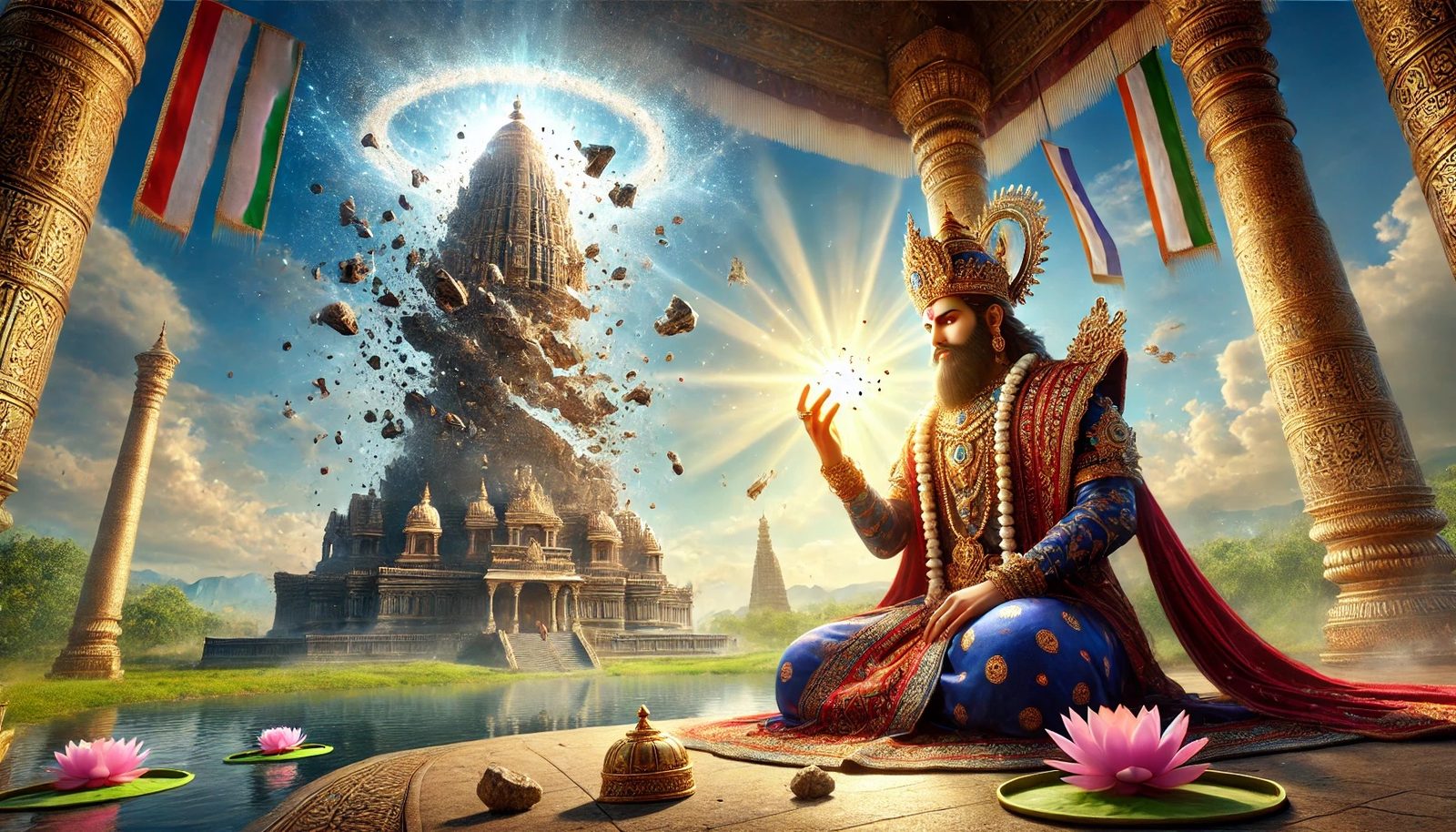
有一位罗汉比丘,名宾头卢,当时在山上打坐。打坐前,宾头卢正在用针线缝衣,将针插在地上后开始打坐,针上的线与罗汉比丘的衣相连。这时候,佛已至难国王宫中坐定,宾头卢忽然想起今天要应供,立即以神足通飞行至难国,插着针线的山也跟随在宾头卢身后。当时国中有一位怀孕的女人,看见空中有一座黑压压的大山飞过来,当场惊吓得流产。佛已遥知此事,立即令目连尊者以神足飞行过去,迎面问说:「宾头卢!你后面是怎么回事?」宾头卢立即回身,看见身后的山,就以手揽山,丢回八千里外的原处。
宾头卢到了佛前,先礼佛,而后坐下。佛告诉宾头卢:「我教化天下人,是为了使大众能正确的生活,超脱尘劳,以维护生命,渐次修行。你今天既忘记应供时间在先,又不小心使一人失去生命。人命至重,是我法所不乐见。从今以后,你不得再随我共食,也不得与大众聚会。你若住世,须待弥勒佛出现世间后,才可以入涅槃。」罗汉宾头卢闻佛如是教示,当下默然不语,忧愁、自责,又自忏悔,斋供完毕即起身礼佛,并向诸菩萨、阿罗汉告辞,独自住于山中。
这时,难国王的老师尼揵若陀弗禀白佛:「你有勇气与我较量道行吗?不如对方的人就投入井中。」佛言:「大善!不须太多言语,只需三个问题,不如对方的人就投入井中。」尼揵若陀弗言:「太好了!就开始吧!」佛问:「你是如何诵经的呢?」尼揵若陀弗答:「我诵经时匍匐而行。」佛说:「匍匐而行是狗的行为,狗才匍匐而行。」尼揵若陀弗顿时无话可接续。其余的较量,尼揵若陀弗都无以为辩,在在都不如佛。外道诸弟子很气愤自己老师的智慧不如佛,便到其师身旁,要将其师投入井中,尼揵若陀弗大为惊慌失措,两手硬撑于井边,拒绝被投入井中。佛说:「放下他吧!」
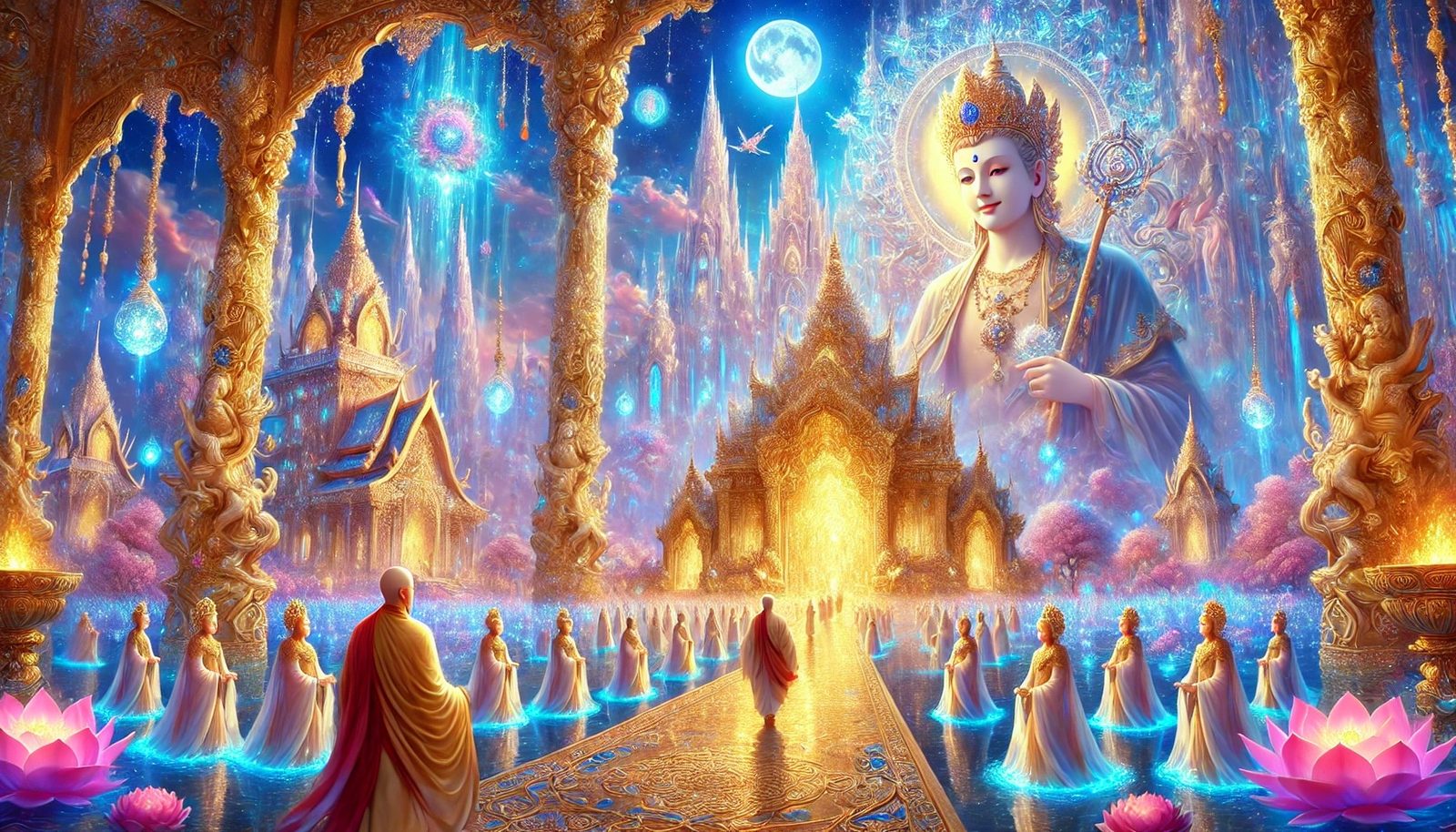
这时,中庭自然出现大火光,光焰上冲至第七梵天,大火光中有千叶莲华,华上又有五百位梵天天众,各各皆合掌、长跪问佛:「供养何等人能得大福报?供养何等人只能得较少的福报?」佛回答梵天:「譬如以五谷的种子,播种在火中,种子能发芽、生长吗?」梵天回答:「不可能发芽、生长。」佛继续说:「难国王供养诸尼揵,就如同将五谷种子播种在火中,终究无法发芽、生长。今日斋供佛及诸菩萨、罗汉,所得福报之多,无法计量。譬如有人,有一方优渥的好地,又有优良的种子,上天又降下及时雨,何需忧愁种子不会发芽、生长得茂盛?佛是一切人的福田,随一切人所播种子,必会满其所愿。愚痴的人却教他人修学外道,此人命终后将堕太山地狱中,受无量极苦,但是悔之已晚!前人尚未从极苦中解脱,后人又再教他人进入,愚痴的世间人常相互欺蒙,自欺又欺人,不知道什么才是正确的真道。若是聪慧有智之人,应当修学正道,依正道而行者,不执着生、老、病、死,是为解脱大道。世间所有的九十六种道,都不及佛道殊胜,难以较量。」
佛又开示:「若是以一天下的树枝及鸟的羽毛,将其作为笔,用以书写、记录佛之智慧,树枝、鸟毛悉皆用尽,佛智所言,犹不可尽;若是用大如须弥山之墨来研磨四海水,沾笔书写佛之智慧,须弥山墨、四海水皆用尽,佛的智慧,终不可尽。」五百位梵天听闻佛的教示后,同时举声说:「善哉!的确是如佛所言!」五百梵天说完,瞬间隐去不见。
难国王的眷属、随从三百余人、千二百位婇女、五百位大臣,因为亲眼目睹佛的威仪巍巍、神通广大、智慧深不可测,及诸菩萨、罗汉比丘皆具变化神通,释梵天帝及四天王为佛前导,诸天天人以天乐迎佛,梵天天众的请化,大众叹未曾有、赞叹欢喜,悉发阿耨多罗三藐三菩提心。这时,二千位外道婆罗门都发阿耨多罗三藐三菩提心,须发皆除,作佛比丘弟子,并得阿罗汉道。万二千尼揵子应时得解脱,其中有得须陀洹道者、有得斯陀含道者、有得阿那含道者。国中六万四千人民相信佛法、渴仰佛法,即受五戒,成为优婆塞。
佛为大众开示后,即与诸菩萨、阿罗汉以神足飞去。难国王及夫人、太子、群臣、人民,心生大欢喜,各各遥向佛顶礼。(全文完)
Date: 05/16/2026 05/17/2026
Location: Star Ocean Meditation Center
Teacher: Jason
Dharma Talk
The Karmic Conditions for the Conversion of King Nan (Part II)
After hearing Samagha praise the World-Honored One, King Nan was filled with joy. He gave rise to reverence and a deep longing to see the Buddha, and so he asked, “May I personally see the Buddha, the World-Honored One whom you serve?” Samagha replied, “I can invite the World-Honored One here from afar on Your Majesty’s behalf.” The king said, “Excellent. But the two places are eight thousand li apart. How can we invite the Buddha to come?” Samagha answered, “There is no need for Your Majesty to send anyone. What is needed is utmost sincerity and reverent incense offered in distant invitation. The Buddha’s spiritual powers are vast. No matter how far away the distance, he knows what people think and hold in their minds. Please, Your Majesty, together with the queen and the crown prince, come with me.” Samagha ascended a high platform, straightened her body and mind, faced in the direction of Śrāvastī, knelt long, burned incense, prostrated with her head to the ground, and said, “Now there is King Nan, who does not know that a Buddha is dwelling in the world. For the welfare of the people of this land, I earnestly beseech the World-Honored One, in great compassion, to graciously come tomorrow with the assembly of bhikṣus to the residence of King Nan and accept this meal offering.” As soon as Samagha finished her prayer, the incense smoke reached the Buddha, circled him three times, and above his head transformed into a canopy of fragrance.
At that time, the Buddha was preaching the Dharma to countless thousands. Seeing this auspicious sign, Ānanda stepped forward, knelt long with palms joined, and said, “World-Honored One, by what cause and condition has this auspicious sign appeared? I pray that you will compassionately explain it.” The Buddha told Ānanda, “King Nan and Samagha are inviting the Buddha and the bhikṣu-saṅgha for tomorrow’s meal offering. Samagha has a most sincere heart. She wishes that the people of Nan may abandon wrong views and study the right path. With this aspiration she has burned incense and invited the Buddha from afar.” The World-Honored One then told Mahāmaudgalyāyana to inform the bhikṣus that on the following morning they were to go to Samagha’s place in the country of Nan to accept the offering.
Samagha then asked the king, the queen, the crown prince, and the palace maidservants all to observe fasting and precepts, burn incense, arrange the seats for the offering, and prepare the utensils and food. Knowing with certainty that the Buddha would come, Samagha waited in the central courtyard together with the king, the queen, the crown prince, the court ladies, and the Nirgranthas. She told the king, the queen, and the crown prince, “Today the bhikṣus who have attained arhatship will arrive first, and the Buddha will arrive last. Do not be alarmed or afraid. Simply follow behind me and do as I do.” Then Samagha again knelt long, burned incense, and said, “The meal offering is fully prepared. I respectfully invite the World-Honored One, in compassion, to accept it.”
Knowing what occupied Samagha’s mind, the Buddha told the bhikṣus, “Today we shall go to the country of Nan to accept the offering. Each of you may manifest spiritual transformations as you wish.” Receiving the Buddha’s instruction, the bhikṣus transformed dragons, tigers, phoenixes, peacocks, oxen, doves, pigeons, and various birds and beasts into their mounts, and the monks rode upon them. The World-Honored One himself took a lion throne as his vehicle, seated within its canopy, and traveled through the sky together with one thousand two hundred and fifty bhikṣus, five hundred bodhisattvas, and devas, ghost kings, spirits, and dragons. When they arrived at the country of Nan, the Buddha emitted great light, and heaven and earth shook mightily.
The arhat bhikṣus and bodhisattvas arrived first in the country of Nan. After displaying all kinds of miraculous transformations, they descended to the ground. The people of Nan were greatly astonished and marveled at such rarity. The king asked Samagha, “Are they the Buddha?” Samagha replied, “Please do not be afraid, Your Majesty. They are disciples of the Buddha. The Buddha comes last, possessing the thirty-two marks and eighty excellent characteristics.” In but an instant, the Buddha descended from the sky to the earth. Śakra, Brahmā, and the Four Heavenly Kings led the way, while devas and heavenly beings beat drums, played lutes, and performed every kind of celestial music to welcome the Buddha. Samagha, together with the king, the queen, and the crown prince, held flowers and incense and went forward to receive him. They first bowed to the Buddha, then respectfully escorted him into the royal palace and invited him to be seated. The bodhisattvas and arhats all sat down in proper order. At that time, after Samagha invited the king, the queen, and the crown prince to pour cleansing water over their hands, she respectfully invited the Buddha and the saṅgha to accept the meal offering.
Many people of Nan gathered at the palace gate to watch. The king therefore ordered his ministers to shut the palace gate tightly. When the people saw the gate closed, they became furious and each took up axes to break it open. The Buddha knew what was happening outside the palace and thought, “Now the people of Nan are gathered outside watching, yet the king has shut the gate. My teaching is meant to lead the multitude to practice wholesome dharmas and not unwholesome ones.” Wishing that all the people might see the Buddha, he used his spiritual power to make the palace gates and walls transparent, so that those inside and outside could see one another. Thus the people of Nan were able to behold the Buddha and the bodhisattvas and arhats, and all gave rise to great joy.
There was an arhat bhikṣu named Piṇḍola, who at that time was meditating on a mountain. Before meditating, Piṇḍola had been sewing his robe with needle and thread. He stuck the needle into the ground and then began to meditate, with the thread still connected to his robe. At that moment, after the Buddha had already arrived and taken his seat in King Nan’s palace, Piṇḍola suddenly remembered that he was supposed to attend the meal offering that day. He immediately flew by spiritual power to the country of Nan, and the mountain into which the needle and thread were fixed followed behind him. At that time there was a pregnant woman in the country who saw a dark, massive mountain flying through the air, and from fright she miscarried on the spot. The Buddha already knew this from afar and immediately ordered the Venerable Maudgalyāyana to fly there by spiritual power and meet him face-to-face, asking, “Piṇḍola, what is that behind you?” Piṇḍola immediately turned around, saw the mountain behind him, took hold of it with his hand, and threw it back to its original place eight thousand li away.
When Piṇḍola arrived before the Buddha, he first bowed and then sat down. The Buddha told him, “I teach the people of the world in order that the multitude may live properly, transcend the dust of worldly toil, preserve life, and cultivate step by step. Today, you first forgot the appointed time to accept the offering, and then through carelessness caused one person to lose her life. Human life is of utmost gravity and is not something my Dharma approves of. From this day forward, you may no longer eat with me, nor may you gather with the community. If you remain in the world, you must wait until Maitreya Buddha appears in the world before you may enter nirvāṇa.” Hearing the Buddha’s instruction, the arhat Piṇḍola remained silent, filled with sorrow and self-reproach, and repented of himself. When the meal offering was over, he rose, bowed to the Buddha, took leave of the bodhisattvas and arhats, and dwelt alone in the mountains.
At that time, King Nan’s teacher, Nirgrantha Nataputta, addressed the Buddha, saying, “Do you have the courage to compare spiritual practice with me? Whoever is inferior shall be thrown into the well.” The Buddha said, “Very good. There is no need for many words. Only three questions are needed. Whoever is inferior shall be thrown into the well.” Nirgrantha Nataputta said, “Excellent. Let us begin.” The Buddha asked, “How do you recite your scriptures?” Nirgrantha Nataputta answered, “When I recite scriptures, I crawl along the ground.” The Buddha said, “To crawl along the ground is the behavior of a dog; it is dogs that crawl in that way.” Nirgrantha Nataputta at once had nothing further to say. In the remaining comparisons, he had no answer in every case and was everywhere inferior to the Buddha. The heterodox disciples were angry that their teacher’s wisdom did not equal the Buddha’s, and they came to his side to throw him into the well. Nirgrantha Nataputta was greatly frightened and, bracing both hands against the edge of the well, refused to be thrown in. The Buddha said, “Let him go.”
At that moment, a great fire-light naturally appeared in the central courtyard. Its flames rose up to the seventh Brahmā heaven. Within that great fire-light was a thousand-petaled lotus, and upon the lotus were five hundred Brahmā heavenly beings. Each joined his palms, knelt long, and asked the Buddha, “By making offerings to what kind of people does one gain great blessings? By making offerings to what kind of people does one gain only lesser blessings?” The Buddha replied to the Brahmās, “Suppose one takes the seeds of the five grains and sows them into fire. Can those seeds sprout and grow?” The Brahmās replied, “They cannot sprout or grow.” The Buddha continued, “King Nan’s offerings to the Nirgranthas are like sowing the seeds of the five grains into fire. In the end, they can never sprout or grow. But today, by making a meal offering to the Buddha and to the bodhisattvas and arhats, the blessings obtained are immeasurable. It is like a person who possesses a rich and fertile field, good seeds, and timely rain from heaven. Why should he worry that the seeds will not sprout and flourish? The Buddha is the field of blessings for all people. Whatever seeds people sow, he will surely fulfill their aspirations. Yet foolish people teach others to study heterodox paths. When such a person’s life ends, he will fall into the great mountain hell and suffer immeasurable extreme pain, but repentance then will be too late. Before those earlier ones have been freed from that extreme suffering, later ones again teach others to enter it. Foolish worldly people constantly deceive one another, deceiving themselves and deceiving others, not knowing what the true and correct path is. If one is intelligent and wise, one should study the right path. Whoever practices according to the right path does not cling to birth, aging, sickness, and death. This is the great path of liberation. All the ninety-six paths in the world cannot compare with the supreme Buddha-path.”
The Buddha further taught, “If one were to take all the branches of trees and the feathers of birds in an entire world and make them into writing brushes, using them to write down and record the wisdom of the Buddha, the branches and feathers would all be exhausted, yet the wisdom spoken by the Buddha would still not be exhausted. If one were to use ink as great as Mount Sumeru and grind it with the waters of the four seas, dipping the brush to write the wisdom of the Buddha, the ink of Mount Sumeru and the waters of the four seas would all be exhausted, yet the wisdom of the Buddha would never be exhausted.” After hearing the Buddha’s teaching, the five hundred Brahmās all cried out together, “Excellent indeed! It is exactly as the Buddha has said.” Having spoken, the five hundred Brahmās instantly disappeared.
King Nan’s relatives, more than three hundred attendants, one thousand two hundred court ladies, and five hundred ministers all personally witnessed the majestic deportment of the Buddha, his vast spiritual powers, and his unfathomable wisdom. They also saw that the bodhisattvas and arhat bhikṣus all possessed transformative powers, that Śakra, Brahmā, and the Four Heavenly Kings led before the Buddha, that devas welcomed him with celestial music, and that the Brahmā beings came to request instruction. The whole assembly marveled at what had never been seen before, praised with joy, and all gave rise to the mind of anuttarā-samyak-saṃbodhi. At that time, two thousand heterodox brāhmaṇas also gave rise to the mind of anuttarā-samyak-saṃbodhi, shaved off their hair and beards, became bhikṣu disciples of the Buddha, and attained arhatship. Twelve thousand Nirgranthas attained liberation on the spot; among them were those who attained the fruit of srotaāpanna, those who attained the fruit of sakṛdāgāmin, and those who attained the fruit of anāgāmin. In the country, sixty-four thousand people believed in the Buddha-Dharma and yearned for it; they immediately received the Five Precepts and became upāsakas.
After the Buddha had taught the assembly, he and the bodhisattvas and arhats departed by spiritual flight. King Nan, together with the queen, the crown prince, the ministers, and the people, all gave rise to great joy, and each from afar bowed to the Buddha. (End of the complete text)