时间:04/20/2024 04/21/2024
地点:星海禅修中心
主讲:净真
佛法知识
佛陀的日常生活
讨论佛陀的日常生活,并不是为了描绘一位圣者的私人习惯,而是为了理解:觉悟之后的生命,如何在现实条件中持续运作。佛陀的日常,并不神秘,也不脱离世间,相反,它是一种高度结构化、目的明确、完全服务于觉悟与弘法的生活方式。
在觉悟之后,佛陀并未进入隐居状态。他选择以游行僧的身份,长期生活在僧团与世俗社会之间。这一选择本身已体现其核心立场:解脱并不依赖特殊环境,而必须能够在真实的人际、物质与社会条件中成立。
佛陀的日常作息高度稳定。清晨,他通常处于禅修或安住状态,用以维持心的清明与稳定。这并非为了追求特殊体验,而是为了保持对身心过程的持续觉知。觉悟并不意味着觉知自动维持,它仍需要被正确使用。
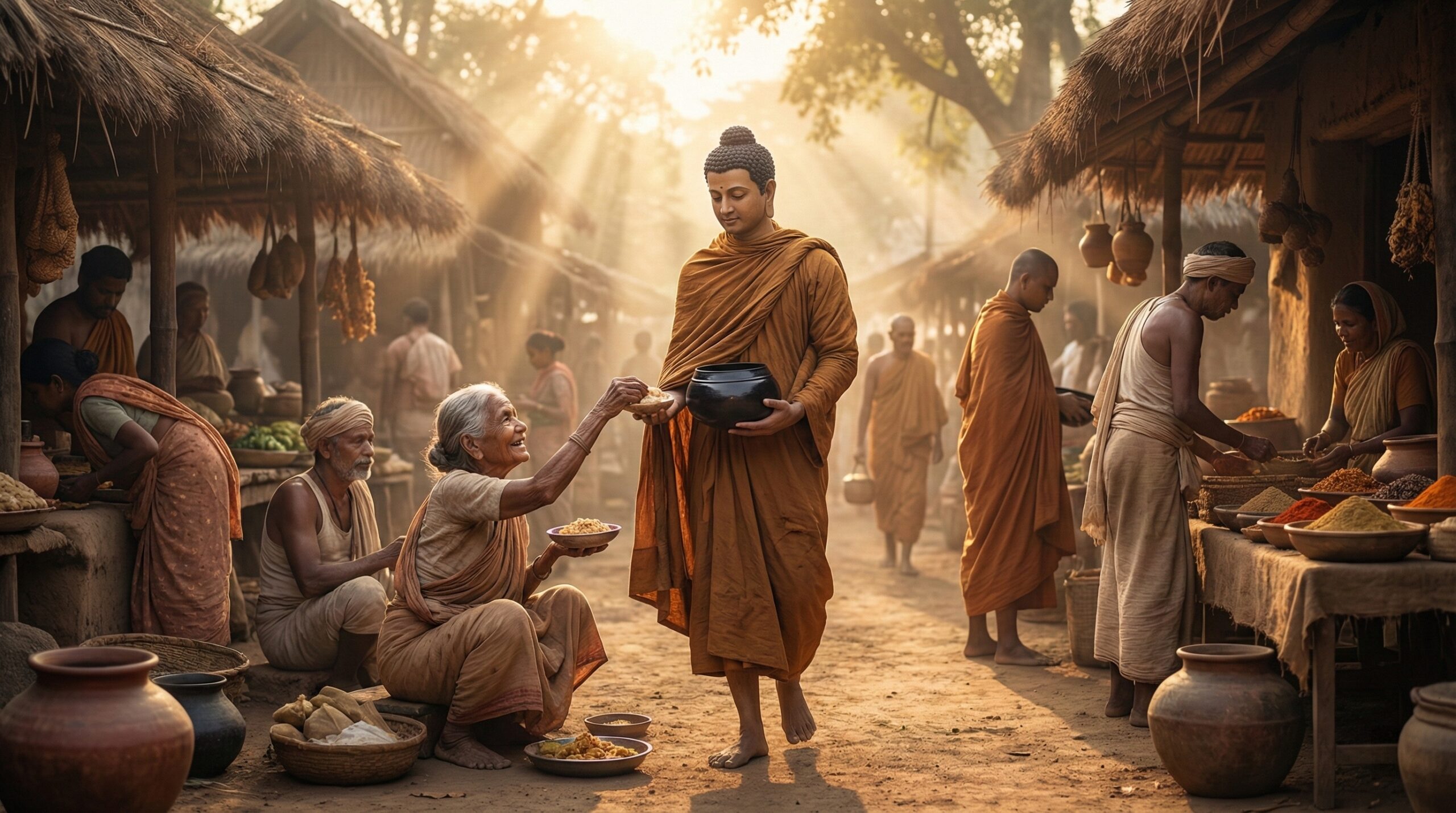
日出之后,佛陀与比丘们进入托钵行程。托钵并非乞讨行为,而是一种制度化安排,其功能在于切断对物质积累的依赖,同时保持与社会的最低限度接触。佛陀不选择固定施主,也不挑选食物,对所得一切平等受用。这种方式直接训练不执取,同时避免僧团形成经济权力。
进食通常在上午完成。佛陀遵循不非时食的原则,并非出于苦行,而是为了减少身体负担,使生活保持简约、可预测、低刺激。饮食在佛陀的日常中只占必要地位,从不被赋予修行意义或仪式价值。
上午与下午,是佛陀弘法与答问的主要时间。他接触的对象极为广泛,包括国王、商人、农夫、婆罗门、外道修行者、僧尼与在家众。佛陀的日常说法并无固定模式,而是围绕提问展开。他从不主动灌输体系,而是针对具体困惑,指出其认知错误所在。
在僧团内部,佛陀的日常生活并不表现为统治或管理。他不参与日常琐事的控制,而是在问题出现时提供原则性判断。戒律的形成,正是源于具体事件的处理结果,而非预设制度。这种“事后总结”的方式,使规则始终服务于解脱目标,而非反客为主。
佛陀亦将大量时间用于个别对话。许多经典记载的核心教义,正是在日常交流中被澄清,而非在正式场合宣讲。对佛陀而言,理解的产生依赖具体语境,脱离对象的抽象论述并无价值。
傍晚与夜间,佛陀多处于静修、独处或简短开示状态。他的睡眠时间极少,但并非刻意压缩,而是身心运作自然所致。佛陀明确反对将少眠、苦行视为修行成果,因为这类行为往往强化“我在修行”的执取。
在日常行为中,佛陀对自身并无任何特殊优待。他遵守僧团制定的戒律,接受批评,也接受劝诫。若行为被指出不当,他并不以觉者身份回避,而是依原则回应。这一点,构成佛法中极为关键的反权威结构。
需要强调的是,佛陀的日常生活并不是修行模板。其意义不在于模仿具体作息,而在于揭示一种原则:觉悟并不取消生活结构,而是使生活结构完全透明、不再制造苦。佛陀的每一项日常安排,都指向同一目标——减少干扰,维持觉知,支持理解,服务解脱。
因此,佛陀的日常生活,并非神圣化的生活方式,而是一种经过验证的最低复杂度生存方案。它所展示的不是“圣者如何生活”,而是“当认知不再错误,生活自然会呈现何种形态”。
Date: 04/20/2024 04/21/2024
Location: Star Ocean Meditation Center
Teacher: Sara
Dharma Knowledge
The Buddha’s Daily Life
To examine the Buddha’s daily life is not to catalog the habits of a sacred figure, but to understand how an awakened mind functions within ordinary conditions. His daily life was neither mystical nor removed from the world. It was a highly structured, purpose-driven mode of living designed to sustain clarity and support teaching.
After awakening, the Buddha did not withdraw into seclusion. He lived as a wandering mendicant, moving continuously between monastic communities and lay society. This choice reflects a central principle of the Dharma: liberation must remain valid under real social, material, and interpersonal conditions.
The Buddha’s daily routine was remarkably stable. Early mornings were typically devoted to meditation or quiet abiding, not to cultivate extraordinary states, but to maintain clarity and continuity of awareness. Awakening does not eliminate the need for attentiveness; it requires correct and sustained use of it.
After sunrise, the Buddha joined the monks on their alms round. Alms practice was not begging, but an institutional mechanism to prevent attachment to possessions while maintaining limited engagement with society. The Buddha did not select donors or discriminate among foods. Whatever was offered was accepted without preference. This directly trained non-clinging and prevented the formation of economic power structures within the community.
Meals were taken in the morning hours. The practice of not eating after midday was not asceticism, but a means of reducing bodily burden and sensory stimulation. Food played a strictly functional role in the Buddha’s life and carried no symbolic or ritual importance.
Late morning and afternoon were devoted primarily to teaching and dialogue. The Buddha interacted with people of all backgrounds—kings, merchants, farmers, priests, ascetics, monastics, and householders. His teaching was never delivered as a standardized lecture. It was responsive, shaped by questions and concrete problems. He did not impose systems; he identified cognitive errors.
Within the monastic community, the Buddha did not function as an administrator or ruler. He avoided micromanagement and intervened only when issues arose. Monastic rules emerged from specific incidents and were articulated retrospectively. This ensured that discipline remained subordinate to the goal of liberation, rather than becoming an end in itself.
A significant portion of the Buddha’s time was spent in one-on-one conversations. Many central teachings were clarified in these ordinary exchanges rather than formal assemblies. For the Buddha, understanding was always context-dependent; abstract instruction without relevance had little value.
Evenings and nights were generally reserved for quiet practice, reflection, or brief instruction. The Buddha slept little, not by deliberate deprivation, but as a natural consequence of his physical and mental condition. He explicitly rejected sleep deprivation and austerity as indicators of progress, recognizing them as subtle forms of self-assertion.
In daily conduct, the Buddha granted himself no exemptions. He followed the same disciplinary rules as other monks, accepted criticism, and responded to admonition. He did not shield himself behind awakened status. This refusal of privilege formed a critical anti-authoritarian foundation within the Dharma.
It is essential to note that the Buddha’s daily life is not presented as a lifestyle model to imitate. Its significance lies in the principle it reveals: awakening does not abolish structure, but renders it transparent and non-generative of suffering. Every aspect of his daily routine served a single purpose—minimizing disturbance, sustaining awareness, and enabling understanding.
The Buddha’s daily life was not a sanctified way of living, but a tested solution of minimal complexity. It demonstrates not how a saint should live, but how life naturally organizes itself when cognition is no longer distorted.