时间:09/26/2026 09/27/2026
地点:星海禅修中心
主讲:净诚
佛法修行
仙叹富者的布施
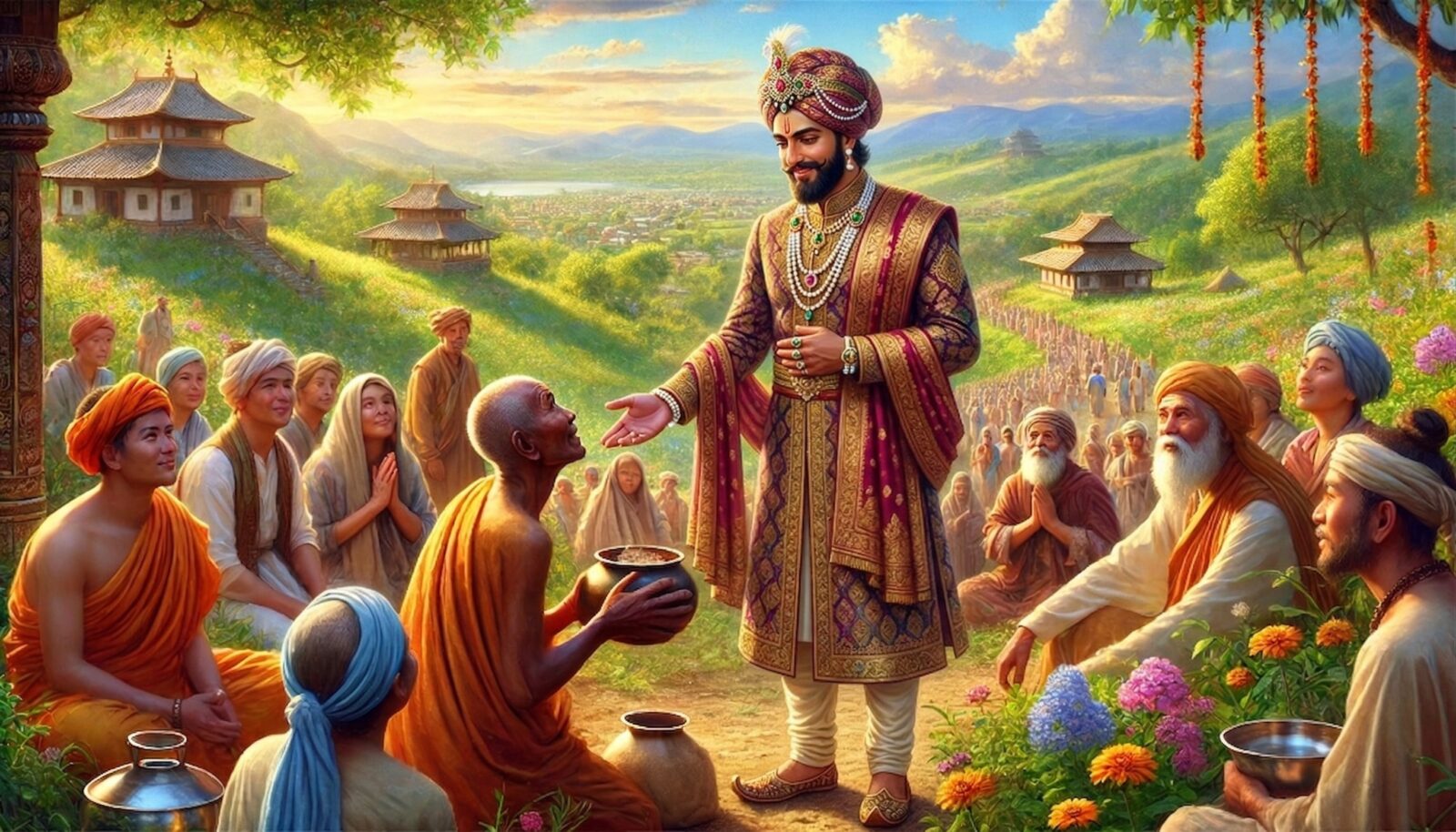
佛陀的过去世曾是一位大财主,名叫仙叹,非常富有。因为看到佛经,感到世事变化无常,荣耀与生命难保,财富并非己有,只有布施的功德才是不朽。于是昭告大众:「如果有生活贫乏的人,都可以随意来取所需。」如此经过数个月后,财富仍宽裕,人民也富足,再也没有贫乏的人了。仙叹心想:「这时应该买药,来照顾身患疾病的人。」于是就买了许多药来救济大众的生命,慈悲化育普润一切处,没有人不蒙受他的恩德。这样经年累月的施惠于大众,使得仙叹的德行远播,生病的人从四面八方而来,都赞叹他的仁行如天之大。
仙叹的财产全部布施殆尽,于是决定前去采宝。离开家一百多里,遇到数量车,载着患了重病的人,仙叹问:「你们要去哪里?」回答说:「我们要去仙叹家,希望他能救回我们的命。」于是仙叹立刻回家,向国王借了五百两黄金,买药来治愈他们,等到这些病患都痊愈了,仙叹才跟商人们入海去采宝,获得了非常多的宝物。回国途中,船搁浅了,于是他们上岸,走得又累又渴,仙叹看到了一口井水,便呼唤大家来喝水,而自己却没有取水喝。商人想到仙叹所得的宝物,比他们珍贵,因此起了贪念,将仙叹丢入深井里。但是仙叹的仁德感动了天神,在他坠入井底时,将他接住,令他毫发无伤。
商人们回国,国王问他们:「仙叹在哪里?」商人们回答:「出国后就分道扬镳,不知道他的去处。」国王说:「是你们杀了他吧?」商人们说:「没有。」
仙叹在井里,看到旁边有穴道,循着穴道缓缓而行,最后从另一口井爬了出来,走了七天才回国。国王问:「你去采宝,为什么空手而回?」仙叹回答:「我没采到宝物。」国王看仙叹离去,沉思一会儿说:「一定有原因!」于是又找来了商人们,说:「如果你们诚实认罪就可以活命,如果再欺瞒,必死无疑。」他们立即承认共同谋害仙叹,就被送进监狱等待定罪。仙叹知道了流着泪,马上来到皇宫向国王叩头请求放了那些商人。国王说:「这样违背了法律。」仙叹再次请愿:「他们知见颠倒,不须重惩,一切只是因为他们无知啊!」国王嘉许仙叹的仁德,因此原谅了商人们的罪行,勅令他们将宝物全数归还仙叹。商人们惭愧地说:「仙叹若不是深信佛法的人,怎么会有这样的仁德?」于是都选了最好的宝物还他。仙叹只接受一半,商人们叩头说:「承蒙您的护祐,我们才能保全性命,希望您能够接受全部的宝物。」于是仙叹就接受了所有的宝物,除了用来归还向国王借的黄金外,又行大布施。国王及臣民,受了仙叹的影响,都信仰佛法,一起受戒,因此子孝臣忠,天神护卫,国丰民康,四境服德,无不称善。
佛说:「那时的仙叹,就是我的前世。菩萨慈悲度济一切众生,就是如此无有穷尽地布施。」
Date: 09/26/2026 09/27/2026
Location: Star Ocean Meditation Center
Teacher: Jason
Dharma Talk
The Generosity of the Wealthy Xiantan
In a past life, the Buddha was once a great wealthy man named Xiantan, possessing immense riches. Upon reading the scriptures, he realized the impermanence of worldly affairs, that glory and life are uncertain, and that wealth does not truly belong to oneself; only the merit of giving is everlasting. Thus he proclaimed to the public, “If there are those who live in poverty, they may freely come and take what they need.” After several months, his wealth still remained abundant, and the people became prosperous, with no one left in poverty. Xiantan then thought, “Now I should purchase medicine to care for those who are ill.” He bought large quantities of medicine to save lives, extending compassion everywhere so that no one failed to receive his kindness. Over the years, his virtue spread far and wide, and the sick came from all directions, all praising his benevolence as vast as heaven.
Having given away all his wealth, Xiantan decided to go in search of treasures. After traveling more than a hundred li from home, he encountered many carts carrying gravely ill people. Xiantan asked, “Where are you going?” They replied, “We are going to Xiantan’s home, hoping he can save our lives.” Xiantan immediately returned home, borrowed five hundred taels of gold from the king, and bought medicine to heal them. Only after all the sick were cured did he set out with merchants to sea in search of treasures, obtaining a great abundance of precious goods. On the return journey, the ship ran aground, and they went ashore, exhausted and thirsty. Xiantan found a well and called everyone to drink, yet he himself did not take water. The merchants, seeing that Xiantan’s treasures were more valuable than theirs, became greedy and threw him into a deep well. However, Xiantan’s virtue moved the heavenly beings, who caught him before he hit the bottom, leaving him unharmed.
The merchants returned to the country. The king asked them, “Where is Xiantan?” They replied, “After leaving the country, we went separate ways and do not know his whereabouts.” The king said, “Did you kill him?” They answered, “No.”
Inside the well, Xiantan found a passage beside it and slowly followed it, eventually climbing out through another well. After walking for seven days, he returned to the country. The king asked, “You went to seek treasures—why have you returned empty-handed?” Xiantan replied, “I did not obtain any treasures.” The king watched him leave and thought for a while, saying, “There must be a reason!” He summoned the merchants again and said, “If you confess truthfully, you may live; if you continue to deceive, you will surely die.” They immediately admitted to plotting against Xiantan and were imprisoned awaiting judgment. When Xiantan learned of this, he wept and went to the palace, bowing before the king and pleading for their release. The king said, “This would violate the law.” Xiantan pleaded again, “Their views are inverted; they need not be severely punished. All of this arose from their ignorance.” The king praised Xiantan’s virtue, forgave the merchants, and ordered them to return all the treasures. The merchants, ashamed, said, “If Xiantan did not deeply believe in the Buddha-Dharma, how could he possess such virtue?” They selected the finest treasures to return. Xiantan accepted only half, but the merchants bowed and said, “Thanks to your protection, we have preserved our lives. We hope you will accept all the treasures.” Xiantan then accepted them all, repaid the gold he had borrowed from the king, and again performed great acts of giving. The king and his subjects, influenced by Xiantan, all took refuge in the Buddha-Dharma and upheld the precepts. Thus filial piety and loyalty flourished, heavenly beings offered protection, the country prospered, the people lived in peace, and all regions admired their virtue.
The Buddha said, “The Xiantan of that time was my past life. A bodhisattva, through compassion, benefits all beings in this way, giving endlessly without exhaustion.”