时间:03/08/2025 03/09/2025
地点:星海禅修中心
主讲:Otto Huang
佛法修行
差摩比丘的病中证悟
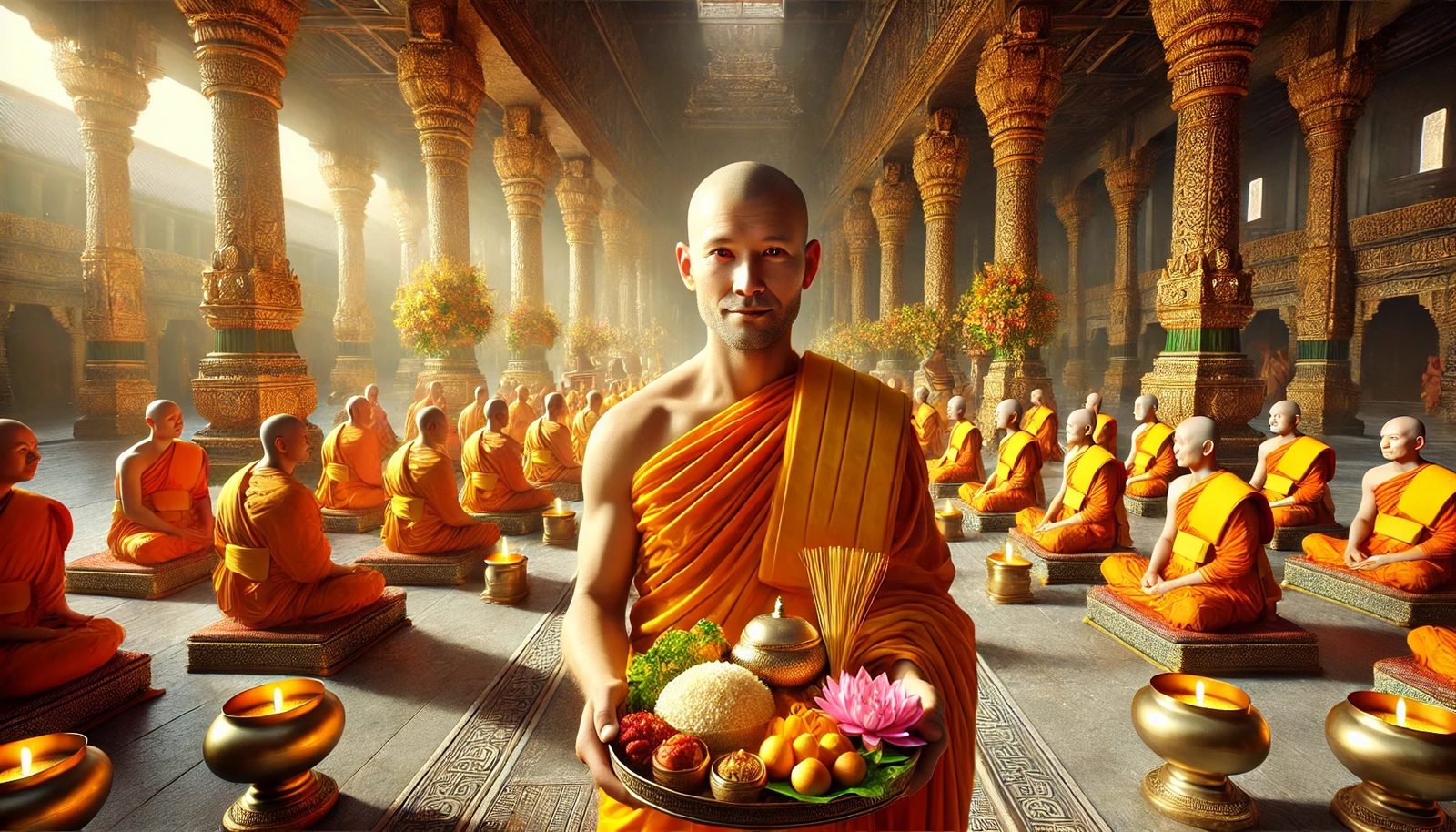
有一次,许多比丘住在拘睒弥城东南,瞿师罗富家长者所布施的林园中。
另一位名叫「差摩」的比丘,也在拘睒弥城,但另住在跋陀梨园中。那时,差摩比丘患了重病,身体很痛苦。
住在瞿师罗园的长老比丘们,得知差摩比丘患了重病,就派遣了轮值担任看护的陀娑比丘去探望他。
陀娑比丘到了差摩比丘的住处,转达瞿师罗园长老比丘们的关怀与安慰,对他说:
「差摩学友!瞿师罗园的长老比丘们很关心你,他们问你的病情缓和了些没?还能忍受吗?」
「学友!我的病没有转好,只有更加剧烈、更痛苦,好像就快没救了。」
了解了差摩比丘的情况,陀娑比丘就赶回瞿师罗园,向长老比丘们报告。
于是,长老比丘们要陀娑比丘再去跋陀梨园,提醒差摩比丘要按照佛陀的教法,从组成人的色、受、想、行、识等五受阴中,观察没有不变的我,也没有属于不变我所拥有的。
陀娑比丘再度前往差摩比丘的住处,转告长老比丘们的提醒。
差摩比丘听了以后,回答陀娑比丘说,他确实依照佛陀所教导的,从五受阴中观察没有一丝不变的我,也没有不变我所拥有的。
陀娑比丘又回到瞿师罗园,转告长老比丘们差摩比丘的回答。
长老比丘们听说差摩比丘能从五受阴中观察非我、非我所,认为这是阿罗汉解脱圣者的境界了,所以,就又要陀娑比丘去问差摩比丘是不是已经证得了阿罗汉果。
陀娑比丘三度前往差摩比丘的住处,转告长老比丘们的问话。
差摩比丘回答说,他还不是阿罗汉。
陀娑比丘又将差摩比丘的回答,带回瞿师罗园。
长老比丘们认为差摩比丘的第三次与第二次回答相互矛盾,就又要陀娑比丘四度前往差摩比丘的住处,转达长老比丘们的质疑。
差摩比丘说,虽然他从五受阴中观察非我、非我所,但经验上还是觉得有我。
辛苦的陀娑比丘,又将差摩比丘的回答,带回瞿师罗园。
原来,差摩比丘的非我观察,是顺服于佛陀教导的学习中观察,还不是自己实际的体验。于是,长老比丘们又重提佛陀时常教导的「非我」观法,透过陀娑比丘告诉差摩比丘说:
「差摩学友!你说有我,是根据什么说有我的?说色是我吗?离色有我吗?还是说受、想、行、识是我?离受、想、行、识有我?」
让陀娑比丘五度来回奔波传话,差摩比丘觉得过意不去,就拿起拐杖,要陀娑比丘扶他到瞿师罗园,去跟长老比丘们直接讨论。
到了瞿师罗园,差摩比丘对长老比丘们说:
「学友们!我不说色是我,不说受、想、行、识是我,不说离色、受、想、行、识有我。但我还觉得整体五受阴有我,不过,我不会说这五受阴是我所拥有的。
学友们!譬如有香味的花,说这棵花的根就是花香,或说离开花的根能有花香;或说茎、叶、花瓣、花蕊是花香,或说离开茎、叶、花瓣、花蕊能有花香,这样说对吗?」
「都不对。」
「那怎样说才正确?」
「应该说有整棵花,才能有花香才对。」
「学友们!所以,我不说色是我,不说离色有我,不说受、想、行、识有我,不说离受、想、行、识有我。学友们!但我还觉得整体五受阴有我,这是对自我感的傲慢、自我感的欲求、受自我感的驱使等深邃处还未能彻底地觉察、断除、出离的缘故。
学友们!这就像洗衣服,虽然脏衣服用清洁剂洗干净了,但却还残留有清洁剂的味道,所以还要用芳香剂熏香,以断除清洁剂不好的味道。
多听闻圣者正法的学习者也一样,能于五受阴观察非我、非我所,但对五受阴的我慢、我欲、我使还未能彻底地觉察、断除、出离的人,尚须继续努力修学,洞察五受阴的生灭,如实地认清:这是色,这是色生成的关键因缘,这是色的灭除;受、想、行、识也一样。能够这样修学,日后就能将我慢、我欲、我使彻底地觉察、断除、出离了。」
听了差摩比丘的这番说明,在座的长老比丘们,远尘离垢,得法眼净,赞叹差摩比丘的解说,让大家更清楚地了解佛陀的教说。差摩比丘也因此而突破自己的盲点,证入了解脱。
Date: 03/08/2025 03/09/2025
Location: Star Ocean Meditation Center
Teacher: Otto Huang
Dharma Talk
The Enlightenment of Bhikkhu Chāma Amid Illness
Once, many bhikkhus were residing southeast of Kuśinagara in a forest grove donated by the elder Ghoṣila, a wealthy householder.
Another bhikkhu, named Chāma, was also in Kuśinagara but lived separately in the Bhadali Grove. At that time, Bhikkhu Chāma had fallen seriously ill and was suffering greatly.
When the elder bhikkhus residing in Ghoṣila’s Grove heard of Chāma Bhikkhu’s severe illness, they sent Bhikkhu Tosa, who was on duty as a caretaker, to visit him.
Upon arriving at Chāma Bhikkhu’s dwelling, Bhikkhu Tosa conveyed the concern and well-wishes of the elder bhikkhus from Ghoṣila’s Grove, saying:
”Friend Chāma! The elder bhikkhus from Ghoṣila’s Grove are very concerned about you. They asked whether your condition has improved and whether you can still endure it.”
”Friend! My illness has not improved at all. It has only worsened, becoming more intense and painful, as if there is no hope for recovery.”
Having understood Chāma Bhikkhu’s condition, Bhikkhu Tosa hurried back to Ghoṣila’s Grove and reported to the elder bhikkhus.
The elders then instructed Bhikkhu Tosa to return to Bhadali Grove and remind Chāma Bhikkhu to contemplate in accordance with the Buddha’s teaching: to observe within the five aggregates—form (rūpa), feeling (vedanā), perception (saññā), mental formations (saṅkhāra), and consciousness (viññāṇa)—and realize that there is no unchanging self nor anything that belongs to an unchanging self.
Bhikkhu Tosa went again to Chāma Bhikkhu’s dwelling and conveyed the elders’ reminder.
After hearing this, Chāma Bhikkhu replied that he had indeed examined the five aggregates in the way the Buddha had taught and found no trace of an unchanging self nor anything belonging to an unchanging self.
Bhikkhu Tosa returned once more to Ghoṣila’s Grove and relayed Chāma Bhikkhu’s response.
When the elder bhikkhus heard that Chāma Bhikkhu could contemplate the five aggregates as “not-self” and “not belonging to self,” they believed this to be the realization of an Arahant’s liberation. So, they sent Bhikkhu Tosa again to ask Chāma Bhikkhu whether he had attained Arahantship.
Bhikkhu Tosa made a third visit to Chāma Bhikkhu’s dwelling and conveyed the elders’ inquiry.
Chāma Bhikkhu replied that he was not yet an Arahant.
Bhikkhu Tosa brought this response back to Ghoṣila’s Grove.
The elder bhikkhus found Chāma Bhikkhu’s third answer to be contradictory to his second. Therefore, they sent Bhikkhu Tosa on a fourth trip to Bhadali Grove to clarify this apparent inconsistency.
Chāma Bhikkhu explained, “Although I observe the five aggregates as ‘not-self’ and ‘not belonging to self,’ I stillexperience a sense of self.”
Once again, the diligent Bhikkhu Tosa carried this message back to Ghoṣila’s Grove.
It became clear that Chāma Bhikkhu’s contemplation of ‘not-self’ was still based on intellectual acceptance of the Buddha’s teachings rather than direct personal realization. Understanding this, the elder bhikkhus reiterated the Buddha’s frequent teaching on ‘not-self’ and sent Bhikkhu Tosa once again with the following questions:
”Friend Chāma! On what basis do you say there is a self? Do you claim that form is self? Is there a self apart from form? Do you say that feeling, perception, mental formations, or consciousness is self? Or is there a self apart from feeling, perception, mental formations, and consciousness?”
After making Bhikkhu Tosa run back and forth so many times, Chāma Bhikkhu felt deeply apologetic. He picked up his staff and asked Bhikkhu Tosa to help him walk to Ghoṣila’s Grove so that he could discuss directly with the elder bhikkhus.
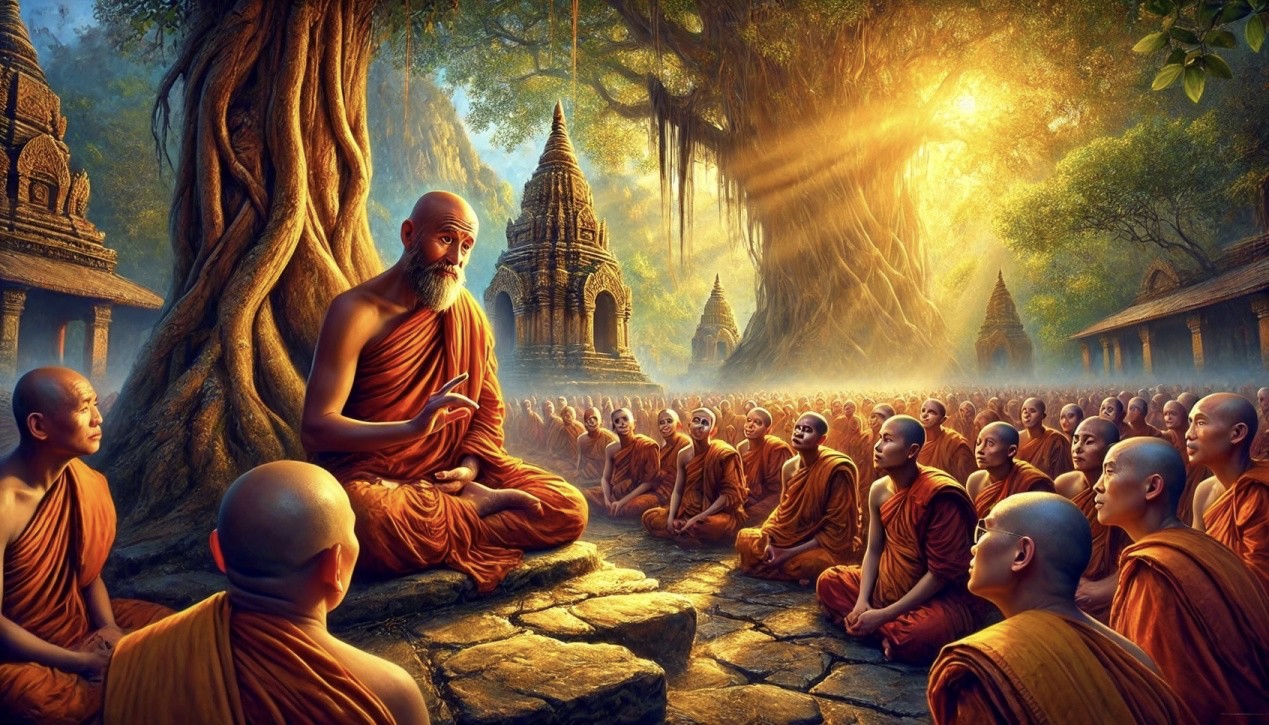
Upon arriving at Ghoṣila’s Grove, Chāma Bhikkhu addressed the elders:
”Friends! I do not claim that form is self. I do not claim that feeling, perception, mental formations, or consciousness is self. Nor do I claim that there is a self apart from form, feeling, perception, mental formations, or consciousness. However, I still perceive a self within the entirety of the five aggregates, though I do not claim ownership over these five aggregates.
Friends! Suppose there is a fragrant flower. Would it be correct to say that the fragrance comes from the flower’s root? Or that the fragrance exists separately from the root? Or that the fragrance comes from the stem, leaves, petals, or stamen? Or that the fragrance exists apart from the stem, leaves, petals, or stamen?”
The elders replied, “None of these statements are correct.”
”Then how should it be stated correctly?”
”It should be said that the fragrance exists because the entire flower exists.”
”Friends! In the same way, I do not claim that form is self, nor that there is a self apart from form. I do not claim that feeling, perception, mental formations, or consciousness is self, nor that there is a self apart from them. However, I still perceive a self within the entirety of the five aggregates. This is because I have not yet fully discerned, severed, or abandoned the deep-seated tendencies of self-conceit, self-desire, and self-clinging.
Friends! This is like washing clothes. Even when dirty clothes have been cleaned with detergent, the smell of the detergent still lingers. Therefore, one must use fragrance to remove the unwanted detergent smell.
Similarly, a person who frequently hears and studies the noble teachings can observe the five aggregates as ‘not-self’ and ‘not belonging to self.’ However, if they have not yet fully discerned, severed, and abandoned self-conceit, self-desire, and self-clinging regarding the five aggregates, they must continue striving in their practice.
They should clearly perceive the arising and ceasing of the five aggregates and recognize them as they truly are: ‘This is form, this is the cause of form’s arising, and this is the cessation of form.’ The same applies to feeling, perception, mental formations, and consciousness. By practicing in this way, one will eventually discern, sever, and abandon self-conceit, self-desire, and self-clinging completely.”
Upon hearing Chāma Bhikkhu’s explanation, the elder bhikkhus present became free from defilements, attaining the purity of the Dhamma-eye. They praised Chāma Bhikkhu’s teaching, as it deepened their understanding of the Buddha’s words. Chāma Bhikkhu himself, having overcome his own blind spot, attained liberation.