时间:10/24/2026 10/25/2026
地点:星海禅修中心
主讲:净诚
佛法修行
天神辗转宣说佛正法
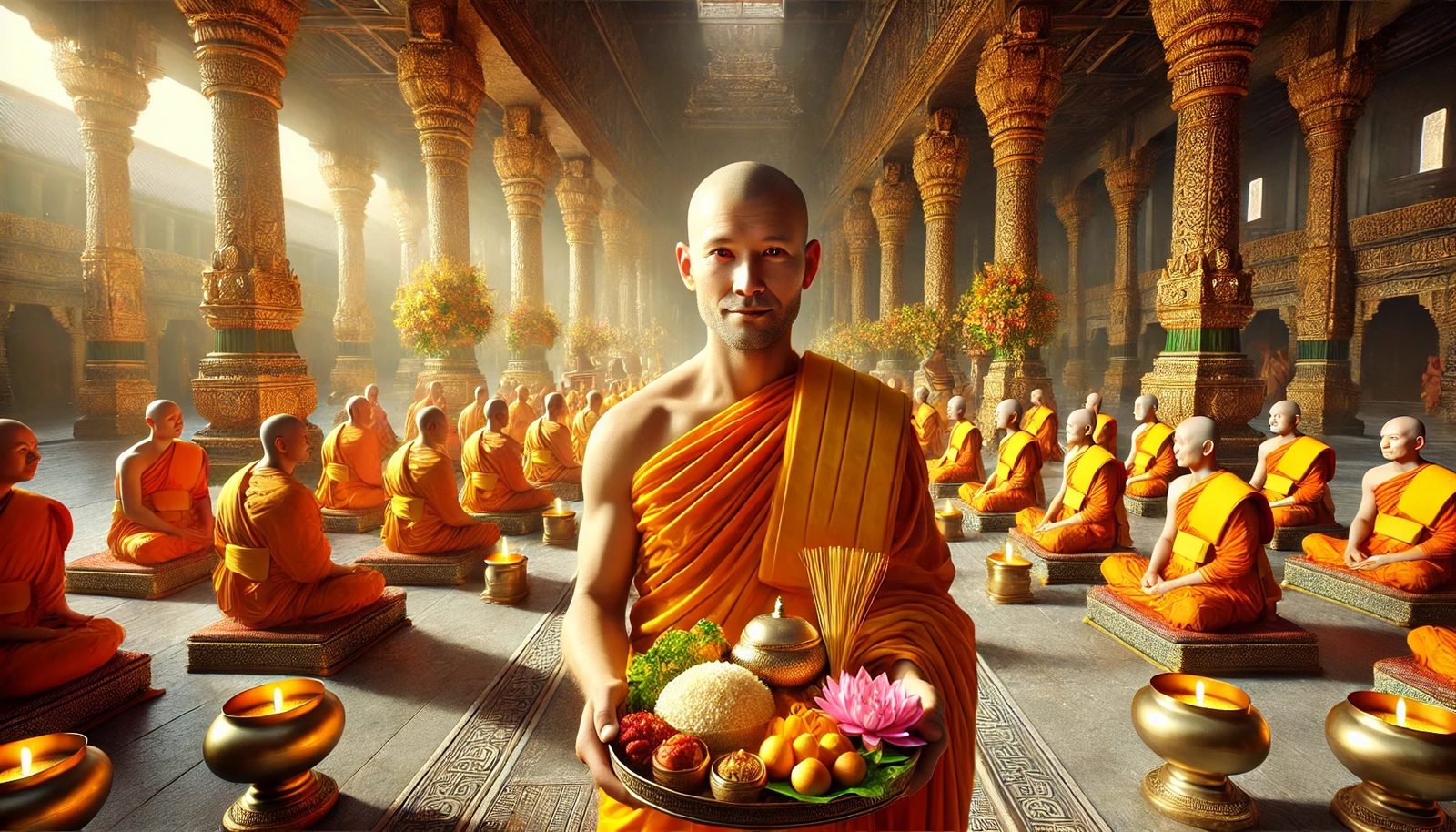
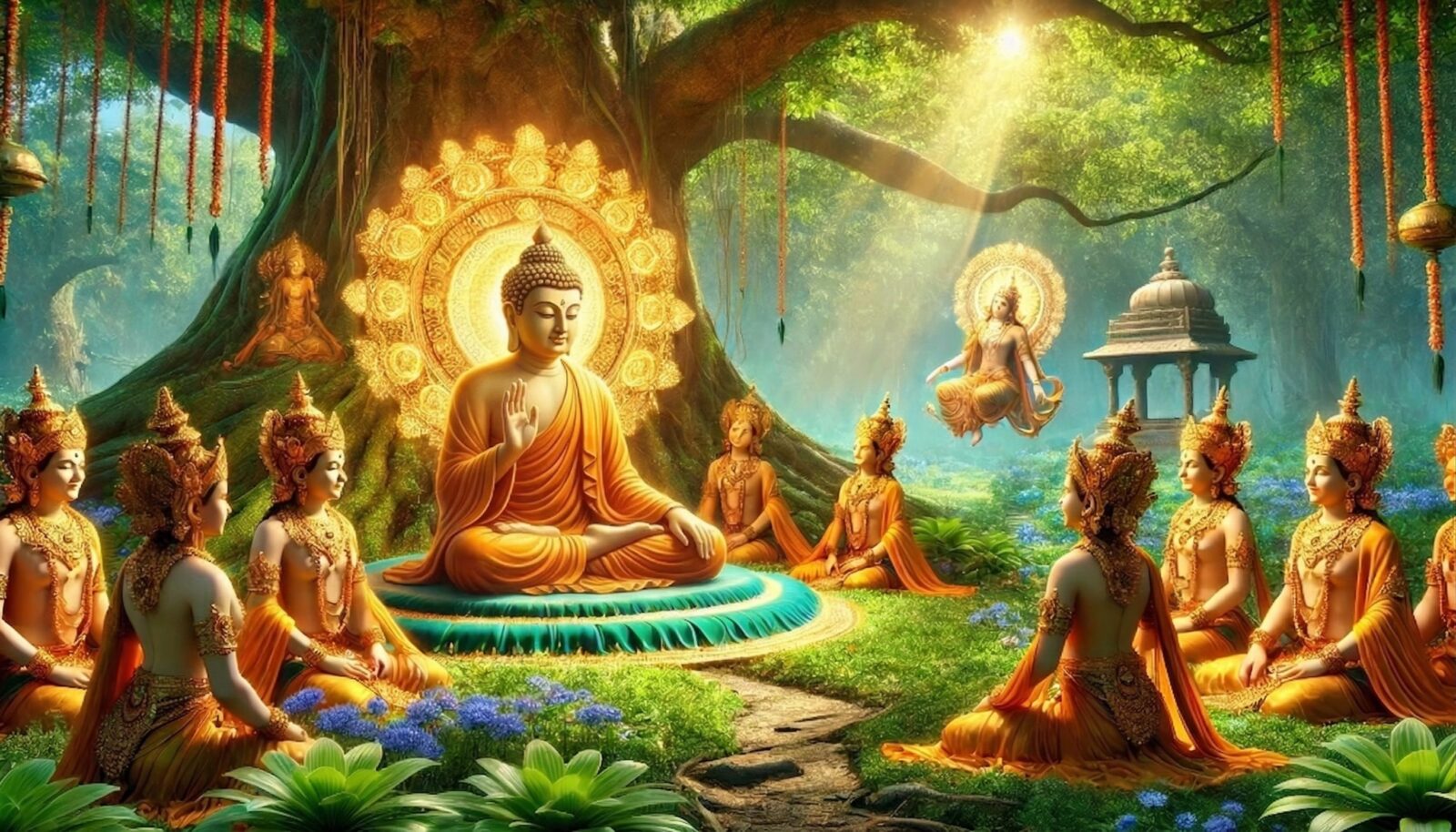
有一天,世尊着衣持钵,入那伽城乞食后,走到树林里,坐在一棵树下,思惟摩竭国人命终之后所投生之处。这时,不远处有一位鬼神,向世尊报上自己的名字:「世尊!我是阇尼沙,我是阇尼沙。」(阇尼沙意指解脱烦恼)
世尊问:「你为什么自称为阇尼沙?你修习什么法门,而自称已见道迹?」阇尼沙言:「我并非他方之人。先前,我在人间为国王,是修习如来正法的优婆塞,深信佛法、护持三宝,命终一心念佛,而转生为四天王天毘沙门王的太子。从此以后,心中慧光常明,照见诸法缘起性空,证得初果须陀洹,不堕恶道,七生以来,常名为阇尼沙。」
世尊在树林中略停歇后,即前往那陀揵稚,就座后,告诉一位比丘:「你去唤阿难来,说我找他。」比丘回应:「是,世尊!」比丘依世尊指示,去唤阿难来。不久阿难来到世尊面前,顶礼之后,退至一侧,禀白:「世尊!您看起来比平常更容光殊胜,寂然安定。请问您在思惟何事,以致容光如此焕然殊胜?」
此时,世尊告诉阿难:「你先前曾经来请求我,为摩竭国人授记。你离开后,我着衣持钵,入那罗城中乞食,乞食后,到树林里,坐在树下,思惟摩竭国人命终之后投生之处。当时,离我不远处,有一位鬼神,对我说:『我是阇尼沙!我是阇尼沙!』阿难!你可曾听说过阇尼沙这个名字吗?」阿难回答:「我从未听过。但现在听您说起这个名字,顿时生起怖畏,汗毛竖立。世尊!这位鬼神必定有大威德,所以名为阇尼沙。」
世尊说:「当时我问他:『你是修学何种法门,而自称已见道迹?』阇尼沙回答:『我并非他方之人,也不是修学外道法门。过去我曾经是人间的国王,为世尊弟子,以坚定的信心修学佛法,为护持三宝的优婆塞,一心念佛,命终后投生为毘沙门天王的太子,证得须陀洹果,不堕恶趣,于人天往返七次,尽除一切烦恼之苦,于七世往返中,常名为阇尼沙。
有一世,乘坐天人的千辐宝车,打算前去拜访毘楼勒天王,当时遥见世尊坐在树林中的一棵树下,颜貌端正,安然寂定,犹如深渊般澄净清明。我见到这个情景,心中思惟:我可以去请问世尊,摩竭国人命终之后,会投生何处?又有一世,毘沙门天王于大众中,宣说一偈:
『我等不自忆,过去所更事;今遭遇世尊,寿命得增益。』
又有一次,忉利天天众因为某些事,聚在一处。当时,四大天王各坐其位,提头赖咤天王坐于东方,面向西边;毘楼勒叉天王坐在南方,面向北边;毘楼博叉天王坐在西方,面向东边;毘沙门天王坐在北方,面向南边,帝释天主释提桓因坐在中间。当时四位天王就座后,我才跟着入座。此外,还有其他大天神参与此会,这些天神都是以前跟随如来修习清净梵行,命终之后,得生忉利天,他们都得到天人五福:天寿、天色、天名称、天乐、天威德。当时,忉利天天众都踊跃欢喜的说:『天众增加,阿修罗众减少。』帝释天释提桓因知道忉利天众起欢喜心,随即作颂曰:
『忉利诸天人,帝释相娱乐;礼敬于如来,最上法之法。诸天受影福,寿、色、名、乐威;于佛修梵行,故来生此间。复有诸天人,光色甚巍巍;佛智慧弟子,生此复殊胜。忉利及因提,思惟此自乐;礼敬于如来,最上法之法。』」
「阇尼沙又说:『那时忉利天的天众聚集在善法堂,是为了共同商议思惟教令,四天王承受教令后,就各自回座。没多久,忽然有巨大又奇异的光遍照四方,当时忉利天众见此异光,都感到惊愕,难道有什么怪事要发生吗?其他大威德的天神众,也都感到惊怖,以为将有什么怪事。
此时,大梵天王即化身为头梳五角髻的童子,站立在天众上方的虚空中,颜貌端正,天众无可比拟,身紫金色,光芒遮盖了天光,梵童子径自于忉利天的天众中入座,内心欢欣,犹如受灌顶的剎利王登王位时般踊跃欢喜,不久,又在众人上方的虚空中安坐,犹如大力士般巍然不动,并颂偈曰:
『调伏无上尊,教世生明处;大明演明法,梵行无等侣,使清净众生,生于净妙天。』
梵童子说完此偈,告诉忉利天众:『如果音声具五种清净,才可称为梵声。一是其音正直,二是其音和雅,三是其音清澈,四是其音深满,五是周遍远闻;具有这五种特质,方可名为梵音。汝等善听!摩竭国的在家佛弟子,命终后,有人证得阿那含果,有人证得斯陀含果,有人证得须陀洹果,有人生他化自在天,亦有人生化自在天、兜率天、焰摩天、忉利天、四天王天,或生剎帝力、婆罗门、居士大家,得五欲自在。』梵童子并以偈颂曰:『摩竭优婆塞,诸有命终者,八万四千人,吾闻俱得道。成就须陀洹,不复堕恶趣,俱乘平正路,得道能救济。此等群生类,功德所扶持,智慧舍恩爱,惭愧离欺妄。于彼诸天众,梵童记如是;言得须陀洹,诸天皆欢喜。』
毗沙门王听闻此偈,欢喜的说:『世尊出现于世间演说真实法,这是多么奇特、未曾有之事。我从来都不知道原来如来出现世间,是为了演说微妙真实法;未来,应当还会有佛出世演说如是真实法义,能令忉利诸天众发起欢喜心。』
梵童子听到毗沙门王的话后,说:『如来出现于世间演说真实法,是甚为奇特、未曾有之事。如来出现于世,即以种种方便,巧说善法与不善法,说了无量无边的法而无有一法可得,说自性空寂、本自清净,当中又具足无量功德,此法甚深微妙,犹如从酥酪中提炼出的最上味醍醐。』
「此时,梵童子又告诉忉利天众:『汝等谛听!并仔细思惟当中的义理,我将为你们更详细说明如来所说的四念处、七定具、四神足等法门。何谓四念处?观内身,精勤不懈,专注观照,以去除世间贪爱与忧恼;观外身,精勤不懈,专注观照,除去世间的贪爱与忧恼。乃至于观受、意、法,也是要精勤不懈,专注观照,除去世间贪忧。内身观已,生他身智;内观受已,生他受智;内观意已,生他意智;内观法已,生他法智,这是如来善能分别解说四念处。诸天!汝等善听!我再说如来所说的七定具:正见、正志、正语、正业、正命、正方便、正念。再者,诸天!如来善能分别说四神足,一是欲如意足;二是念如意足;三是进如意足;四是慧如意足。』
梵童子又告诉诸天众:『过去的沙门、婆罗门,以种种方便展现无量的神通变化,皆由修习四神足证得三昧,而启发本具的神通妙用;未来乃至现在的沙门、婆罗门也以无数方便,展现无量神通变化,也是透过修习四神足。』这时,梵童子随即变化身形,分身为三十三身,各个分身与三十三天一一同坐,梵童子问:『你们都看见我的神通了吗?』天众回答:『都看见了。』梵童子说:『我也是因为修习四神足有所成就,才能有如是神通变化。』
此时,三十三天的天众各自思惟:现在梵童子与我对坐、与我对语,而其余化身也同时都在言说;一化身沉默,其余化身亦皆沉默。此时,梵童子收摄神通变化,归于一身与帝释天主同坐,告诉忉利天众:『汝等善听!我将解说如来,以正知见、觉悟力,开启三条路径,以致成就正觉。是哪三条路径呢?
若有众生贪欲成性,常行不善,但此人亲近善知识后,听闻正法,反省改过,便离欲、舍不善行,努力修学正法,法法奉行且有所成就,得欢喜心,恬然快乐,于此乐中,更生大法喜;这就好比有人舍弃粗食,尝了百味饭,复求更美味的饭食。修行也是如此,先离不善法,得欢喜乐;又于乐中,更生大法喜,这就是开启成就正觉的第一条路径。
若有众生瞋恚成性,经常造身、口、意恶业,后来得遇善知识,闻法受教,法法奉行而成就,因此舍离身、口、意恶行,心生欢喜,恬然快乐,又于乐中,更生大法喜;这就好比有人舍弃粗食,食百味饭,虽得饭食充足,更求佳肴。修行也是如此,离不善法,得欢喜乐,又于乐中,更生大法喜,这是开启成就正觉的第二条路径。
若有众生愚痴迷昧,不识善恶,不明白『知苦、断集、慕灭、修道』的真实道理,此人后来得遇善知识,闻法受教,法法奉行而成就,明了善法与不善法,真正了解苦集灭道四圣谛之理,因而舍弃不善行,心生欢喜,恬然快乐,又于乐中,更生大法喜;如人舍弃粗食,食百味饭后,更求佳肴。修行也是如此,舍离不善法,得欢喜乐,又于乐中,更生大法喜,这是如来成就正觉的第三条路径。』
梵童子于忉利天上说此正法后,毗沙门天王又为其眷属转说此正法,阇尼沙复于佛前转说此正法,世尊又为阿难说此正法,阿难复为比丘、比丘尼、优婆塞、优婆夷说此正法。」
阿难尊者听闻世尊如是说法,法喜充满,依教奉行。
Date: 10/24/2026 10/25/2026
Location: Star Ocean Meditation Center
Teacher: Sara
Dharma Talk
Heavenly Beings Successively Proclaim the Buddha’s Right Dharma
One day, after the World-Honored One had put on his robe, taken his alms bowl, and entered Nāga City for alms, he went into a forest and sat beneath a tree, contemplating where the people of Magadha would be reborn after death. At that moment, not far away, a spirit announced his name to the World-Honored One: “World-Honored One! I am Janesha, I am Janesha.” (Janesha means one who is liberated from afflictions.)
The World-Honored One asked, “Why do you call yourself Janesha? What teaching do you practice, that you claim to have seen the迹 of the Path?” Janesha said, “I am not someone from another realm. Formerly, I was a king among humans, a lay disciple who practiced the Tathāgata’s Right Dharma, deeply believed in the Buddha-Dharma, and protected the Three Jewels. At death, I single-mindedly recollected the Buddha and was reborn as the son of Vaiśravaṇa, king of the Heaven of the Four Great Kings. From then onward, the light of wisdom has constantly shone within my mind. I have seen that all dharmas arise dependently and are empty in nature. I attained the first fruit, Stream-entry, no longer fall into evil destinies, and through seven lives I have constantly been named Janesha.”
After resting briefly in the forest, the World-Honored One went to Nadika. After taking his seat, he told a bhikṣu, “Go and call Ānanda, and tell him I am looking for him.” The bhikṣu replied, “Yes, World-Honored One,” and went according to the instruction. Before long, Ānanda came before the World-Honored One, paid homage, stepped to one side, and said, “World-Honored One! You appear more radiant and serene than usual, quiet and deeply settled. May I ask what you have been contemplating, that your appearance is so resplendent and extraordinary?”
At that time, the World-Honored One told Ānanda, “Previously, you came and requested that I give a prediction regarding the people of Magadha. After you left, I put on my robe, took my bowl, entered Nara City for alms, and after alms went to the forest, sat beneath a tree, and contemplated where the people of Magadha would be reborn after death. At that time, not far from me, a spirit said to me, ‘I am Janesha! I am Janesha!’ Ānanda, have you ever heard the name Janesha?” Ānanda replied, “I have never heard it. But now, hearing you speak this name, fear suddenly arises in me, and the hairs on my body stand on end. World-Honored One! This spirit must possess great majesty and virtue, and therefore is called Janesha.”
The World-Honored One said, “At that time I asked him, ‘What teaching do you practice, that you claim to have seen the迹 of the Path?’ Janesha answered, ‘I am not from another realm, nor do I practice the teachings of non-Buddhist paths. In the past I was a human king, a disciple of the World-Honored One. With steadfast faith I practiced the Buddha-Dharma as a lay disciple protecting the Three Jewels. Single-mindedly recollecting the Buddha, after death I was reborn as the son of Vaiśravaṇa, king of the heavenly realm, attained the fruit of Stream-entry, did not fall into evil destinies, and went back and forth between humans and heavens seven times, exhausting the suffering of all afflictions. Throughout these seven returns, I have constantly been called Janesha.
In one life, riding in a celestial thousand-spoked jeweled chariot, I intended to visit King Virūḷhaka. From afar I saw the World-Honored One sitting beneath a tree in the forest, his appearance upright, serene, and deeply composed, pure and clear like a profound abyss. Seeing this, I thought to myself: I may go and ask the World-Honored One where the people of Magadha will be reborn after death. In another life, King Vaiśravaṇa proclaimed this verse in the midst of the assembly:
“We do not ourselves recall
The things we underwent in the past;
Now that we encounter the World-Honored One,
Our lifespan is thereby increased.”
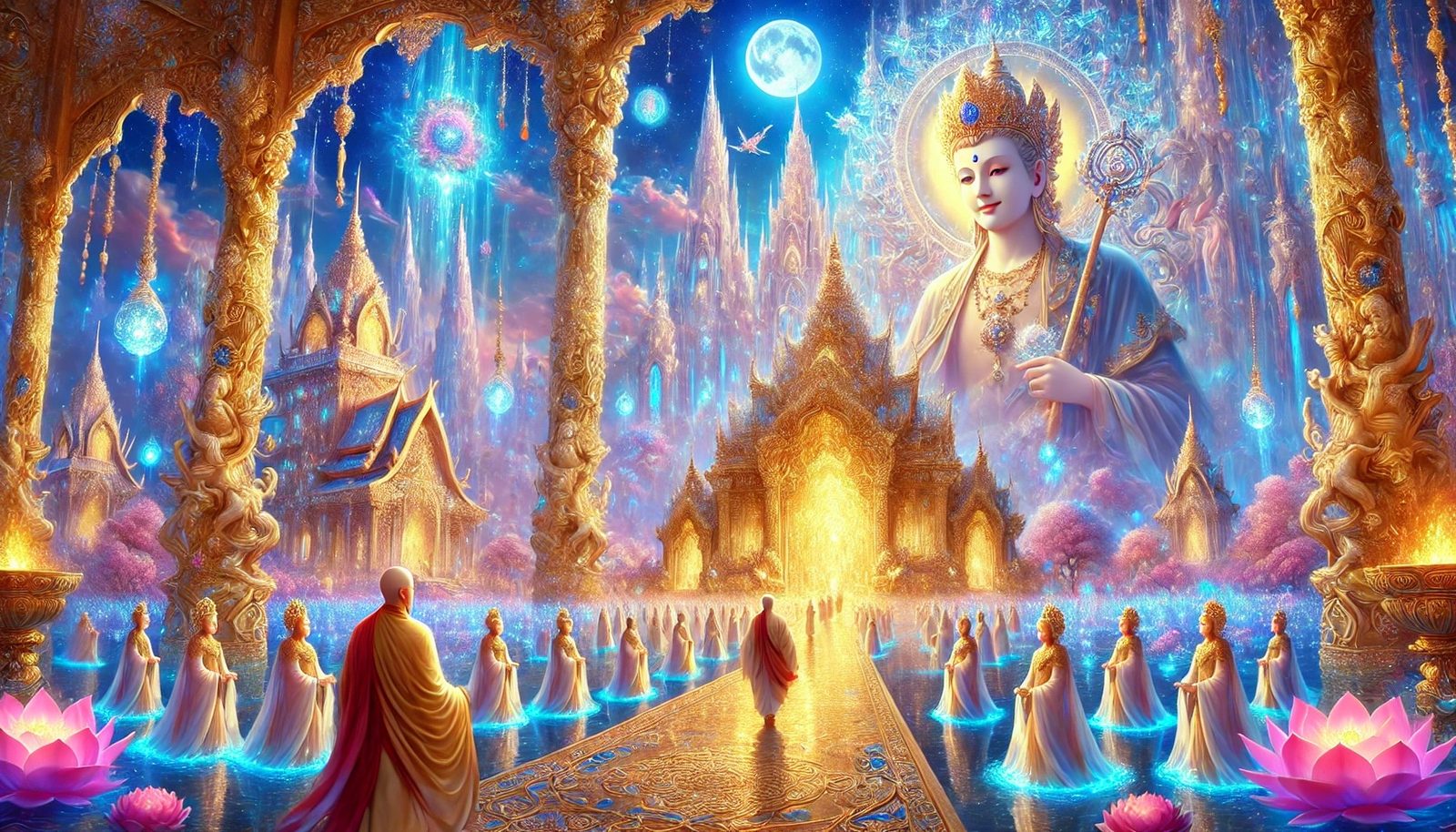
On another occasion, the devas of Trāyastriṃśa gathered together because of certain matters. At that time, the Four Great Kings each sat in their places: Dhṛtarāṣṭra sat in the east facing west; Virūḍhaka sat in the south facing north; Virūpākṣa sat in the west facing east; Vaiśravaṇa sat in the north facing south; and Śakra, lord of the gods, sat in the center. Only after the four heavenly kings had taken their seats did I follow and sit down. In addition, other great devas attended this assembly. These devas had formerly followed the Tathāgata in cultivating pure Brahma-conduct and, after death, were reborn in Trāyastriṃśa Heaven. All of them obtained the five heavenly blessings: heavenly lifespan, heavenly beauty, heavenly renown, heavenly joy, and heavenly majesty. At that time, the devas of Trāyastriṃśa all leapt with joy and said, “The host of devas increases, and the host of asuras decreases.” Śakra knew that the devas had given rise to joy, and immediately spoke this verse:
“The devas of Trāyastriṃśa
Rejoice together with Śakra;
They pay reverence to the Tathāgata,
To the supreme Dharma of dharmas.
The devas receive reflected blessings—
Lifespan, beauty, fame, joy, and majesty;
Because they practiced Brahma-conduct before the Buddha,
They have now come to be born here.
Again there are devas
Whose radiance and appearance are most majestic;
As disciples wise through the Buddha,
Their rebirth here is yet more excellent.
Trāyastriṃśa and Indra
Reflect on this and delight in themselves;
They pay reverence to the Tathāgata,
To the supreme Dharma of dharmas.”’
“Janesha also said: ‘At that time, the devas of Trāyastriṃśa gathered in the Hall of Good Dharma in order to deliberate together upon the teaching commands. After the Four Great Kings received the commands, they each returned to their seats. Not long afterward, suddenly a vast and wondrous light shone throughout the four directions. Seeing this unusual light, the devas of Trāyastriṃśa were all startled. Could some strange event be about to happen? Other devas of great majesty were likewise alarmed and thought that something extraordinary was about to occur.
At that moment, the Great Brahmā King manifested himself as a youth whose hair was arranged in five topknots, standing in the sky above the assembly of devas. His appearance was upright, beyond comparison among the devas. His body was purple-golden in color, and his radiance outshone the heavenly light. The Brahmā youth directly took a seat among the devas of Trāyastriṃśa, inwardly rejoicing, like a consecrated kṣatriya king ascending the throne and delighting greatly. Before long, he sat again in the sky above the multitude, unmoving like a mighty strongman, and spoke this verse:
“The unsurpassed Honored One subdues and tames,
Teaching the world and giving rise to the place of light;
The great brightness expounds the luminous Dharma,
The Brahma-conduct having no equal companion,
Causing pure beings
To be born in pure and wondrous heavens.”
After reciting this verse, the Brahmā youth told the devas of Trāyastriṃśa: ‘Only if a sound possesses five kinds of purity may it be called a Brahmā sound. First, its tone is upright; second, its tone is harmonious and elegant; third, its tone is clear; fourth, its tone is deep and full; fifth, it pervades and is heard afar. Only when these five qualities are present may it be called Brahmā voice. Listen well. Among the lay Buddhist disciples in Magadha who have died, some attained the fruit of Non-returning, some attained the fruit of Once-returning, some attained the fruit of Stream-entry; some were reborn in the Heaven of Those Who Delight in the Transformations of Others, some in the Heaven of Enjoying Transformations, Tuṣita Heaven, Yāma Heaven, Trāyastriṃśa Heaven, or the Heaven of the Four Great Kings; others were reborn among great kṣatriya, brahmin, or householder families and enjoy mastery over the five desires.’ The Brahmā youth also spoke this verse: ‘Among the lay followers of Magadha, among those whose lives have ended, eighty-four thousand, I hear, have all attained the Path. Having accomplished Stream-entry, they no longer fall into evil destinies. Together they ride the level and proper road; having attained the Path, they are able to save and ferry others. These various kinds of beings are supported by merit. With wisdom they relinquish love and attachment; with shame and conscience they abandon deceit and falsity. Before that host of devas, the Brahmā youth made this prediction: saying that they had attained Stream-entry, all the devas rejoiced.’
When King Vaiśravaṇa heard this verse, he joyfully said, ‘That the World-Honored One has appeared in the world to expound the true Dharma—this is truly a most wondrous and unprecedented event. I never knew that the Tathāgata appears in the world in order to expound the subtle and true Dharma. In the future, there should again be Buddhas who appear in the world and expound such true Dharma principles, bringing joy to the devas of Trāyastriṃśa.’
After hearing the words of King Vaiśravaṇa, the Brahmā youth said, ‘That the Tathāgata appears in the world to expound the true Dharma is indeed a most wondrous and unprecedented event. When the Tathāgata appears in the world, he skillfully expounds wholesome and unwholesome dharmas through various expedient means. Though he speaks immeasurable and boundless dharmas, there is not a single dharma that can be grasped. He teaches that intrinsic nature is empty and quiescent, originally pure, and yet within this are fully endowed immeasurable merits and virtues. This Dharma is profound and subtle, like the supreme essence of ghee refined from cream and curds.’
“At that time, the Brahmā youth again told the devas of Trāyastriṃśa: ‘Listen carefully, and reflect well upon the principles herein. I shall explain in greater detail the Dharma gates spoken by the Tathāgata, such as the Four Foundations of Mindfulness, the Seven Factors of Settled Equipment, and the Four Bases of Spiritual Power. What are the Four Foundations of Mindfulness? Contemplating the inner body with diligent and unremitting effort, with focused observation, in order to remove worldly greed and sorrow; contemplating the outer body with diligent and unremitting effort, with focused observation, in order to remove worldly greed and sorrow. Likewise, in contemplating feeling, mind, and dharmas, one must also be diligent and unremitting, observing with focus so as to remove worldly greed and worry. Having contemplated one’s own body inwardly, one gives rise to knowledge of others’ bodies; having inwardly contemplated feeling, one gives rise to knowledge of others’ feelings; having inwardly contemplated mind, one gives rise to knowledge of others’ minds; having inwardly contemplated dharmas, one gives rise to knowledge of others’ dharmas. Thus the Tathāgata is skilled in distinctly explaining the Four Foundations of Mindfulness. Devas, listen well. I shall next speak of the Seven Factors of Settled Equipment taught by the Tathāgata: right view, right intention, right speech, right action, right livelihood, right effort, and right mindfulness. Furthermore, devas, the Tathāgata is skilled in distinctly teaching the Four Bases of Spiritual Power: first, the basis of desire; second, the basis of mindfulness; third, the basis of energy; fourth, the basis of wisdom.’
The Brahmā youth also told the devas: ‘In the past, śramaṇas and brahmins displayed immeasurable transformations of supernatural power through various means. All were attained through cultivating the Four Bases of Spiritual Power, realizing samādhi, and thereby activating their inherent wondrous spiritual abilities. In the future, and even in the present, śramaṇas and brahmins who display countless transformations of supernatural power likewise do so through cultivation of the Four Bases of Spiritual Power.’ Then the Brahmā youth immediately transformed his form and divided himself into thirty-three bodies, each body sitting together one by one with each of the thirty-three devas. The Brahmā youth asked, ‘Have you all seen my supernatural powers?’ The devas replied, ‘We have all seen them.’ The Brahmā youth said, ‘It is also because I have attained accomplishment in cultivating the Four Bases of Spiritual Power that I can manifest such transformations.’
At that time, the devas of the Thirty-three each thought to themselves: now the Brahmā youth sits facing me and speaks with me, while his other manifested bodies are also simultaneously speaking; when one manifested body is silent, the others are likewise silent. Then the Brahmā youth withdrew these supernatural transformations, returned to one body, and sat together with Lord Śakra, telling the devas of Trāyastriṃśa: ‘Listen well. I shall explain how the Tathāgata, by right knowledge and awakened power, opens three paths whereby perfect awakening is accomplished. What are these three paths?
If there is a being whose nature is dominated by greed and desire, who constantly performs unwholesome actions, yet after drawing near a good spiritual friend hears the Right Dharma, reflects, reforms, abandons desire, gives up unwholesome conduct, diligently studies the Right Dharma, practices each teaching accordingly and attains accomplishment, then joy arises in the mind, serene happiness is obtained, and within this happiness an even greater joy in the Dharma is born. This is like a person who abandons coarse food, tastes richly flavored rice, and then seeks even finer food. Cultivation is also like this: first one leaves unwholesome dharmas and attains joyful happiness; then within that happiness, an even greater joy in the Dharma arises. This is the first path that opens accomplishment of right awakening.
If there is a being whose nature is dominated by anger, who often commits evil bodily, verbal, and mental actions, and later encounters a good spiritual friend, hears the Dharma and receives instruction, practices each teaching and attains accomplishment, thereby abandoning evil bodily, verbal, and mental conduct, then joy arises in the mind, serene happiness is obtained, and within this happiness an even greater joy in the Dharma is born. This is like a person who abandons coarse food and eats richly flavored rice; though sufficiently fed, he still seeks finer delicacies. Cultivation is also like this: leaving unwholesome dharmas, one attains joyful happiness; then within that happiness, an even greater joy in the Dharma arises. This is the second path that opens accomplishment of right awakening.
If there is a being who is deluded and ignorant, unable to distinguish good from evil, and does not understand the true principle of “knowing suffering, cutting off its origin, longing for cessation, and cultivating the path,” yet later encounters a good spiritual friend, hears the Dharma and receives instruction, practices each teaching and attains accomplishment, comes to understand wholesome and unwholesome dharmas, and truly comprehends the Four Noble Truths of suffering, origin, cessation, and the path, then he abandons unwholesome conduct, joy arises in the mind, serene happiness is obtained, and within this happiness an even greater joy in the Dharma is born. This is like a person who abandons coarse food and, after eating richly flavored rice, seeks still finer delicacies. Cultivation is also like this: by abandoning unwholesome dharmas one attains joyful happiness; then within that happiness, an even greater joy in the Dharma arises. This is the third path by which the Tathāgata accomplishes right awakening.’
After the Brahmā youth expounded this Right Dharma in Trāyastriṃśa Heaven, King Vaiśravaṇa in turn proclaimed this Right Dharma to his retinue; Janesha again proclaimed this Right Dharma before the Buddha; the World-Honored One then explained this Right Dharma to Ānanda; and Ānanda in turn explained this Right Dharma to bhikṣus, bhikṣuṇīs, upāsakas, and upāsikās.”
After Venerable Ānanda heard the World-Honored One expound the Dharma in this way, he was filled with joy in the Dharma and practiced in accordance with the teaching.