时间:02/15/2025 02/16/2025
地点:星海禅修中心
主讲:Otto Huang
佛法修行
二十亿耳的精进
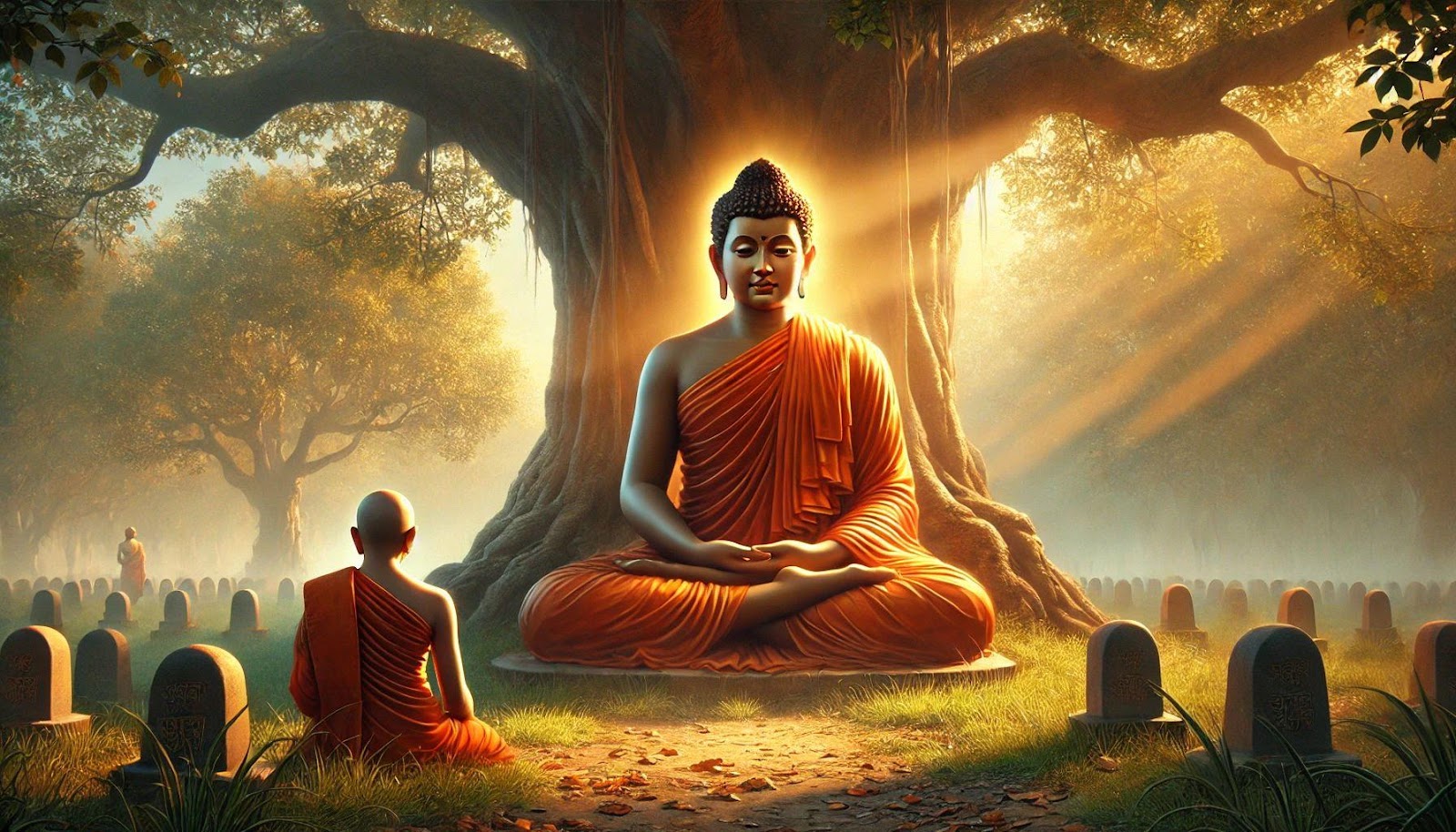
有一次,佛陀来到摩揭陀国王舍城,住在东北方城外的灵鹫山,而尊者二十亿耳,正好也在附近的一处坟场精进修学。
尊者二十亿耳不分昼夜地勤修,不是禅坐就是经行,日夜不离佛陀教导的三十七道品。尊者经行所到之处,经常看得见因为脚磨破皮而留下来的斑斑血迹,引来鸟儿啄食。这么努力的精进修学,却还老是无法突破,一直不得解脱,尊者最初的修学热诚与信心,就这样逐渐逐渐地消耗掉,终于,热诚冷却了,信心动摇了。有一天,他不禁暗自这么想:
「在世尊众多弟子中,我算得上是精进修学群里的一个了,可是至今还不得解脱,再这样耗下去有什么用呢?不如还俗回家,用父母亲雄厚财力布施作福,还来得受用些。」
佛陀知道了尊者二十亿耳这样的想法,就来坟场开导他。佛陀对他说:
「二十亿耳!未出家时,你会弹琴吗?」
「会的,出家前我琴弹得还不错。」
「那好!当你弹琴时,如果琴弦调得太紧,弹出来的声音好听吗?」
「不好听,世尊!」
「如果琴弦调得太松,弹出来的声音好听吗?」
「不好听,世尊!」
「如果琴弦调得松紧适中,弹出来的声音好听吗?」
「这样就好听了,世尊!」
「这就对了,修道人!修学太精进,就像调得太紧的琴弦,反而引起急躁不安;精进不足,就像调得太松的琴弦,又令人懒散懈怠,两者都不能引领你成就。所以,你应当避开这两种情况,做适当的调整,就可以修得解脱了。」
尊者二十亿耳听了佛陀这番开导,重新燃起了修学的热诚与信心,常常念着上面佛陀弹琴譬喻的教导,继续修学,不久便成就解脱了。
解脱后,尊者二十亿耳心想,应当去向佛陀禀报,于是,就前往拜见佛陀,向佛陀报告他的解脱体证:
「世尊!一位真正的解脱者,不是因为相信而能证入无欲;不是为了名闻利养而能安于远离;不是为了不犯戒而做到无诤,解脱者是因为贪、瞋、痴已尽的缘故,所以能乐于无欲;乐于远离;乐于无诤;乐于爱尽;乐于取离;乐于心不移动。
一位心正解脱的比丘,不会因为他看见了什么,听到了什么,闻到了什么,尝到了什么,触到了什么,意念了什么而退失解脱,解脱者在六根认识境界时,心不会被境界俘虏,始终能维持一贯地清净不杂、坚住不动,能就其因缘,善观生灭无常;善观无常中的寂灭性,就像一座坚固的大石山,任凭哪个方向来的风雨吹打,都不能令其动摇、转移一样。」
佛陀听了尊者二十亿耳这番报告后,十分欢喜,随后对比丘们说:
「比丘们!解脱的人,应当像这样表白自己的体证。二十亿耳的表白,不卑不亢,平顺真实,他是真的成就解脱了,不是未证说证、自取减损的增上慢者。」
Date: 02/15/2025 02/16/2025
Location: Star Ocean Meditation Center
Teacher: Otto Huang
Dharma Talk
The Diligence of Two Billion Ears
Once, the Buddha came to Rajagaha in the kingdom of Magadha and stayed at Vulture Peak, located outside the northeastern part of the city. At the same time, the venerable monk known as Two Billion Ears was diligently practicing in a nearby cemetery.
Venerable Two Billion Ears practiced tirelessly day and night, either meditating in seated posture or walking meditation, constantly adhering to the Buddha’s teachings on the Thirty-Seven Factors of Enlightenment. His walking meditation was so intense that his feet would often bleed, leaving bloodstains on the ground that attracted birds to peck at them.
Despite his diligent efforts, he could not make a breakthrough and remained unenlightened. Gradually, his initial enthusiasm and faith in practice began to wane, until his zeal cooled and his confidence faltered. One day, he thought to himself:
“Among the many disciples of the Blessed One, I am considered one of the diligent practitioners. Yet, I have not achieved liberation to this day. If I continue like this, what is the point? It would be better to return to lay life and use my parents’ considerable wealth to make offerings and accumulate merit—it might be more beneficial that way.”
The Buddha, aware of Venerable Two Billion Ears’ thoughts, went to the cemetery to guide him. The Buddha asked him:
“Two Billion Ears, before you became a monk, did you play the lute?”
“Yes, Blessed One, I was quite skilled at playing the lute before I renounced the world.”
“Good. When you played the lute, if the strings were too tight, would the sound be pleasant?”
“No, Blessed One, it would not.”
“And if the strings were too loose, would the sound be pleasant?”
“No, Blessed One, it would not.”
“But if the strings were tuned just right, would the sound be pleasant?”
“Yes, Blessed One, it would be.”
“That is correct. A practitioner should be like this as well. Overexertion in practice is like a string that is too tight—it causes agitation and restlessness. Insufficient effort is like a string that is too loose—it leads to laziness and slackness. Neither extreme leads to accomplishment. Therefore, you should avoid these two extremes and make proper adjustments to achieve liberation.”
Hearing this guidance from the Buddha, Venerable Two Billion Ears reignited his enthusiasm and faith in practice. Constantly recalling the Buddha’s teaching about the lute, he resumed his efforts. Before long, he attained liberation.
After his liberation, Venerable Two Billion Ears thought that he should report to the Buddha. He went to see the Buddha and shared his realization:
“Blessed One, a truly liberated person does not attain dispassion through mere belief, nor does one embrace renunciation for fame or gain, nor avoid contention merely to uphold precepts. A liberated person is free from greed, hatred, and delusion.
Such a person delights in dispassion, delights in renunciation, delights in peace, delights in the cessation of attachment, delights in letting go, and delights in the immovable mind.
A monk whose mind is truly liberated will not lose that liberation due to anything he sees, hears, smells, tastes, touches, or thinks. When encountering the six sense objects, a liberated person’s mind is never captured by them and remains pure and unwavering, steadfast and unmoved.
Such a person can skillfully observe the arising and ceasing of phenomena in accordance with dependent origination, and recognize the stillness within impermanence. Just as a massive stone mountain stands unshaken by winds or storms from any direction, so does the liberated mind remain unshaken.”
Hearing this account, the Buddha was greatly pleased. He then said to the monks:
“Monks, one who has attained liberation should express their realization in this way. Two Billion Ears’ statement is neither arrogant nor self-deprecating but smooth and truthful. He has indeed attained liberation. He is not one who claims realization without attainment, thereby falling into the conceit of overestimation.”