时间:07/06/2024 07/07/2024
地点:星海禅修中心
主讲:净真
佛法知识
什么是苦
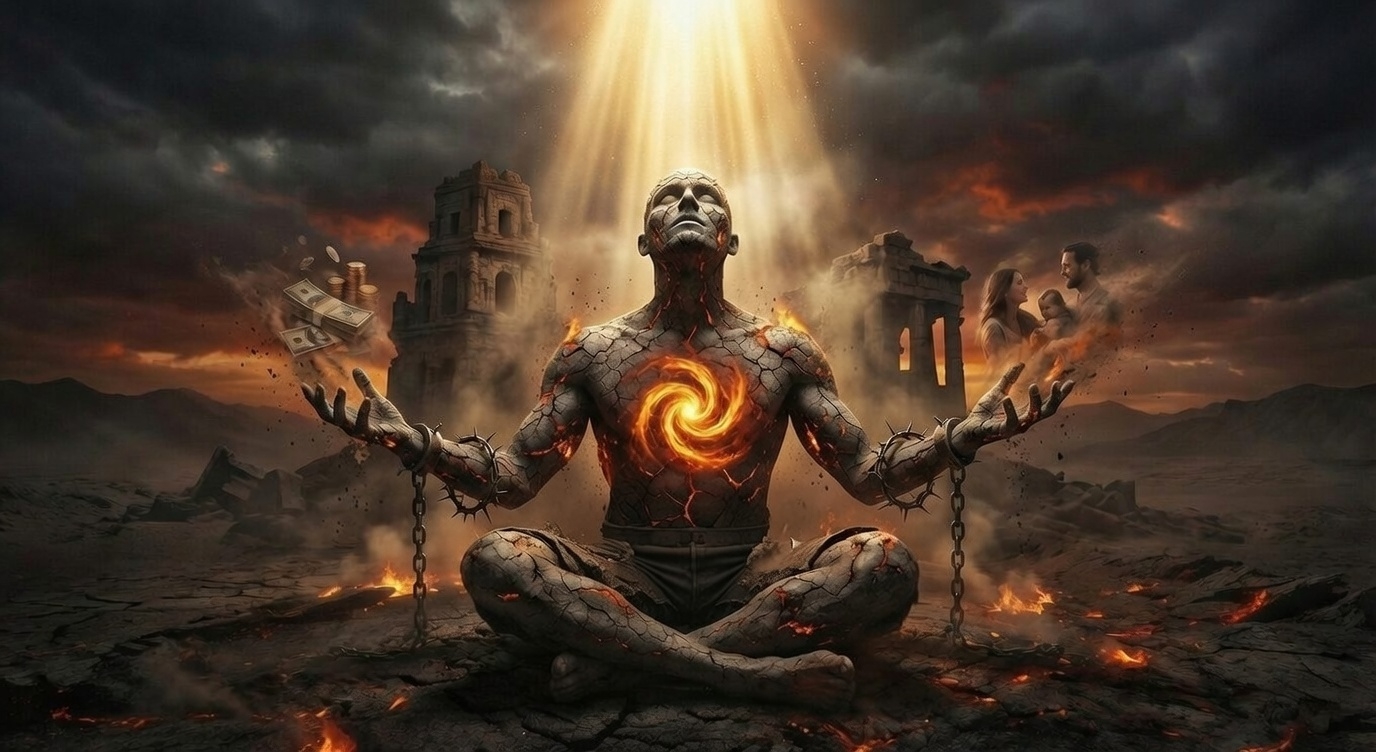
“苦”是佛法的起点,也是最容易被误解的概念之一。日常语言中的“苦”,通常指痛苦、不幸或情绪上的难受;而佛法所说的“苦”,并非情绪判断,而是对存在状态的结构性描述。若不区分这两层含义,关于佛法的一切讨论都会偏离轨道。
在佛法中,“苦”首先不是主观感受,而是一种客观事实。它指的是一切有条件而生的存在,必然具有不稳定性、不可控性与不圆满性。只要某个状态依赖条件而成立,它就无法被永久维持,也无法完全符合个体的期待。从这个意义上说,“苦”不是异常,而是常态。
佛法对“苦”的分析并不止于明显的痛楚。身体的疼痛、疾病与死亡固然是苦,但快乐本身同样属于苦的范畴。原因并不在于快乐本身有问题,而在于它无法持续、无法被固定,也无法保证不变。当人将快乐视为可以依赖、可以占有、可以重复的对象时,苦便已在结构上成立。
佛经中对苦的经典归纳,通常分为三个层次。第一是苦苦,即直接的身心痛苦,如疼痛、悲伤、恐惧。第二是坏苦,即表面愉悦但必然走向失去的状态,例如关系的破裂、青春的消逝、成功的失效。第三是行苦,即更为根本的层面,指一切条件组合本身所具有的压迫性——事物必须变化,个体必须应对变化,而这一过程本身即是不安定的。
需要强调的是,佛法并不认为“苦”来自外在世界的恶意,也不将其归咎于命运或道德惩罚。苦并非世界对人的惩罚,而是条件运行的自然结果。只要无常存在,只要事物依因缘而生灭,苦就不可避免。这一判断不带价值立场,而是事实陈述。
更进一步,佛法指出:苦之所以成为问题,不在于变化本身,而在于人对变化的错误理解。将无常视为常,将依赖条件的事物当作可以掌控的“我”或“我的”,便产生了执取。执取并不会阻止变化,只会在变化发生时制造冲突与挫败感。因此,苦并非由事件本身决定,而是由认知结构决定。
这也是为什么佛法不以消除外在痛苦为终点。即便环境完美、身体健康、关系和谐,若对这些状态产生依赖与认同,苦仍会以更隐蔽的方式存在。反之,即便身处不利条件,若对无常与因果有清醒理解,苦的心理结构也可以被削弱甚至终止。
因此,佛法所说的“认识苦”,并不是培养悲观态度,而是获得现实判断力。只有当苦被准确界定,解脱才具备逻辑前提。若误将苦理解为情绪问题、社会问题或命运问题,便必然在错误的层面上寻找答案。
总结而言,佛法中的“苦”并非人生失败的象征,而是对条件存在之本质的揭示。它不是为了令人绝望,而是为了指出:只要苦有因,它就不是绝对的;只要因可以被理解,苦就可以被止息。
Date: 07/06/2024 07/07/2024
Location: Star Ocean Meditation Center
Teacher: Sara
Dharma Knowledge
What Is Suffering
Suffering is the starting point of the Dharma and also one of its most frequently misunderstood concepts. In ordinary language, suffering refers to pain, misfortune, or emotional distress. In the Dharma, however, suffering is not a subjective feeling but a structural description of existence. Without distinguishing these meanings, any discussion of the Dharma becomes conceptually confused.
In the Dharma, suffering is first of all an objective condition, not a personal mood. It refers to the inherent instability, lack of control, and incompleteness of all conditioned phenomena. Anything that arises due to conditions cannot be permanently maintained and cannot fully conform to individual expectations. In this sense, suffering is not an exception, but the normal state of conditioned existence.
The analysis of suffering in the Dharma goes far beyond obvious pain. Physical illness, injury, and death are forms of suffering, but pleasure itself is also included. This is not because pleasure is inherently wrong, but because it is impermanent, unrepeatable at will, and incapable of providing lasting security. When pleasure is treated as something to rely on, possess, or preserve, suffering is already structurally present.
Classical Buddhist analysis often distinguishes three levels of suffering. The first is suffering as pain—direct physical or mental distress such as illness, grief, or fear. The second is suffering due to change—the distress that arises when pleasant states inevitably deteriorate, such as the loss of relationships, youth, or success. The third is conditioned suffering, the most fundamental level, referring to the pressure inherent in all compounded processes: things must change, and beings must continuously respond to that change.
Crucially, the Dharma does not attribute suffering to external hostility, fate, or moral punishment. Suffering is not the world acting against individuals; it is the natural outcome of conditional processes. As long as impermanence exists, and as long as phenomena arise and pass away dependent on causes, suffering is unavoidable. This statement is descriptive, not evaluative.
The Dharma further clarifies that suffering becomes problematic not because of change itself, but because of how change is misunderstood. When impermanence is mistaken for permanence, and conditioned processes are taken to be a controllable self or possession, attachment arises. Attachment does not prevent change; it only ensures conflict when change occurs. Thus, suffering is not determined by events, but by cognitive structure.
For this reason, the Dharma does not aim merely at removing external discomfort. Even in ideal conditions—health, security, harmonious relationships—suffering persists if identification and clinging remain. Conversely, under adverse conditions, suffering can be significantly reduced or even cease if impermanence and causality are clearly understood.
To recognize suffering in the Dharma is therefore not to adopt pessimism, but to gain accuracy. Liberation becomes logically possible only when suffering is correctly defined. If suffering is mistaken for a purely emotional, social, or existential problem, solutions will inevitably be sought at the wrong level.
In conclusion, suffering in the Dharma is not a symbol of life’s failure, but a precise diagnosis of conditioned existence. It is not meant to produce despair, but to establish a clear premise: if suffering has causes, it is not absolute; and if its causes can be understood, suffering can cease.