时间:12/13/2025 12/14/2025
地点:星海禅修中心
主讲:净真
佛法知识
佛法与现代生活节奏
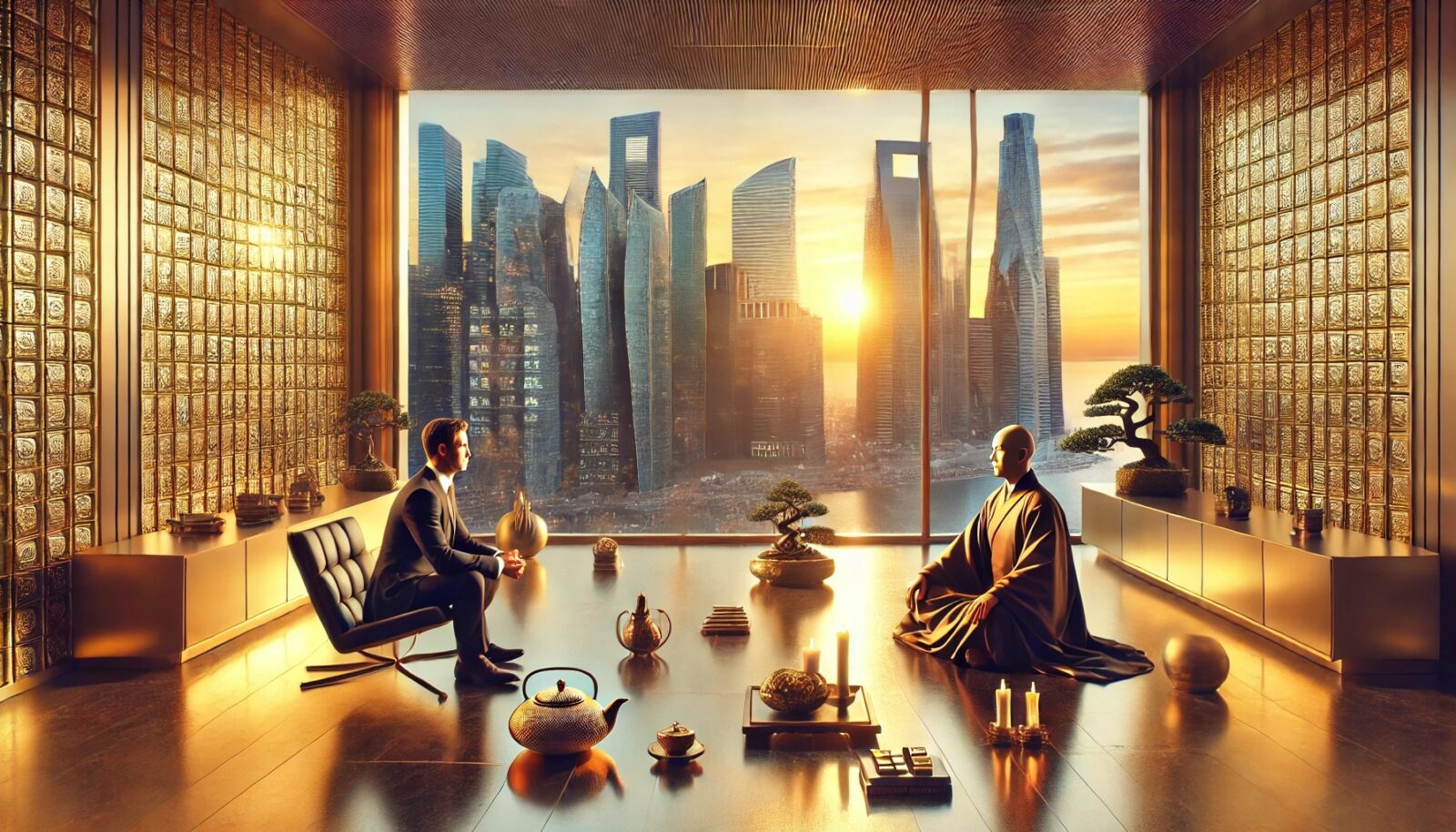
“现代生活节奏过快,是否仍适合修行佛法”这一问题,源自一个常见误解:将佛法等同于缓慢、退隐、远离现实的生活方式。若从佛法自身的理论结构出发,而非从其历史外观或修行形式出发,这一问题本身可以被重新澄清。
首先需要指出的是,佛法并不以“慢”为价值前提。佛法关注的不是时间密度,而是认知质量。无论生活节奏快慢,只要心智处于无明与执取的运作中,苦便持续存在;反之,即使身处高度密集的信息与事务环境,只要认知结构清晰,苦并不会因节奏本身而必然增加。将“快”视为修行障碍,是将外在条件误认为内在原因。
现代生活的显著特征,并非忙碌本身,而是持续的注意力分裂。信息流高速切换、任务并行、角色频繁变换,使心长期处于反应模式。在佛法看来,这种状态并不是新的问题形态,而是“散乱心”的高度放大版本。佛陀在其时代所分析的贪、嗔、痴,并未因技术变化而失效,只是获得了更高频率的触发条件。
佛法对这一问题的回应,并不是要求人脱离现代社会,而是训练人在任何节奏下保持可观察的心。所谓修行,并不等同于延长坐禅时间或减少事务数量,而是提升对当下身心状态的觉知精度。当行为由无意识反应转为有觉察的选择,节奏不再是主宰者,而成为被管理的变量。
在戒的层面,佛法并非要求远离现代生活,而是要求减少不必要的消耗与冲突。现代社会中大量的心理疲惫,源于过度承诺、身份膨胀与无边界比较。戒的功能,在于为行为设定清晰边界,使精力不被持续泄漏。这是一种结构性节能,而非道德约束。
在定的层面,佛法并不要求长时间脱离工作与家庭,而是训练心从持续分心中恢复稳定。定的核心不是“静”,而是“不被牵引”。在高强度环境中,若心能够短时间内反复回到清楚、单一、可控的状态,其效果往往比偶尔的长时间静修更具现实价值。
在慧的层面,现代生活反而提供了丰富的观察材料。无常在信息更新中显现,无我在角色切换中暴露,苦在欲望不断被刺激又不断落空中反复验证。问题不在于材料不足,而在于是否具备观察这些现象而不立即卷入的能力。佛法所训练的,正是这种能力。
因此,佛法并非与现代生活节奏相冲突,而是对其运行机制的直接回应。它不试图让生活变慢,而是让认知变清;不试图减少世界刺激,而是减少由错误认知引发的内耗。在这一意义上,节奏越快,佛法的分析价值反而越容易被验证。
结论是明确的:佛法不依赖特定时代条件。它不要求回到过去,也不抗拒现代性。只要苦仍以相同的因果结构出现,佛法的方法就仍然成立。现代生活节奏并未使佛法失效,只是更清楚地暴露了其必要性。
Date: 12/13/2025 12/14/2025
Location: Star Ocean Meditation Center
Teacher: Sara
Dharma Knowledge
The Dharma and the Pace of Modern Life
The question of whether the Dharma remains applicable in the fast pace of modern life arises from a common misunderstanding: the assumption that the Dharma requires slowness, withdrawal, or escape from contemporary reality. When examined from the internal logic of the Dharma rather than its historical appearance or traditional forms, the issue becomes clearer.
The Dharma does not take slowness as a value. Its concern is not the density of time, but the quality of cognition. Regardless of how fast life moves, suffering persists as long as ignorance and attachment operate. Conversely, even within environments saturated with information and obligations, suffering does not necessarily increase if perception is clear. To treat speed as the cause of suffering is to confuse external conditions with internal mechanisms.
What distinguishes modern life is not busyness itself, but chronic fragmentation of attention. Continuous information streams, multitasking, and rapid role-switching keep the mind in reactive mode. From the perspective of the Dharma, this is not a new phenomenon, but an intensified version of what the Buddha described as mental distraction. Greed, aversion, and delusion have not changed with technology; only their triggers have multiplied.
The Dharma’s response is not to reject modern life, but to cultivate a mind that remains observable under any pace. Practice does not mean extending meditation hours or reducing responsibilities. It means increasing the precision of awareness within ordinary activity. When action shifts from unconscious reaction to conscious choice, pace no longer dominates experience; it becomes a variable that can be managed.
At the level of ethical discipline, the Dharma does not demand withdrawal from modern society. Its function is to reduce unnecessary depletion and conflict. Much contemporary mental fatigue arises from overcommitment, inflated identities, and boundaryless comparison. Ethical discipline sets clear limits on behavior, preventing continuous loss of attention and energy. This is structural efficiency, not moral restraint.
At the level of concentration, the Dharma does not require prolonged retreat from work or family life. It trains the capacity to stabilize attention amid constant stimulation. Concentration is not defined by stillness, but by resistance to compulsive pull. In high-intensity environments, the ability to repeatedly return to a clear and controllable mental state for short periods often has more practical value than occasional extended retreats.
At the level of wisdom, modern life provides abundant material for insight. Impermanence is evident in rapid information turnover, non-self is exposed through constant role transitions, and suffering is repeatedly confirmed through desires that are continuously stimulated and continually frustrated. The issue is not a lack of phenomena, but the absence of the capacity to observe them without immediate involvement. The Dharma trains precisely this capacity.
Thus, the Dharma does not conflict with the pace of modern life; it directly addresses its operating mechanics. It does not aim to slow life down, but to clarify perception. It does not seek to reduce stimulation, but to reduce the internal waste generated by misperception. In this sense, the faster the pace, the more readily the analytical value of the Dharma can be verified.
The conclusion is straightforward. The Dharma does not depend on a particular historical tempo. It neither romanticizes the past nor resists modernity. As long as suffering arises through the same causal structure, the method of the Dharma remains valid. The pace of modern life has not rendered the Dharma obsolete; it has made its necessity more visible.