时间:05/22/2027 05/23/2027
地点:星海禅修中心
主讲:净真
佛法知识
行禅的修行方法
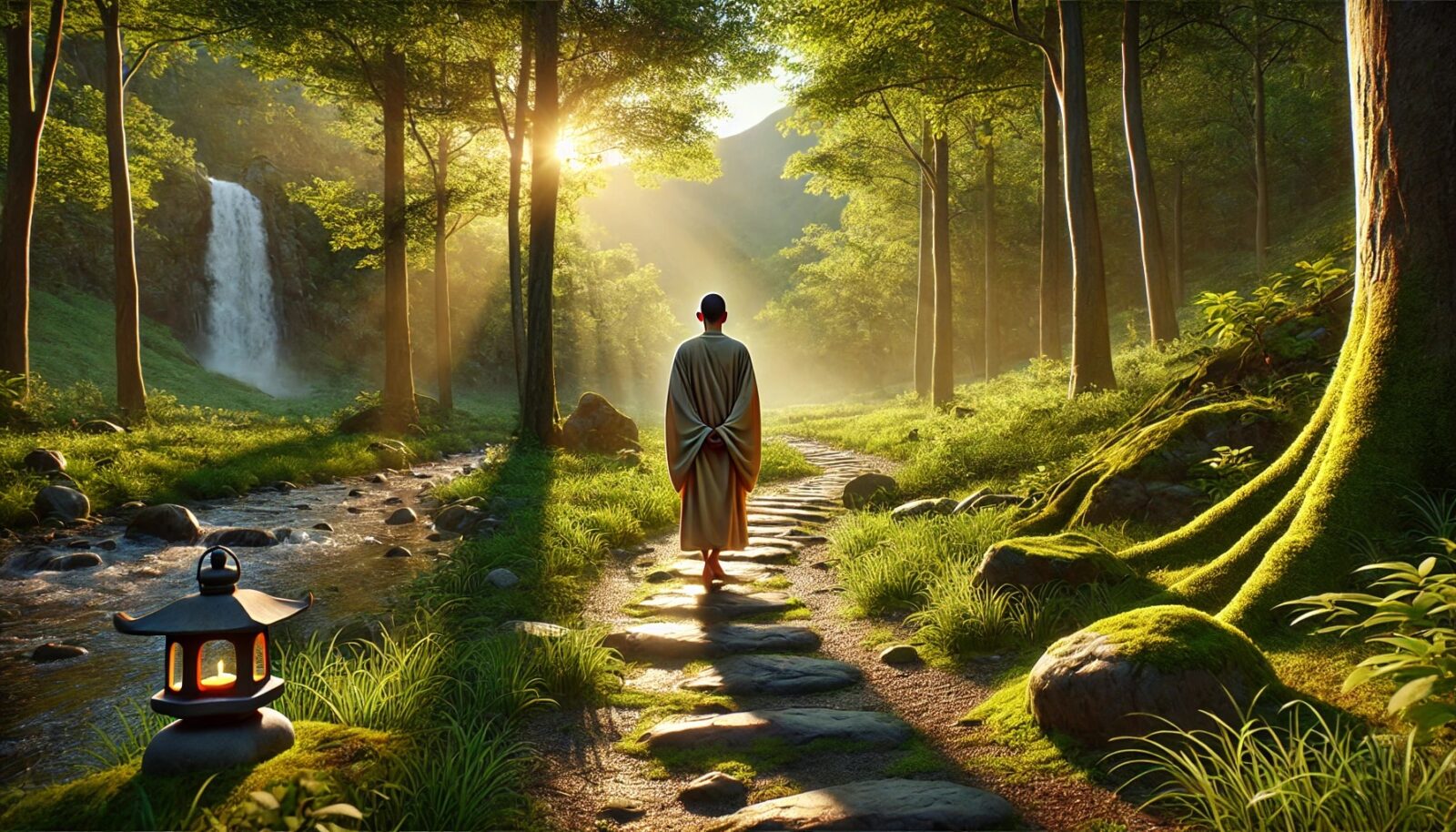
行禅,是佛法中一种以行走为载体的身心训练方法,其核心不在于移动本身,而在于对当下经验的持续觉察。与坐禅相比,行禅并不改变修行的目标,仅在形式上有所差异,其本质仍是对身心现象的如实观察与理解。
从结构上看,行禅的基本要素包括身体动作、感知过程与心识活动三个层面。身体层面表现为步伐的移动与姿势的变化;感知层面体现为对触觉、平衡与空间关系的觉知;心识层面则涉及对念头、情绪与反应的观察。三者并非分离,而是在同一经验中同时发生。
在方法上,行禅通常以缓慢、稳定的步行为基础。修行者将注意力放在脚步的起、移、落等具体过程上,而非目的地或路径本身。每一步的动作被细分为多个阶段,例如抬脚、前移、落地,通过对这些阶段的连续觉知,使注意力从散乱状态转向稳定。
进一步而言,行禅并非仅关注动作本身,而是通过动作作为切入点,观察无常、苦与无我的特性。每一步的生起与消失,显示出过程的瞬时性;身体的移动无法被固定或控制,体现出非主宰性;持续的变化则揭示出不稳定性。这种观察并非概念推理,而是直接经验中的识别。
常见误解之一,是将行禅视为放松或休闲的活动。实际上,行禅要求高度的专注与清醒,其目的不是获得舒适感,而是建立持续的正念与正知。若注意力停留在愉悦或放松的感受上,则偏离了修行的核心方向。
另一误解,是认为行禅必须在特定环境中进行。事实上,行禅的关键不在于场所,而在于觉察的连续性。无论是在禅修场地、日常通行路径,甚至在工作环境中,只要能够维持对身体动作与心识变化的观察,均可构成行禅的实践。
在进阶层面,行禅可与其他修行方法形成互补。例如,在长时间坐禅后,通过行禅调整身体状态,同时保持正念不间断;或在日常生活中,将行走转化为修行,使觉察从特定时间延伸至整体生活。这种整合使修行不局限于单一形式,而成为连续过程。
从结果上看,行禅的作用在于稳定注意力、增强觉知的精细度,并逐步削弱对身体与心识的执著。当观察达到一定深度时,修行者能够直接识别经验的生灭过程,从而动摇对“我”的固有认知结构。
因此,行禅的修行方法,并非技巧性的动作训练,而是一种以身体运动为基础的认知重构过程。其核心在于通过持续、精确的觉察,揭示经验的真实结构,并为进一步的智慧发展奠定基础。
Date: 05/22/2027 05/23/2027
Location: Star Ocean Meditation Center
Teacher: Sara
Dharma Knowledge
The Practice Method of Walking Meditation
Walking meditation is a method of training the body and mind in the Dharma, using movement as its primary medium. Its essence does not lie in walking itself, but in the continuous awareness of present-moment experience. Compared to sitting meditation, the objective remains unchanged; only the form differs. Its core remains the direct observation and understanding of mental and physical phenomena.
Structurally, walking meditation consists of three interrelated aspects: bodily movement, sensory perception, and mental activity. The bodily aspect involves the movement of steps and shifts in posture; the sensory aspect includes awareness of touch, balance, and spatial orientation; the mental aspect concerns the observation of thoughts, emotions, and reactions. These are not separate processes but occur simultaneously within a unified experience.
Methodologically, walking meditation is typically practiced through slow and steady movement. The practitioner places attention on specific phases of each step—lifting, moving, and placing the foot—rather than on the destination or path. By dividing each step into distinct stages and maintaining continuous awareness, attention is stabilized and withdrawn from distraction.
Beyond mere movement, walking meditation serves as a basis for observing the characteristics of impermanence, unsatisfactoriness, and non-self. Each step arises and passes away, demonstrating momentariness; the movement of the body cannot be fully controlled, revealing non-mastery; the constant flux indicates instability. This observation is not conceptual but directly experiential.
A common misunderstanding is to treat walking meditation as a form of relaxation or leisure. In fact, it requires a high degree of clarity and sustained attention. Its purpose is not to generate comfort, but to cultivate continuous mindfulness and clear comprehension. Fixation on pleasant sensations deviates from its intended function.
Another misunderstanding is that walking meditation must be confined to specific environments. In reality, its effectiveness depends not on location but on continuity of awareness. Whether in a meditation setting, daily pathways, or work environments, as long as one maintains observation of bodily movement and mental processes, walking meditation is present.
At a more advanced level, walking meditation complements other practices. It can be used after prolonged sitting meditation to adjust the body while maintaining mindfulness, or integrated into daily life so that awareness extends beyond formal practice periods. This integration transforms practice into a continuous process rather than an isolated activity.
In terms of outcome, walking meditation stabilizes attention, refines perceptual clarity, and gradually reduces attachment to bodily and mental phenomena. With sufficient depth, the practitioner directly perceives the arising and passing of experience, thereby weakening the constructed sense of self.
Thus, the method of walking meditation is not merely a technical training of movement, but a process of cognitive restructuring grounded in bodily activity. Its essence lies in sustained and precise awareness, revealing the true structure of experience and supporting the development of insight.