时间:05/24/2025 05/25/2025
地点:星海禅修中心
主讲:Otto Huang
佛法修行
善于说法的优陀夷
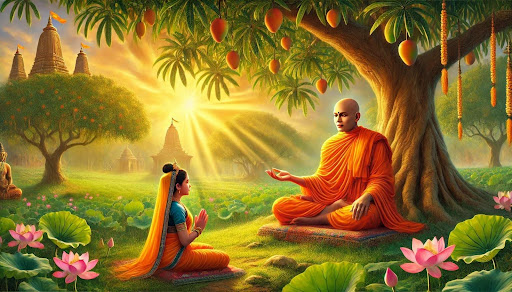
有一次,尊者优陀夷在憍萨罗国游化,来到名叫「拘盘荼」的村落,住在一个属于毘纽迦旃延婆罗门家族的芒果园中。
这天,一群跟随着毘纽迦旃延女婆罗门学习的年轻人,来到芒果园中打柴,看到正坐在树下的尊者优陀夷容貌非凡,散发着解脱者的气度,就过去礼拜问讯,请求说法。
尊者优陀夷为这群年轻人说了种种法,并对他们多所勉励,说得这群年轻人法喜充满,赶紧回去向他们的老师女婆罗门禀报:
「老师!芒果园中来了一位很会说法的沙门,名叫优陀夷。」
「这样啊!那帮我请他明天来家里吃饭,请他接受我的供养。」
「好啊!老师。」
这群年轻人又回芒果园去邀请了尊者优陀夷,而尊者也同意了邀请。
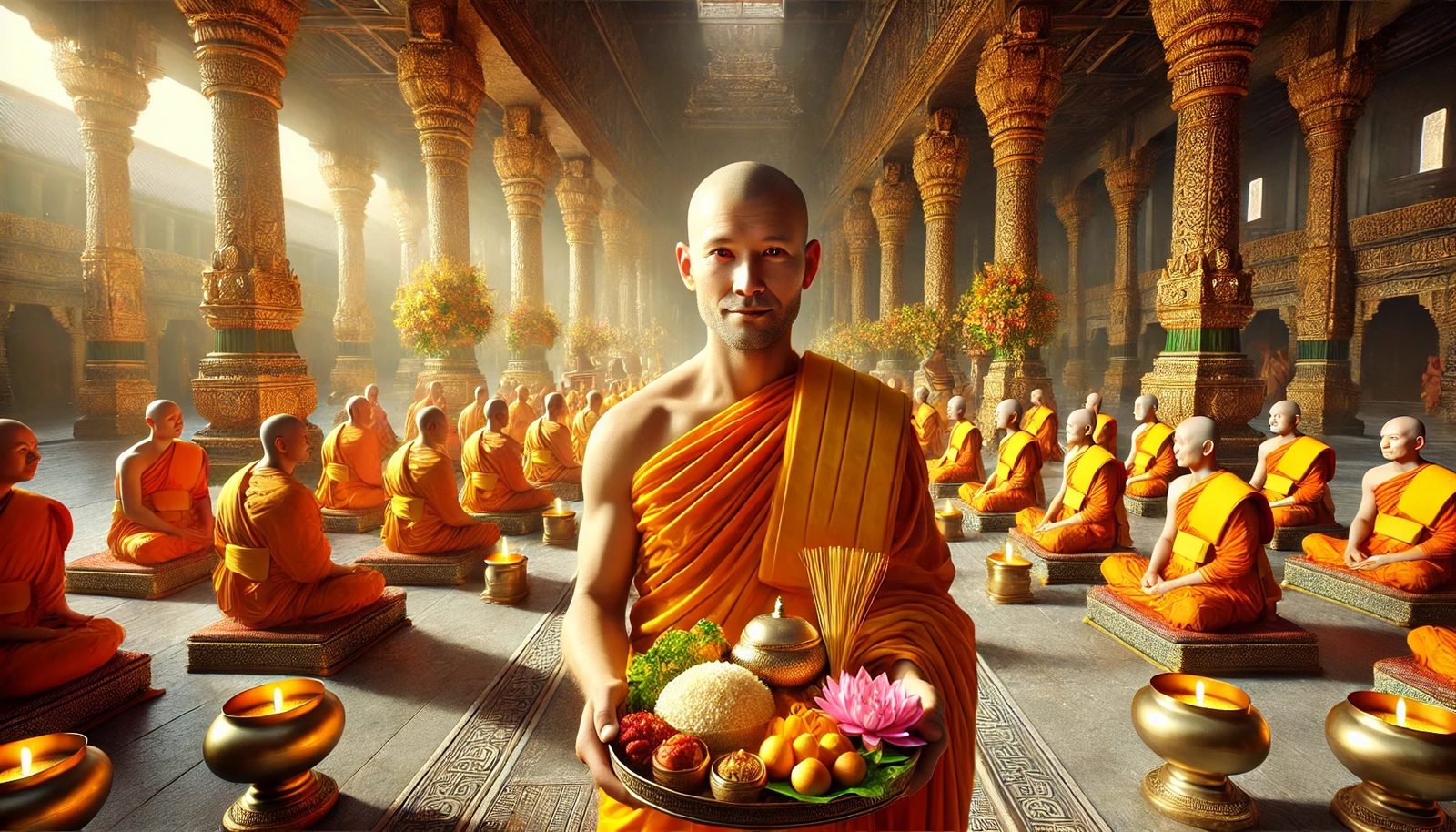
第二天,尊者优陀夷应邀来到女婆罗门老师的住处,接受了许多美食的供养。当尊者优陀夷用餐完毕后,这位女婆罗门老师穿着华贵的鞋子,包着头巾,坐在高座上,显得有些骄慢地向尊者优陀夷说:
「我有些问题想请教你,可以为我解说吗?」
「姊妹!今天不是时候,改天吧。」
第二天,那群年轻的学生们,又到芒果园去听尊者优陀夷说法了,同样地法喜充满回来,而尊者优陀夷也同样地应邀接受供养,然后什么也没说就走了。
第三天的情形也一样,一连三天,尊者优陀夷都是吃过饭就走,没响应女婆罗门的问题,也没说法。
当第四天,年轻学生们又向他们的老师报告时,女婆罗门不耐烦地说:
「年轻人!你们这么赞叹沙门优陀夷,可是一连三天来,我每次请他说法,他都推托不说!」
「老师!尊者优陀夷很珍重法,而这三天来,每次你都穿着华贵的鞋,包着头巾,不恭敬地坐在高座上,人家怎么会说呢?」
「如果是这样,那再帮我邀请一次吧!」
这一次,女婆罗门改坐在低座上,诚敬地问尊者优陀夷:
「大德!有沙门、婆罗门说:苦、乐是由其自体所生的『自作』,有说是苦、乐以外体性所生的『他作』,有说不是自体,也不是其它体性所生的『非自非他作』,尊者!您怎么说呢?」
「姊妹!体证真实的解脱阿罗汉都不这样说,因为苦、乐是由别的原因生成的。」
「那怎么说呢?」
「阿罗汉说,从其因缘而生起种种的苦、乐。
让我来问你,请依你的意思照实回答。
有眼吗?」
「有。」
「有眼可见的色吗?」
「有。」
「有视觉的辨别、认识,然后由认识等因缘,而生起苦、乐、不苦不乐的感受吗?」
「嗯,的确是这样子的,尊者优陀夷!」
「有由于耳、鼻、舌、身、意等认识因缘,而生苦、乐、不苦不乐的感受吗?」
「有的,尊者优陀夷!」
「这就是阿罗汉所说的:从其因缘而生起种种的苦、乐。」
「尊者优陀夷!这就是阿罗汉所说的从其因缘而生起种种的苦、乐吗?」女婆罗门再次认真地确认道。
「正是,姊妹!」尊者优陀夷肯定地答。
「那阿罗汉是如何说灭除从因缘而生的苦、乐、不苦不乐的呢?」
「让我再问你:如果能灭除眼而永不再生起,还会有由视觉认识等因缘,而生起苦、乐、不苦不乐的感受吗?」
「不会了,沙门!」
「像这样,能灭除耳、鼻、舌、身、意,而且永不再生起,还会有由这些感觉认识因缘,而生起苦、乐、不苦不乐的感受吗?」
「不会了,沙门!」
「这就是阿罗汉所说的:因缘生起的苦、乐、不苦不乐灭除了。」
说到这里,女婆罗门当下远尘离垢,得法眼清净,见法、得法;知法、入法,不再疑惑,不必再靠别人而领悟佛法,在正法中无所畏惧,就从座位起来,合掌对尊者优陀夷说:
「我现在已经坚定而不退失地领悟了正法,从现在起,皈依佛、皈依法、皈依僧伽,终身皈依三宝。」
Date: 05/24/2025 05/25/2025
Location: Star Ocean Meditation Center
Teacher: Otto Huang
Dharma Talk
Uttara the Skillful Preacher
Once, the Venerable Uttara was wandering in the country of Kosala. He arrived at a village called Kūpaṇḍa and took residence in a mango grove that belonged to the Brāhmaṇa clan of Viṇuka Jaṭāyana.
At that time, a group of youths who were disciples of a female Brāhmaṇa teacher of the Viṇuka Jaṭāyana lineage came to the mango grove to gather firewood. There they beheld the Venerable Uttara seated beneath a tree—his countenance most serene, radiating the deportment of one who is liberated.
With reverence, they approached him, paid homage, and inquired after his well-being. They then requested him to expound the Dhamma.
The Venerable Uttara discoursed upon various aspects of the Dhamma, exhorting them earnestly. Hearing this, those youths were filled with rapture in the Dhamma. They swiftly returned to their teacher and reported:
“Teacher, in the mango grove resides a wandering ascetic named Uttara, one who speaks the Dhamma with great eloquence.”
The teacher replied, “Is that so? Then, I ask you, invite him to come to my house tomorrow to partake of a meal and to accept my offering.”
“Yes, teacher,” the youths replied.
They returned to the mango grove and extended the invitation to the Venerable Uttara, who consented.
On the following day, the Venerable Uttara went to the residence of the female Brāhmaṇa teacher. There, he received a variety of exquisite foods as offerings. After partaking of the meal, the teacher, adorned with fine sandals and a turban upon her head, seated herself upon a lofty seat. With an air of pride, she said to the Venerable:
“I have a few questions to ask you. Might you be willing to expound them to me?”
“Sister,” said the Venerable, “today is not the right time. Let it be on another day.”
The next day, the group of youths once again went to the mango grove to listen to the Dhamma. Their hearts again rejoiced in the teachings. The Venerable again accepted offerings from the female teacher, yet without saying a word, he departed.
On the third day, the same occurred. For three successive days, the Venerable Uttara, after receiving offerings, took his leave without responding to the woman’s questions nor delivering any discourse.
On the fourth day, when the students once again reported this to their teacher, she said, with growing impatience:
“You praise this ascetic Uttara so highly, but for three days now, whenever I request him to speak the Dhamma, he declines!”
“Teacher,” said the youths, “the Venerable Uttara deeply cherishes the Dhamma. Yet for three days, you sat in fine sandals, your head covered, seated upon a high seat. How could he possibly preach under such circumstances?”
“If that is so,” said the teacher, “then go and invite him once more.”
This time, the female Brāhmaṇa removed her sandals, uncovered her head, and sat upon a low seat. With humility, she addressed the Venerable Uttara:
“Venerable Sir, there are ascetics and Brāhmaṇas who declare that pain and pleasure arise from self-creation (attakara), others say they are created by another (parakara), and still others claim they arise from neither self nor other (ahetuka). Venerable Sir, what is your view?”
“Sister,” replied the Venerable, “the Arahants, those who have realized true liberation, do not assert thus. For pain and pleasure arise from specific causes and conditions.”
“How is that so?” she asked.
The Venerable said: “The Arahants declare: It is through causes and conditions that various forms of pain and pleasure arise.
Let me ask you, and please answer according to your understanding.
Do you have eyes?”
“Yes, I do.”
“Are there forms that are visible to the eye?”
“Yes.”
“Is there discernment of visual objects? And from that discernment, through causes and conditions, arise feelings of pain, pleasure, or neither?”
“Yes, Venerable Uttara, that is truly so.”
“Do feelings of pain, pleasure, and neutrality also arise through discernment via the ear, the nose, the tongue, the body, and the mind?”
“Yes, Venerable Uttara.”
“This, sister, is what the Arahants speak of as the arising of pain and pleasure through causes and conditions.”
“Venerable Uttara, is this truly what the Arahants declare: that various forms of pain and pleasure arise through causes and conditions?” she asked again, with utmost sincerity.
“Indeed so, sister,” affirmed the Venerable.
“How then, Venerable, do the Arahants speak of the cessation of these conditioned feelings of pain, pleasure, and neutrality?”
“Let me ask you again: If the eye were to cease and not arise again, would there still be those feelings—of pain, pleasure, or neither—arising from visual discernment and its conditions?”
“No, Venerable Sir, there would not.”
“In the same way, if the ear, nose, tongue, body, and mind were to cease and not arise again, would there still be those feelings arising from contact and recognition through them?”
“No, Venerable Sir.”
“Thus, sister, the Arahants speak of the cessation of pain, pleasure, and neutrality which arise from causes and conditions.”
At that moment, the female Brāhmaṇa became free from the dust and defilements, her Dhamma-eye was purified. She saw the Dhamma, realized the Dhamma, understood the Dhamma, and entered into the Dhamma. All doubt was dispelled; she needed no one else as her guide. In the true Dhamma, she stood fearless.
Then she rose from her seat, joined her palms in reverence before the Venerable Uttara and said:“From this day forth, I have realized the true Dhamma, unshakable and irreversible. I take refuge in the Buddha, I take refuge in the Dhamma, I take refuge in the Saṅgha. For the rest of my life, I shall take refuge in the Triple Gem.”