时间:01/16/2027 01/17/2027
地点:星海禅修中心
主讲:净诚
佛法修行
四妻子喻
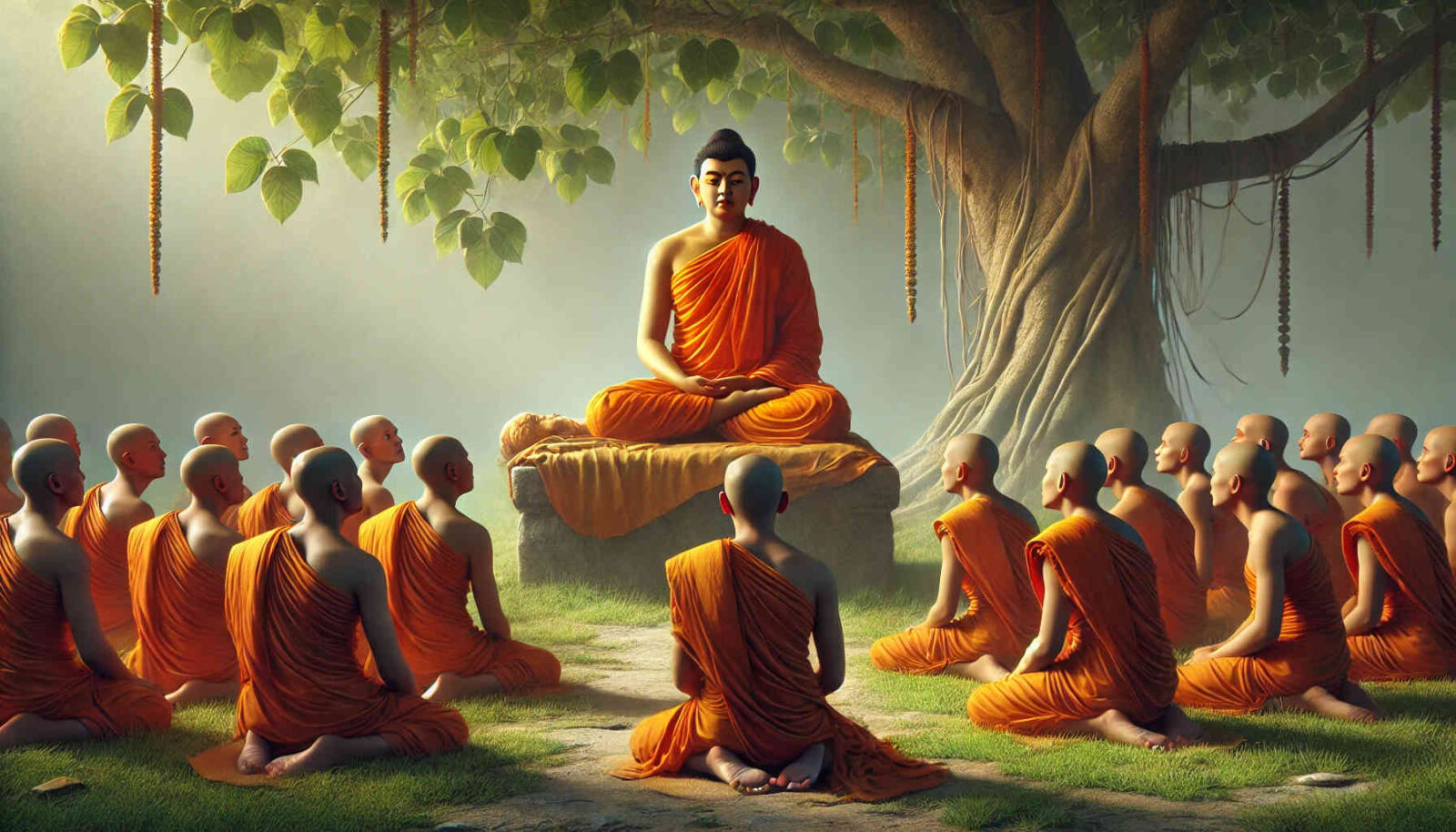
昔日,佛在舍卫国只树给孤独园弘化。佛告诉比丘们:「人有四种因缘,爱着的程度有轻有重,但一旦起了贪爱心,即远离解脱道。」
佛接着举了一个譬喻:「譬如有一男子拥有四位妻子,第一位妻子最受男子宠爱与重视,行住坐卧都形影不离,举凡盥洗沐浴、装扮所需,乃至有美味的饮食、种种五欲之乐,都会优先给她享用;天寒、酷暑、饥饿口渴等大小事,总是小心呵护、用心照护着,一切都随顺她的心意,两人从未有过争吵。
第二位妻子,则是起居言谈常陪伴在左右。男子得到这位妻子,便很欢喜;若得不到,便心生忧愁,乃至因忧愁而衰老、生病,有时为了得到她,甚至和人发生争讼。
第三位妻子,和男子偶尔聚在一起,会互相问候、关怀生活中的甘苦,但若遭遇穷困,便彼此感到厌烦,互相讨厌,可是疏离一阵子后,又会开始想念对方。
第四位妻子,则是任由男子使唤,忙碌地操持着各种家务,再困难的事都能应对,但男子对她则不闻不问,疏于关心、照护,全然不放在心中。
一天,拥有四位妻子的男子即将死去。想到自己即将离开人世,男子便唤来第一位妻子,对她说道:『妳应该随我一同离去。』第一位妻子回答:『我不愿相随。』男子一听,说道:『我最宠爱妳,大大小小的事都顺着妳,提供生活所需,爱护妳、照护妳,让妳称心如意,为什么不随我一起离开?』妻子说道:『你虽然宠爱重视我,但我终究无法随你一起离去。』听闻妻子如此说,男子只好含恨地走开。
男子接着唤来第二位妻子,说道:『妳应当随我一起离开。』第二位妻子回答:『你最宠爱的第一位妻子都不愿相随,我也不会跟随你离开的。』听到她的拒绝,男子说道:『想当初我在追求妳时,历经的辛苦,实在难以言喻,遭遇严寒、酷暑、饥饿、口渴,又经历了水灾、火灾、官司、盗贼,且和人争夺,费尽心思才得到妳,为什么不跟我一起走?』第二位妻子回答:『是你自己贪图利益,强要追求我,我并没要求你这样做,为何要对我说当初的辛劳困苦?』男子听后,只好含恨走开。
男子又唤来第三位妻子,说道:『妳应该随我一起离开。』第三位妻子回答:『我受过你的恩惠,所以会送你到城外,但终究无法随你远行到你将去的地方。』男子只好再度含恨离开。
最后,男子找来第四位妻子商量:『我将离开此地,妳就随我一同离去。』第四位妻子说道:『我离开父母来到你家,就是要让你使唤,生死苦乐都会相随。』男子无法得到自己所喜欢的三个妻子自愿相随,只有貌丑,自己不甚喜欢的第四位妻子愿意随他一起离去。」
佛接着说道:「前面所举的譬喻,男子就如同是人的神识,第一位妻子就如同是人的身体,人对自己身体的爱惜呵护,远远超过男子对第一位妻子的爱护。当人命尽时,神识会随着人生前所做的罪福之业离去,身体则僵直地倒卧在地,无法跟随。比丘们!若不能随顺四种正行,便无法得到解脱。是哪四种?一、知苦,二、断集,三、慕灭,四、修道。要趋向解脱之道,当行八正道,并体证四圣谛。」
佛继续解说:「第二位妻子是譬喻人的财产,得到了很欢喜,得不到就忧愁。当命尽时,财产会留在世间,并不会跟随自己离开。第三位妻子,是譬喻父、母、妻、子、兄弟等亲人,以及朋友、奴婢。人活着的时候,和亲戚朋友相亲相爱,互相思念,一旦命终,亲友也只是啼哭着送至城外坟墓间,然后便舍弃亡者,各自回家。对亡者的思念不超过十天,便又如往昔一样聚会吃喝,把亡者忘得一干二净。第四位妻子,是譬喻人的心念。天下少有人能爱惜、守护自己的心念,一般都是纵心恣意,任凭滋长贪心、瞋心、痴心,不信正道,如此死后当堕三恶道,或堕入地狱,或投生为畜生,或为饿鬼,此皆是由于放纵心念所导致的果报。」
佛告诉比丘们:「修道者应当端正自己的心念,去除痴心,不造作愚痴行,止息恶念、不行恶行;不造作恶行,就不会招来苦果的祸殃;没有苦果的祸殃,就不会来三界受生;不受生,则不会有老、病、死;无生老病死,便得出离生死轮回,得入涅槃。」
闻佛说法,比丘们皆心生欢喜,信受奉行。
Date: 01/16/2027 01/17/2027
Location: Star Ocean Meditation Center
Teacher: Jason
Dharma Talk
The Parable of the Four Wives
Once, the Buddha was teaching at Jetavana in Śrāvastī. He told the bhikṣus, “People have four kinds of conditions of attachment, varying in degree; yet once craving arises, one departs from the path of liberation.”
The Buddha then gave a parable: “Suppose a man has four wives. The first wife is the most beloved and cherished. Whether walking, standing, sitting, or lying down, he is never apart from her. All matters—washing, adornment, fine food, and pleasures of the five desires—are first given to her. In cold, heat, hunger, or thirst, he carefully protects and attends to her, always complying with her wishes, and they never quarrel.
The second wife constantly accompanies him in daily life and conversation. When he gains her, he rejoices; when he does not, he becomes sorrowful, even to the point of aging and illness. At times, in order to obtain her, he even disputes with others.
The third wife meets him occasionally, exchanging greetings and sharing life’s joys and sorrows. Yet in times of poverty, they grow weary and resentful of each other. After separation, however, they begin to miss one another again.
The fourth wife is left to serve him, busily managing all household affairs. No matter how difficult the task, she handles it, yet the man neglects and disregards her, giving her no care or attention.
One day, the man with four wives is about to die. Knowing he must leave the world, he calls the first wife and says, ‘You should come with me.’ She replies, ‘I will not follow you.’ The man says, ‘I have loved and cared for you above all, providing everything you need—why will you not come with me?’ She answers, ‘Though you cherished me, I cannot go with you.’ Hearing this, the man departs in sorrow.
He then calls the second wife, saying, ‘You should come with me.’ She replies, ‘If even your most beloved first wife will not follow, neither will I.’ The man recounts the hardships he endured to obtain her, but she replies that it was his own greed and effort, not her request. He leaves again in sorrow.
Next, he calls the third wife, who says, ‘I will accompany you only as far as the city outskirts, but cannot go further.’ He leaves once more in sorrow.
Finally, he calls the fourth wife, who says, ‘I left my parents to come to your household, to serve you. In life and death, in suffering and joy, I will follow you.’ Thus, the man cannot obtain the willing companionship of the three wives he favored, but only the fourth, whom he did not value, is willing to go with him.”
The Buddha then explained: “In this parable, the man represents the consciousness. The first wife represents the body, which people cherish even more than the man cherishes his first wife. At death, consciousness departs according to one’s karma, while the body lies stiff and cannot follow. Bhikṣus, without practicing the four right efforts, liberation cannot be attained: to know suffering, to cut off its origin, to aspire to cessation, and to cultivate the path. One must follow the Noble Eightfold Path and realize the Four Noble Truths.”
The Buddha further explained: “The second wife represents wealth, which brings joy when gained and sorrow when lost; at death, it remains behind. The third wife represents relatives and companions, who accompany one in life but only mourn briefly after death before returning to their own lives. The fourth wife represents the mind. Few people cherish and guard their mind; instead, they indulge it, allowing greed, anger, and ignorance to grow. Thus, after death, they fall into the three evil paths—hell, animal, or hungry ghost—due to the consequences of unrestrained mind.”
The Buddha told the bhikṣus: “Practitioners should rectify their mind, remove ignorance, refrain from unwholesome actions, and cease evil thoughts. Without creating evil, one avoids suffering; without suffering, one is not reborn; without rebirth, there is no aging, sickness, or death. Free from birth, aging, sickness, and death, one transcends saṃsāra and enters nirvāṇa.”
Hearing the Buddha’s teaching, the bhikṣus rejoiced and faithfully practiced it.