时间:09/04/2027 09/05/2027
地点:星海禅修中心
主讲:净诚
佛法修行
均提沙弥
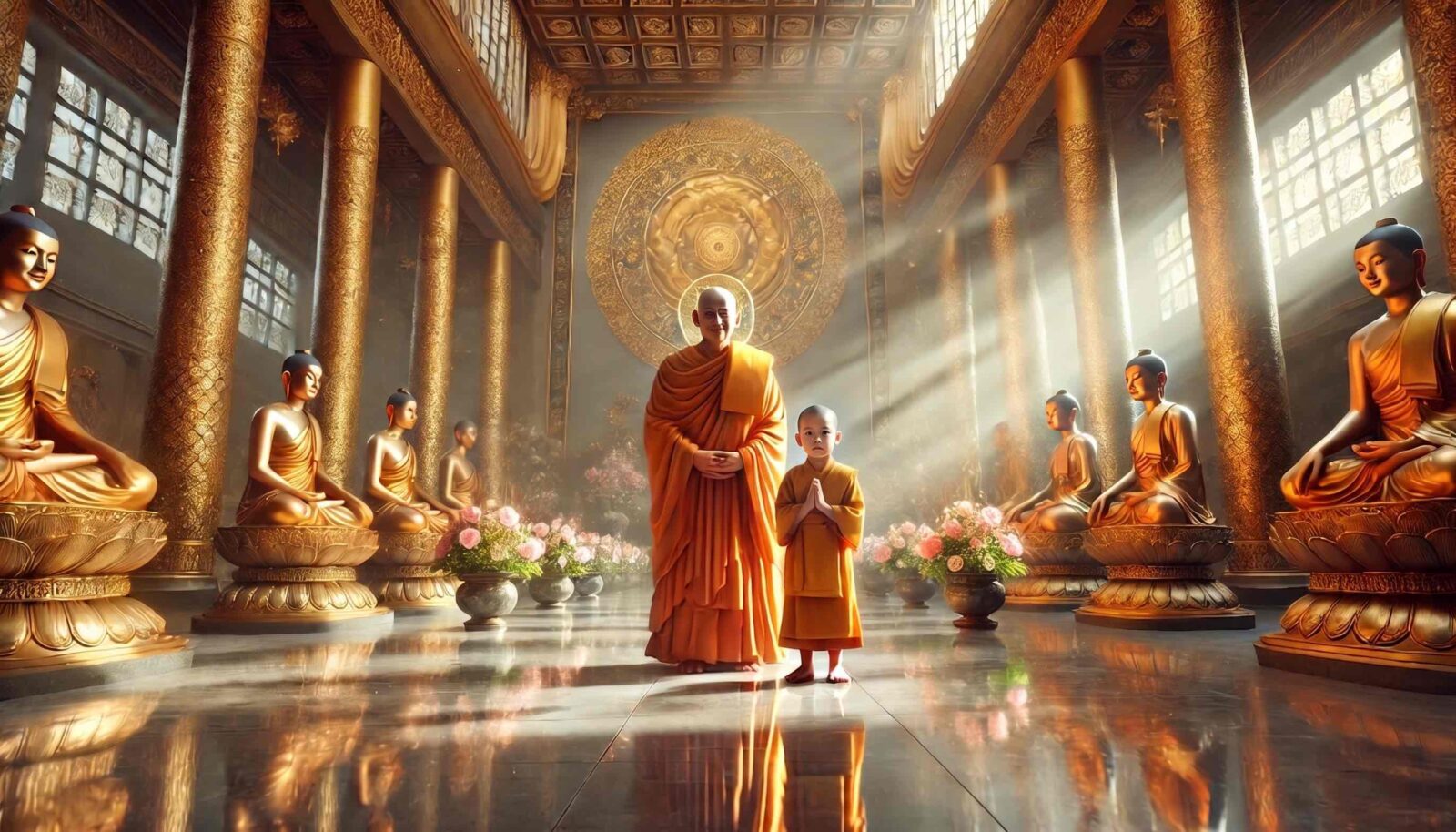
昔日,有一群商人带着一只狗到其他国家做生意,行至半途,商人停下来稍作歇息。狗儿趁着商人不留意时,便将放在一旁的肉给刁去吃了。商人发现后,生气地拿起棍棒将狗儿的腿打断, 并将它丢弃在路旁。此时,舍利弗尊者以天眼看见断了腿且饥饿不堪的狗儿,便着衣持钵入城乞食, 然后以神通力飞至狗儿的身边,将乞得的食物给它吃。狗儿欢喜地用完食物,舍利弗尊者便为其开示说法。狗儿命终后,则投生至舍卫国的一户婆罗门家。
一天,这位婆罗门看见舍利弗尊者独自入城乞食, 便上前询问:「尊者没有沙弥随行吗?」尊者回答:「我没有沙弥随行,听说您有一子,可否随我出家?」婆罗门说:「我有一幼儿,名叫均提,待其年纪稍长再让他跟随尊者出家修行。」等到均提七岁时,婆罗门便带他到祇洹精舍出家修行。均提沙弥不断地薰修佛法,精进修行,最后心开意解,证得阿罗汉果。
均提沙弥思惟今生能得遇圣者、悟道证果,必是过去的因缘,便以神通力观见自己过去世为一只饿狗,蒙舍利弗尊者慈悲救助,今日方能为人并获圣果。于是均提沙弥发愿:「我蒙尊者之恩,得以脱离诸苦,今生应当终身随侍于尊者。」便终身求作沙弥而不受大戒。
当时,阿难尊者见此因缘,请示佛陀:「不知此人曾造何种恶行,受此狗身?又曾造何等善根,蒙尊者救助而得解脱?」佛陀告诉阿难:「迦叶佛时,有一群比丘聚集一处修行。当时僧团中有一年少比丘音声清雅且善于梵呗,人皆乐听;另一位年长比丘音声浊钝,不善梵呗,但因功德具足,已得阿罗汉果。这名年少比丘自恃好声,便嘲笑老比丘的声音犹如狗吠。老比丘心知年少比丘种下恶果,便慈悲地对年少比丘说:『我已得证阿罗汉果,功德悉备。』年少比丘自知罪行,心惊毛竖,惶怖自责,便赶紧向老比丘忏悔自己的罪过。」
佛陀告诉大众:「当时的年少比丘就是今日的均提沙弥,由于恶言果报,五百世常受狗身;也因出家持戒清净的功德,得以见佛而后悟道证果。」诸大比丘们闻佛所说,欢喜信受,顶戴奉行。
Date: 09/04/2027 09/05/2027
Location: Star Ocean Meditation Center
Teacher: Jason
Dharma Talk
The Novice Kunti
In the past, a group of merchants traveled with a dog to conduct business in another country. Midway, they stopped to rest. While they were inattentive, the dog stole and ate some meat placed aside. When the merchants discovered this, they became angry, beat the dog’s leg with a stick until it broke, and abandoned it by the roadside. At that time, the Venerable Śāriputra, with his divine eye, saw the dog suffering from hunger and a broken leg. He put on his robe, took his alms bowl, entered the city to beg for food, and then used his spiritual power to fly to the dog and fed it with the alms he had obtained. The dog joyfully ate the food, and Śāriputra then taught it the Dharma. After the dog died, it was reborn in a Brahmin household in Śrāvastī.
One day, this Brahmin saw Śāriputra entering the city alone for alms and asked, “Venerable sir, do you not have a novice accompanying you?” Śāriputra replied, “I do not have a novice. I hear that you have a son; could he follow me to leave the household life?” The Brahmin said, “I have a young child named Kunti. When he is older, I will let him follow you to become a monastic.” When Kunti reached the age of seven, the Brahmin brought him to Jetavana Monastery to ordain. The novice Kunti diligently cultivated the Buddha-Dharma, practiced with effort, and eventually attained arhatship.
Reflecting that in this life he encountered a noble one and attained realization due to past causes, Kunti used his spiritual power to see that in a previous life he had been a hungry dog, and through the compassionate aid of Śāriputra he was now able to be reborn as a human and attain the noble fruit. Thus, he made a vow: “Through the kindness of the Venerable, I have been freed from suffering. In this life, I will serve him for my entire lifetime.” Therefore, he remained a novice for life and did not take full ordination.
At that time, Venerable Ānanda, seeing these causes and conditions, asked the Buddha, “What evil actions caused this person to be born as a dog? And what good roots enabled him to receive the Venerable’s help and attain liberation?” The Buddha told Ānanda, “In the time of Buddha Kāśyapa, a group of bhikṣus practiced together. Among them, there was a young bhikṣu with a clear and pleasant voice skilled in chanting, whom people enjoyed listening to. There was also an elder bhikṣu with a coarse voice, unskilled in chanting, but who had already attained arhatship. The young bhikṣu, proud of his voice, mocked the elder, saying his voice was like a dog’s bark. The elder, knowing the young one had planted a bad cause, compassionately said, ‘I have attained arhatship; my virtues are complete.’ Realizing his fault, the young bhikṣu was filled with fear and remorse, and hastened to repent before the elder.”
The Buddha told the assembly, “That young bhikṣu is now the novice Kunti. Due to the karmic retribution of harsh speech, he was born as a dog for five hundred lifetimes. Yet, because of the merit of leaving the household life and upholding pure precepts, he was able to encounter the Buddha and attain realization.” Hearing the Buddha’s words, the bhikṣus rejoiced, accepted them with faith, and respectfully practiced accordingly.