时间:07/19/2025 07/20/2025
地点:星海禅修中心
主讲:Otto Huang
佛法修行
智能第一的舍利弗
舍利弗是佛陀的十大弟子之一,每当佛陀讲解经典时,舍利弗都随侍在佛陀的身边。
舍利弗又叫舍利弗多罗。他母亲的名字叫做舍利,而弗多罗是儿子的意思,舍利弗多罗就是舍利之子。
舍利弗原来信奉别的教派,手下有一百名弟子。修行了一阵子之后,他忽然觉得茫然无所皈依,找不到人生的真义。正在仿徨苦闷的时候,巧遇佛陀的弟子阿说示比丘,阿说示是最初皈依佛陀的五比丘之一,他有庄严的态度,威仪的行止,舍利弗一见,心中非常惊奇,并向阿说示比丘请法。
舍利弗从阿说示的口中,听到佛陀及其教法,像天崩地裂一般,心中对宇宙人生积聚的疑云,也一扫而空,并且和阿说示比丘约定,一定要去拜访佛陀。
舍利弗回到自己的住处,又把阿说示口中的佛陀和教法转述给好朋友目犍连,不单是讲话的舍利弗自己边说边感动,就连听话的目犍连,都不禁感动得涔然泪下!
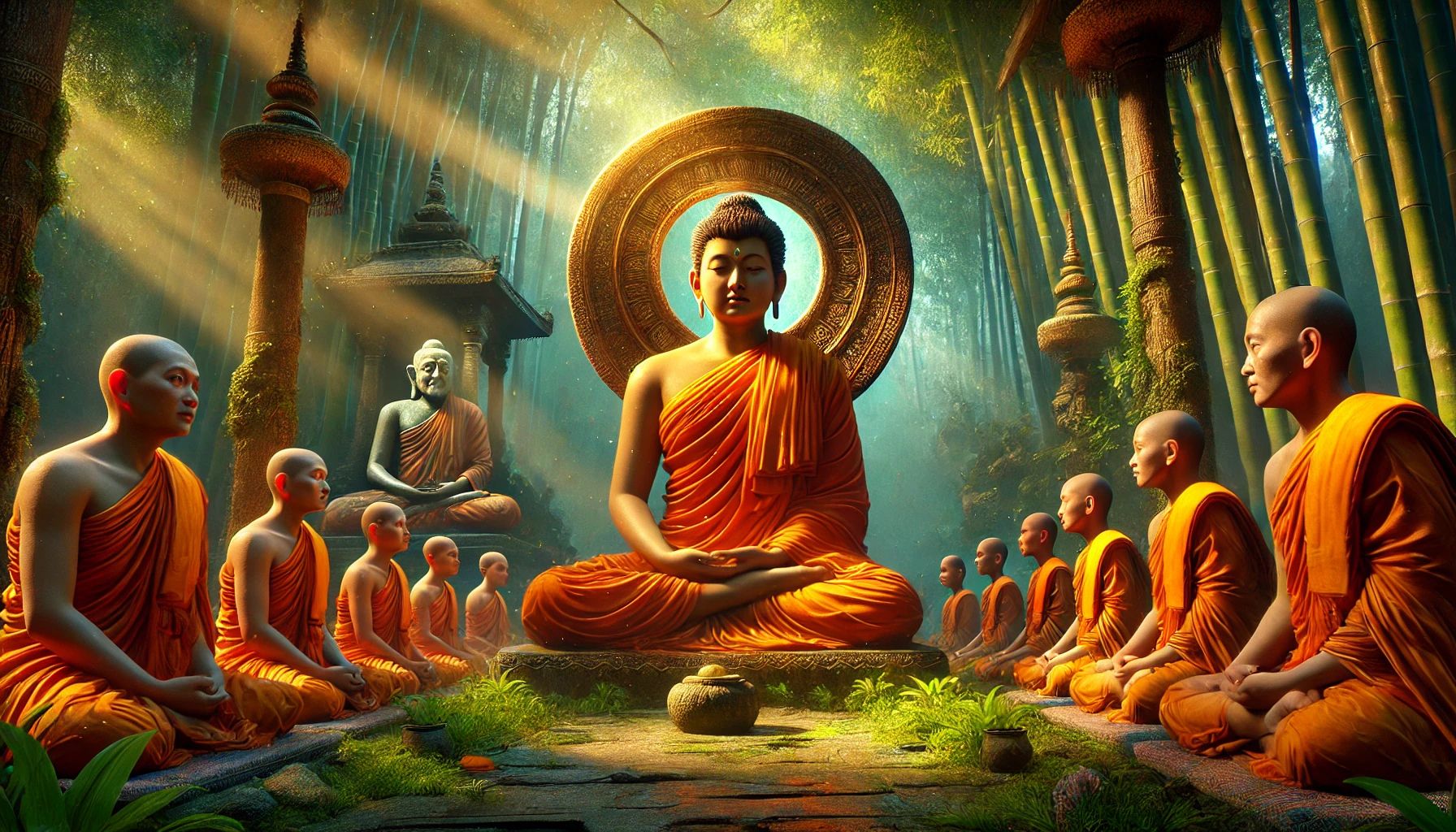
第二天,舍利弗和目犍连带领二百弟子,一同到竹林精舍皈投在佛陀座下,他们觉得自己遇到了真正的老师。
《阿含经》中说:「智能无穷,诀了诸疑,所谓舍利弗比丘是。」舍利弗在所有弟子中有智能第一的美誉。
《大智度论》则是把舍利弗比拟成「世世心坚不可动」的一条毒蛇。据佛陀说,以前有一个国王被毒蛇咬到了,生命垂危,四处求医诊治。医生认为要想解毒,只有让这条毒蛇亲自为国王的伤口吸毒,于是在地上设了一个火盆,里头烧着熊熊烈火,然后把这条蛇捉来,叫它吸吮国王的伤口,否则就把它投入火中烧成灰烬。不过毒蛇坚决不肯吸吮伤口,宁愿跳入火中烧死。舍利弗对于自己认定的事绝不反悔,哪怕烈火焚身也丝毫不动摇心志,的确是个意志坚定的人。
关于舍利弗,在经典上还有一则很有名的故事:
舍利弗,本来是一位小乘的阿罗汉,后来,他认为小乘属于自利,发出离心,只求自己了生脱死;而行菩萨道.救人救世,可以解除别人的痛苦。因此他发了大心,要修学菩萨行,利益众生,如果众生有什么苦难和需求,他一定要满足人家的要求。正如佛经说的:「不为自己求安乐,但愿众生得离苦。」他要实践菩萨的这种利他的精神。
舍利弗发了这个大愿,感动了天神。天神是有他心通的,于是他盘算一番,暗中道:「好!舍利弗要做菩萨,我得去试一试他。」
于是这天人就从天上下来,摇身一变,变成一个孝子,在路旁嚎啕大哭。
舍利弗看见他哭得这么伤心,不禁生起了悲悯心,说:「年轻人,你为什么这样悲伤呢?我是个修学菩萨道的人,你有什么困难,不妨跟我说,我一定尽力帮助你。」
「不必说了,你没有办法做到的!」孝子说道。
「你不妨讲一讲嘛!我能够做得到的,一定帮你的忙。」
这年轻人听到舍利弗说得如此诚恳,心中又是一阵抽痛,最后才说:「唉!我妈妈得了绝症,看过了医生,但这医生开的药方好奇怪,什么药引子他不好放,却说需要人的眼睛,而且又是修行人的眼睛,我想:谁不爱惜自己的眼睛?谁愿意施舍给我呢?这件事怎么办得到呢?我只有眼睁睁地看着妈妈死掉,怎不叫我感到伤心痛苦呢?」
「你可以想办法啊!这件事情虽然很困难,但是世尊说讲过:『我们要成佛,必须经过三大阿僧祇劫的修持,要能够舍弃我们的头目髓脑。』你既然需要一只眼睛,我就布施给你吧!」
说着,舍利弗下了决心,马上把自己的左眼挖下,送上去说:「年轻的朋友,这眼睛给你,带回去给你母亲治病吧!」
「别急啊!我话还没有讲清楚哩!你都不要急嘛!医生说我妈妈需要的是右眼,不是左边的那一只,你搞错了!」
啊!听了这话,舍利弗的心顿时冷了半截,但随着念头一转,我既然发了菩萨心,要行菩萨道,好吧!救人救到底,索性把右边的眼睛再挖下来给他。
为了要做菩萨,舍利弗就忍痛再牺牲右眼,送给年轻人,自己却成为瞎子。
这年轻人接过眼睛,马上用鼻子嗅了一嗅,说:「哎呀!这眼睛怎么腥味这样重呀!」
又说道:「人家说一个真正有修行的人,他的眼睛一定是很香的。我闻到你的眼睛,真是腥得要命,我妈妈怎么可以吃呢?」
于是,他把眼睛往地上一摔,接着又用脚把它踩碎。
舍利弗虽然已经是个瞎子,看不到他的动作,却可以听得到他的举动,心也被他踏碎了,非常感叹地说:「众生真是难度啊!要做菩萨,可没有那么简单,我的两只眼睛都施舍了,他居然还嫌弃,说是腥味重。啊!我不当菩萨了,还是做小乘人,自己了生脱死算啦!」
这时候,天人现出原形,说:「啊!舍利弗尊者,你真是太伟大了!你真正是为了救众生啊。你有这一份慈悲心,佛菩萨和龙天护法,会保佑你的,你的眼睛一定可以复明。」
就这样,舍利弗的双眼顿时就复明了,又继续地发大心,行菩萨道。
在佛陀十大弟子中,舍利弗有着「智能第一」的美誉,因为舍利弗在理解佛法教义的深度与广度,以及在教导解脱道的能力上,仅次于佛陀。虽然在佛教经典中并没有关于舍利弗的完整传记,但我们仍然可以从分散在各经典和论典中,所提到的有关舍利弗的种种事迹,而对舍利弗有所了解。
因为舍利弗的生活与佛陀及教团的生活密切关连,他扮演着很重要的角色。此外,在许多场合里,舍利弗就是扮演着领导的角色,他是位能循循善诱的教师和优良的楷范,也是位仁慈与体贴他人的朋友,是僧团的守护者,更是佛陀教诲的忠实保存者,这些特性为他赢得「佛法护卫」(Dhamma-senapati)的头衔。
舍利弗,有着深邃的智能与高贵的本性,是佛陀的真实弟子。
Date: 07/19/2025 07/20/2025
Location: Star Ocean Meditation Center
Teacher: Otto Huang
Dharma Talk
Śāriputra, Foremost in Wisdom
Śāriputra was one of the ten great disciples of the Blessed One. Whenever the Buddha expounded the Dharma, Śāriputra would always be by his side.
Śāriputra was also known as Śāriputtra. His mother’s name was Śāri, and “puttra” means “son”; thus, Śāriputtra means “the son of Śāri.”
Initially, Śāriputra adhered to another religious sect and was followed by a retinue of one hundred disciples. After a period of cultivation, he felt inwardly lost and directionless, unable to grasp the true meaning of life. While he was in this state of confusion and distress, he happened upon the Venerable Assaji, one of the first five monks to take refuge in the Buddha. Venerable Assaji’s noble demeanor and dignified conduct deeply impressed Śāriputra, who immediately approached and asked him for the Dharma.
Hearing from Assaji the words of the Buddha and his teachings was like thunder breaking the heavens. The doubts that had long clouded Śāriputra’s heart regarding the universe and life were utterly dispelled. He resolved to seek out the Buddha and made a firm agreement with Assaji to visit him together.
Upon returning to his abode, Śāriputra relayed to his close friend Mahāmaudgalyāyana what he had heard from Assaji about the Buddha and his Dharma. As Śāriputra spoke, he himself was moved to the point of tears, and Mahāmaudgalyāyana, too, was profoundly touched and wept.
The next day, Śāriputra and Mahāmaudgalyāyana led two hundred disciples to the Bamboo Grove Monastery and took refuge at the feet of the Buddha. There, they felt they had finally found their true teacher.
The Āgama Sutras state:
“Infinite in wisdom, dispeller of doubt—such is the Bhikkhu Śāriputra.”
Among all the disciples, Śāriputra was known as the foremost in wisdom.
The Mahāprajñāpāramitā Śāstra likens Śāriputra to a venomous snake whose will is unwavering across lifetimes. The Buddha once told of a king who was bitten by a poisonous serpent and lay on the brink of death. Physicians said that the only cure was for the very serpent to suck out the poison from the wound. A blazing fire was prepared, and the snake was told: suck out the venom or be thrown into the flames. The serpent, however, refused to violate its nature, choosing death in fire rather than submission. Just so, Śāriputra, once he had resolved upon a principle, would never turn back—not even if consumed by fire. Truly, he was one of indomitable will.
Another well-known story about Śāriputra appears in the scriptures:
Though Śāriputra had attained the Arhatship of the Hīnayāna path, he later realized that the lesser vehicle served primarily for self-liberation, seeking only personal deliverance from birth and death. Reflecting that the bodhisattva path, which seeks to liberate and benefit all beings, was far more virtuous, he gave rise to the Great Aspiration—to practice the bodhisattva path and relieve all beings of their suffering. As the sutras say:
“Not seeking happiness for oneself, but wishing only that beings be free from suffering.”
He resolved to embody this altruistic spirit of the bodhisattvas.
Moved by this great vow, a celestial being—possessing knowledge of others’ thoughts—decided to test him. The deva descended from the heavens, assuming the form of a grieving son, and sat weeping bitterly by the roadside.
Seeing this, Śāriputra’s heart was filled with compassion. He asked:
“Young man, why are you in such sorrow? I am one who walks the path of the bodhisattva. If you are in trouble, please tell me. I shall do all I can to help.”
The youth replied:
“It’s no use telling you. You wouldn’t be able to do it.”
Śāriputra said:
“Do not hesitate. Tell me. If it is within my ability, I will surely help you.”
Hearing this sincerity, the youth cried all the more, and finally said:
“Alas! My mother is gravely ill. The physician has prescribed a strange remedy—not just any medicine, but the eye of a cultivator. Who would ever be willing to give up their own eye? I must simply watch my mother perish. How could I not be in pain?”
Śāriputra replied:
“Think of a way! Though this may seem impossible, the Blessed One has said:
‘To attain Buddhahood, one must pass through three great asamkhyeya kalpas of cultivation, and even relinquish one’s head, eyes, brain, and marrow.’
If you need an eye, then I shall give it to you.”
Having resolved thus, Śāriputra plucked out his left eye and offered it, saying:
“Young man, take this to heal your mother.”
But the youth cried out:
“Wait! I haven’t finished speaking! The doctor said it must be the right eye, not the left. You’ve made a mistake!”
Hearing this, Śāriputra’s heart sank. But then he recollected his vow:
“Since I have taken the bodhisattva path, I must go through to the end.”
And so, he bore the pain and tore out his right eye to offer as well.
Now blind, he handed both eyes to the youth. The youth sniffed them and said:
“Ugh! These eyes stink horribly!”
Then he added:
“They say a true cultivator’s eyes should smell fragrant. Yours reek! How could my mother ingest such filth?”
Saying thus, he flung the eyes to the ground and crushed them beneath his heel.
Though Śāriputra could not see, he could hear what was happening. His heart felt as shattered as his eyes. He sighed and said:
“Beings are truly difficult to save. To be a bodhisattva is no easy task. I gave up both my eyes, and still he complains of the stench. Ah, I will no longer seek the bodhisattva path. I shall return to the Hīnayāna—to seek only my own deliverance.”
At that moment, the deva revealed his true form and exclaimed:
“O Venerable Śāriputra! You are truly noble! Your compassion for beings is vast and sincere. The Buddhas and the devas shall protect you. Your eyes shall be restored!”
At once, Śāriputra’s vision was miraculously restored. He renewed his great vow and continued on the path of the bodhisattva.
Among the ten principal disciples of the Buddha, Śāriputra was praised as foremost in wisdom, for his deep and vast understanding of the Dharma, and for his supreme ability to guide others on the path to liberation, second only to the Buddha himself.
Although the Buddhist scriptures contain no complete biography of Śāriputra, scattered accounts throughout the sūtras and śāstras provide glimpses into his life. He was deeply intertwined with the life of the Buddha and the saṅgha, playing a pivotal role. In many assemblies, he acted as a leader—gentle and skillful in teaching, an excellent model, kind and considerate, a protector of the community, and a faithful preserver of the Buddha’s teaching. For these qualities, he earned the revered title Dhamma-senāpati, Commander of the Dharma.
Śāriputra, with profound wisdom and noble character, was indeed a true disciple of the Buddha.