时间:03/29/2025 03/30/2025
地点:星海禅修中心
主讲:Otto Huang
佛法修行
见井水的准解脱者
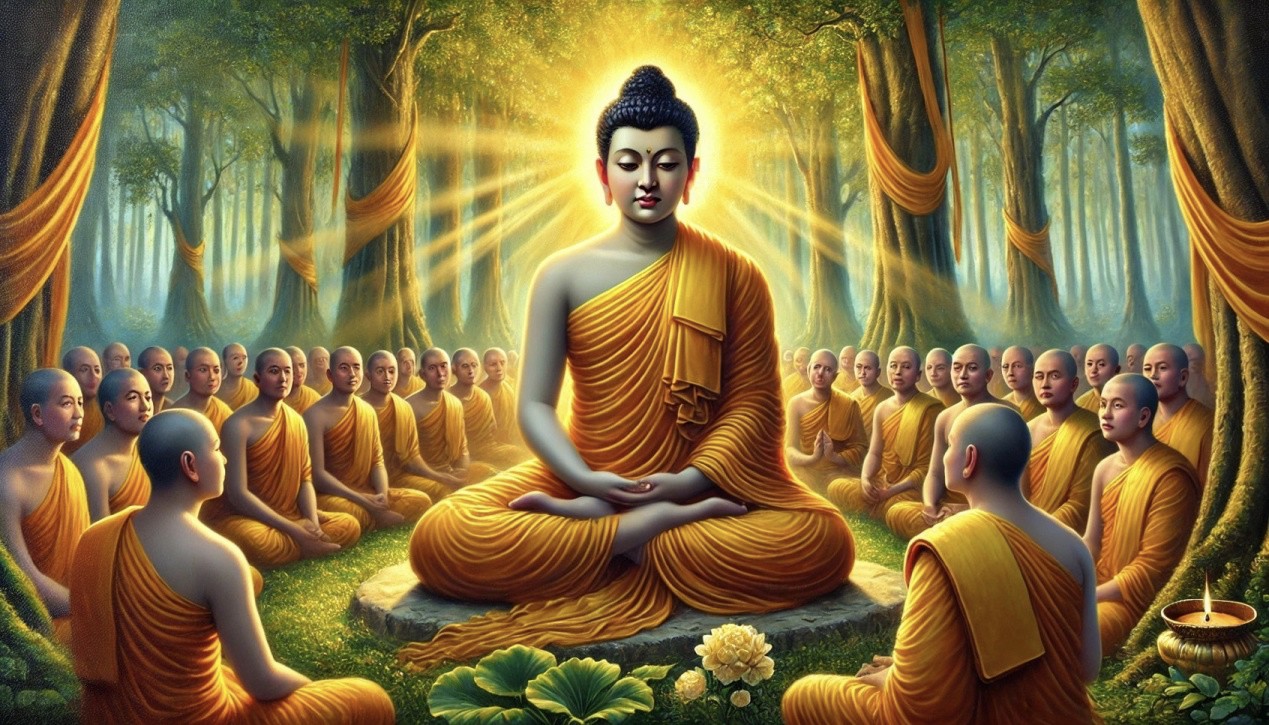
有一次,佛陀在憍萨罗国首都舍卫城南郊祇树给孤独园,对比丘们说:
「比丘们!除了依于信仰,除了依于直觉偏好,除了依于相信古老口传,除了依于理性思惟,除了依于深思所成的观点之外,还有什么方法能够向人说明解脱的证知:生死已尽,清净的修行已经确立,该作的都已完成,不再有往生下一辈子的后有爱了呢?」
比丘们请求佛陀教说,佛陀说了:
「比丘们!是还有其它方法的,例如,当眼等六根,识得色等六境,而引起贪、瞋、痴时,觉知自己心中有了贪、瞋、痴;不起贪、瞋、痴时,觉知自己心中没有贪、瞋、痴,这样的觉知,是依于信仰?依于直觉偏好?依于相信古老口传?依于理性思惟?依于深思所成的观点吗?」
「不是,世尊!」
「比丘们!这样的觉知,不是依于智慧而明白的吗?」
「是的,世尊!」
「比丘们!这就是在信仰、直觉偏好、相信古老口传、理性思惟、深思所成的观点之外,能够向人说明『生死已尽……』之解脱证知的方法。」
有一次,尊者那罗、尊者茂师罗、尊者殊胜、尊者阿难在一起讨论。
首先,尊者那罗问尊者茂师罗说:
「茂师罗学友!能知道:『老死是因为出生,不离出生而有老死;出生是因为业力的蓄积成熟;业力的蓄积成熟是因为执取……;乃至无明灭则行灭;「有」的尽灭为涅槃』这样的正知见智慧,除了来自信仰,除了自己的直觉偏好,除了相信古老口传,除了是自己理性思惟,除了是深思所成的观点之外,还有别的方法吗?」
尊者茂师罗回答说:
「有啊!我有『老死是因为出生……「有」的尽灭为涅槃』这样的正知见智慧,但不是来自信仰,不是自己的直觉偏好,不是来自相信古老的口传,不是自己理性的思惟,也不是深思所成的观点。」
「茂师罗学友!你说你有『「有」的尽灭为涅槃』这样的正知见智慧,那你是诸漏已尽的解脱阿罗汉了吗?」看来尊者那罗转移了原先的讨论方向,继续追问。
这时,尊者茂师罗沉默了,显然不愿意响应这样的质问,也许问题本身存在着矛盾,也许他还没有证得解脱,不是阿罗汉。
尊者那罗再三追问,但尊者茂师罗还是沉默,一时间两人就僵在那里。
这时,在旁边的尊者殊胜,觉得自己可以回答这样的问题,于是,征得了尊者茂师罗的同意,替代他回答尊者那罗说:
「那罗学友!除了来自信仰,除了自己直觉的偏好,除了相信古老口传,除了是自己理性思惟,除了是自己深思所成的观点之外,确实有『「有」的尽灭为涅槃』这样的正知见智慧。」
「你说有『「有」的尽灭为涅槃』这样的正知见智慧,那就是诸漏已尽的解脱阿罗汉喽?」尊者那罗再度关切这个问题。
尊者殊胜回答说:
「我说有『「有」的尽灭为涅槃』这样的正知见智慧,但还不是诸漏已尽的解脱阿罗汉。」
「既然已经得到『「有」的尽灭为涅槃』的正知见智慧,怎么还不是诸漏已尽的解脱阿罗汉呢?这样的说法,前后互相矛盾!」尊者那罗不表同意。
这时,尊者殊胜就打了一个比方来说明:
「学友!譬如在荒野路边,有一口井,却没有打水的绳子和桶子。当在炎热的天气下,有人因为长途跋涉,十分疲惫口渴。他来到井边,确确实实看到了井中的水,但由于缺乏取水的工具,所以还没能喝到水,这种情形,就如同我所说的:有涅槃的正知见,但还不是解脱阿罗汉。」
这时,在一旁的尊者阿难听了,对尊者那罗说:
「那罗学友!尊者这样说,你还有意见吗?」
「阿难学友!我对尊者殊胜这样说,除了说他讲得很好,讲得很巧妙外,不能再说什么了。」
Date: 03/29/2025 03/30/2025
Location: Star Ocean Meditation Center
Teacher: Otto Huang
Dharma Talk
The One Who Sees the Well’s Water—A Near Attainer of Liberation
Once, while staying at Jetavana Monastery, south of Sāvatthī, the capital of Kosala, the Buddha addressed the bhikkhus:
”Bhikkhus! Apart from relying on faith, apart from relying on intuitive preference, apart from relying on belief in ancient oral traditions, apart from relying on rational thought, and apart from relying on views formed through deep reflection, is there any other way to explain to others the direct knowledge of liberation—the realization that birth and death have ended, that the pure spiritual path has been fully established, that all that needed to be done has been accomplished, and that there is no longer any attachment to future existence?”
The bhikkhus requested the Buddha to teach them, and the Buddha said:
”Bhikkhus! There is indeed another way. For example, when the six sense faculties—such as the eyes—perceive the six sense objects—such as form—and greed, hatred, or delusion arises, one is aware of the presence of greed, hatred, or delusion in the mind. When greed, hatred, or delusion does not arise, one is aware that they are absent.
Does such awareness depend on faith? On intuitive preference? On belief in ancient oral traditions? On rational thought? Or on views formed through deep reflection?”
”No, Blessed One!”
”Bhikkhus! Isn’t this kind of awareness directly understood through wisdom?”
”Yes, Blessed One!”
”Bhikkhus! This is an example of how, apart from faith, intuitive preference, belief in ancient oral traditions, rational thought, and deep reflection, one can explain to others the direct knowledge of liberation—‘birth and death have ended…’”
At another time, Venerable Nālā, Venerable Mahāsiro, Venerable Supassa, and Venerable Ānanda were discussing together.
First, Venerable Nālā asked Venerable Mahāsiro:
”Friend Mahāsiro! Can one know, through right view and wisdom, that ‘aging and death arise because of birth; without birth, there is no aging and death; birth arises due to the maturation of karmic formations; the maturation of karmic formations is due to grasping…; and with the cessation of becoming, there is Nibbāna’? And can such right view and wisdom arise apart from faith, apart from intuitive preference, apart from belief in ancient oral traditions, apart from rational thought, and apart from views formed through deep reflection?”
Venerable Mahāsiro replied:
”Yes! I do have the right view and wisdom that ‘aging and death arise because of birth… and with the cessation of becoming, there is Nibbāna,’ but it does not come from faith, nor from intuitive preference, nor from belief in ancient oral traditions, nor from rational thought, nor from views formed through deep reflection.”
”Friend Mahāsiro! Since you say you have the right view and wisdom that ‘with the cessation of becoming, there is Nibbāna,’ does that mean you are an Arahant, one who is fully liberated and free from all defilements?”
It seemed that Venerable Nālā was shifting the focus of the discussion and pressed further.
At this, Venerable Mahāsiro fell silent. He was clearly unwilling to respond to such questioning—perhaps because there was a contradiction in the question itself, or perhaps because he had not yet attained liberation and was not an Arahant.
Venerable Nālā asked him repeatedly, but Venerable Mahāsiro remained silent, and the discussion reached an impasse.
At this point, Venerable Supassa, who was observing the exchange, felt that he could answer the question. With Venerable Mahāsiro’s consent, he stepped in and answered Venerable Nālā:
”Friend Nālā! Apart from faith, apart from intuitive preference, apart from belief in ancient oral traditions, apart from rational thought, and apart from views formed through deep reflection, there is indeed the right view and wisdom that ‘with the cessation of becoming, there is Nibbāna.’”
”You say that there is the right view and wisdom that ‘with the cessation of becoming, there is Nibbāna.’ Does that mean you are an Arahant, fully liberated and free from all defilements?” Venerable Nālā asked again, showing continued concern about this question.
Venerable Supassa replied:
”I say that there is the right view and wisdom that ‘with the cessation of becoming, there is Nibbāna,’ but I am not yet an Arahant, fully liberated from all defilements.”
”If you have already gained the right view and wisdom that ‘with the cessation of becoming, there is Nibbāna,’ why are you still not fully liberated as an Arahant? Isn’t this contradictory?” Venerable Nālā objected.
At this, Venerable Supassa gave an analogy to clarify his point:
”Friend! Suppose there is a well by the roadside in a desolate wilderness, but there is no rope or bucket to draw water.
On a scorching day, a traveler, exhausted and extremely thirsty after a long journey, arrives at the well. He clearly sees the water at the bottom of the well, but because he lacks the tools to draw it, he is unable to drink.
This situation is like my case: I have the right view and wisdom regarding Nibbāna, yet I am not fully liberated as an Arahant.”
At this point, Venerable Ānanda, who had been listening, turned to Venerable Nālā and asked:
”Friend Nālā! After hearing Venerable Supassa’s explanation, do you still have any objections?”
”Friend Ānanda! After hearing Venerable Supassa’s words, I have nothing more to say except to praise his excellent and skillful explanation.”