时间:03/22/2025 03/23/2025
地点:星海禅修中心
主讲:Otto Huang
佛法修行
须深盗法
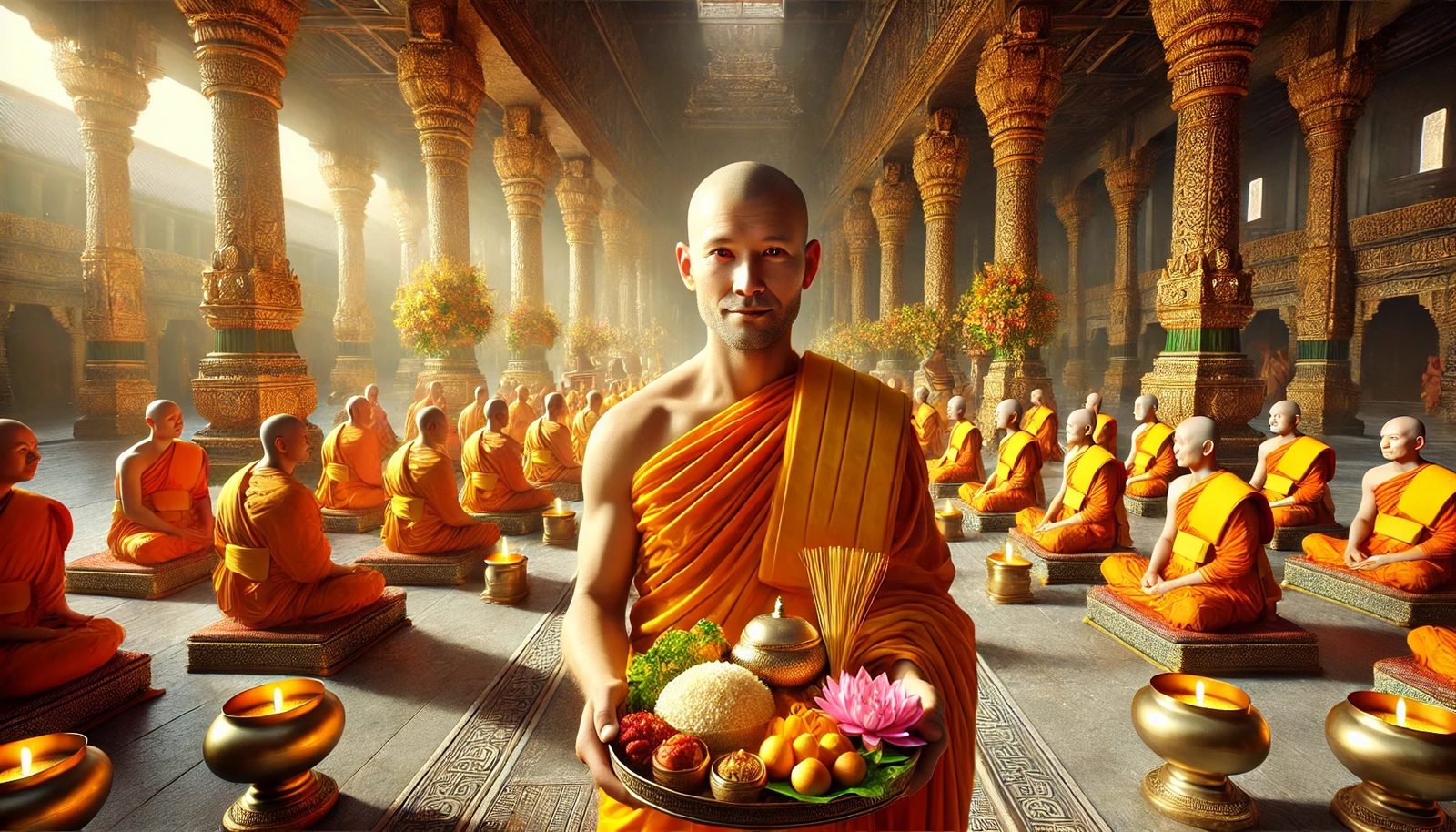
有一阵子,佛陀在摩揭陀国首都王舍城游化,住在城北郊外的迦兰陀竹园。
那时,摩揭陀国的国王,以及当地的许多大臣、婆罗门、富有的长者、居士与一般民众们,都对佛陀及比丘大众十分敬重,所以对他们的供养,如衣、食、医药、日用品等特别丰富。相对的,当地其它外道所能得到的供养,就很少了。
住在王舍城的外道们,为因应供养少,生活困难的困局,共同集会商量,最后想出一个点子,推举他们之中一位名叫须深的聪明青年,要他到佛陀那边去出家,看看能不能学一些佛陀的秘籍回来,好让他们也能得到大家的信仰与尊重,期望能恢复往日供养的水准。
背负特别任务的须深来到迦兰陀竹园,向一群比丘请求出家。经由比丘们的引见,佛陀也同意他在僧团中出家了。
半个月过去了,有一天,他听到一些比丘自称是证得解脱的阿罗汉,觉得这下机会来了,赶紧前去向他们请教,怎样才能学得初禅而得解脱。
然而,这些比丘却告诉须深,他们不会初禅,也不会神足神通。
须深不相信,就继续要求这些比丘教他第二禅、第三禅、第四禅等其它禅定。但是这些比丘都说他们不会,更不会他心神通、宿命神通。
须深对这些比丘的回答很不满,质疑、指责他们前后所说互相矛盾,哪有不会禅定,而还可以自称是解脱阿罗汉的!
这些比丘就告诉须深,说他们是慧解脱者。
须深根本不了解,也不相信这样的回答,就去向佛陀求证。
佛陀告诉须深说:
「须深!修学的前后次第是:先知『法住智』,后知『涅槃智』。那些比丘就是以这样的次第,从专精思惟、安住于不放逸,而修得离我见、不起诸烦恼而证入解脱的。」
须深完全听不懂佛陀在说什么,就请求佛陀为他详加解说。
佛陀解说道:
「须深!不管你知不知道,修学的必然顺序,就是要先知法住智,后知涅槃智。
须深!你认为如何?有出生所以会老死,不离出生而有老死,是吗?」
「是的,世尊!」
「像这样,生、有、取、爱、受、触、六入处、名色、识、行、无明;有无明所以有行业,不离无明而有行业,是吗?」
「是的,世尊!」
「反过来说,不出生就不会老死,不离生之灭而老死灭,是吗?」
「是的,世尊!」
「像这样,生、有、取、爱、受、触、六入处、名色、识、行、无明;无明灭所以行灭,不离无明灭而行灭,是吗?」
「是的,世尊!」
「须深!让我再问你:色是常,还是无常呢?」
「世尊!是无常。」
「无常的事物,会带来苦呢?还是乐?」
「世尊!是苦。」
「既是无常、苦,那是变易之法了,能在变易之法中,找到所谓不变的『真我』吗?」
「世尊!不能。」
同样地,佛陀又分别以「受、想、行、识」一一提问,并且由现在扩展到过去、未来等,说明这一切都是无常,是苦的,其中不存在所谓的「真我」。然后,佛陀作了个小结论说:
「须深!多闻圣弟子对色、受、想、行、识有这样的理解而生厌,因厌而离贪爱,因离贪爱而解脱,因解脱而生解脱之智:我的生死已尽,清净的修行已经确立,该作的都已完成,不再有往生下一辈子的后有爱了。
须深!有了这样的所知所见,就会各种禅定,各种神通了吗?」
「不会的,世尊!」
「须深!这就是先知法住智,后知涅槃智。那些比丘就是这样专精思惟,安住于不放逸,而修得离我见,不起诸烦恼而得解脱的。」
佛陀说到这里,须深当下远尘离垢,得法眼清净:见法、得法、觉法而自己解决了对法的疑惑,心中无所畏惧。
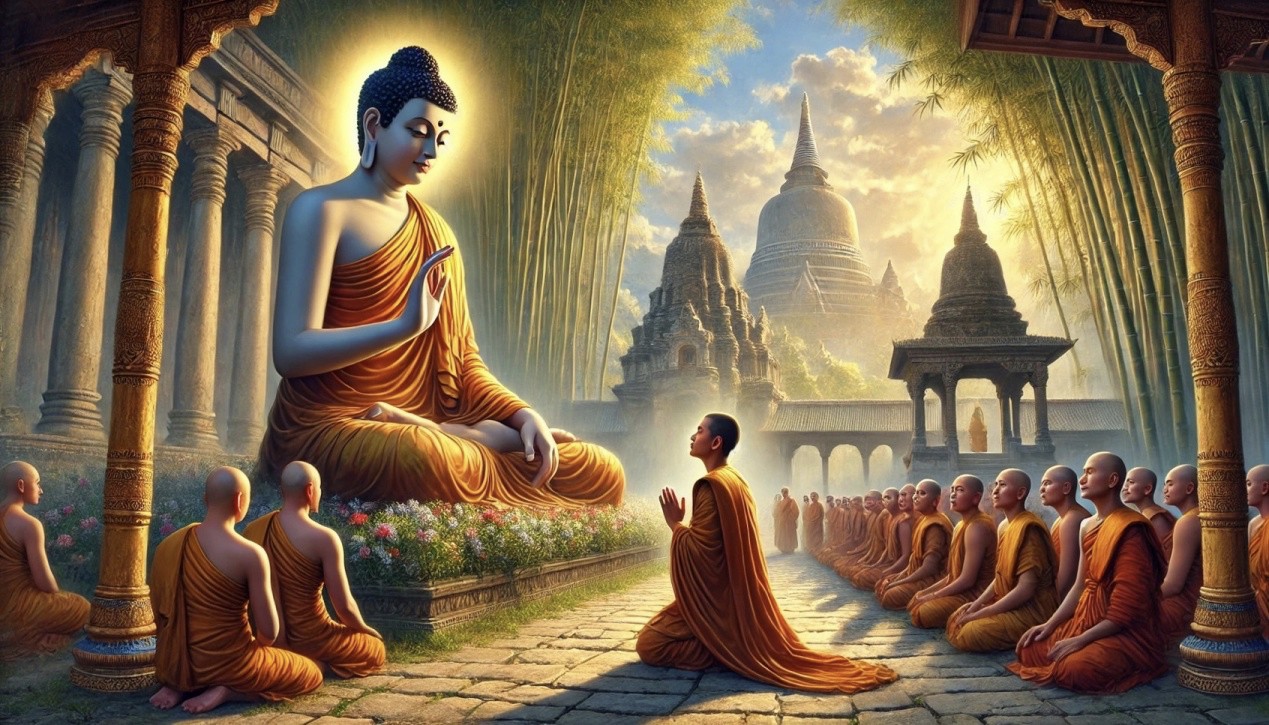
这时,悟入正法的须深,向佛陀顶礼,忏悔他出家盗法的不当动机,并请求佛陀的原谅。
佛陀接受了须深诚心的忏悔,并且告诉他说,若以名闻利养的动机来出家盗法,日后其心里的不安折磨,将会更胜于盗贼被国王行刑,慢慢凌迟至死的痛苦。
Date: 03/22/2025 03/23/2025
Location: Star Ocean Meditation Center
Teacher: Otto Huang
Dharma Talk
The Theft of the Dhamma by Sudīpa
At one time, the Buddha was traveling in Rājagaha, the capital of Magadha, and was staying at Kalandaka Bamboo Park in the northern outskirts of the city.
At that time, the king of Magadha, along with many ministers, Brahmins, wealthy elders, laypeople, and common citizens, all held great respect for the Buddha and the community of bhikkhus. As a result, the offerings they received—robes, food, medicine, and daily necessities—were particularly abundant. In contrast, the other ascetics and non-Buddhist sects in the area received significantly fewer offerings.
To address the shortage of support and their increasingly difficult living conditions, the ascetics in Rājagaha gathered to discuss a solution. Eventually, they came up with a plan: they chose among themselves a clever young man named Sudīpa and tasked him with going to the Buddha to ordain as a monk.
Their hope was that he could secretly learn some of the Buddha’s “secret teachings” and bring them back so they too could gain the faith and respect of the people, thereby restoring their previous level of support.
Carrying out this special mission, Sudīpa arrived at Kalandaka Bamboo Park and requested ordination from a group of bhikkhus. Through their introduction, the Buddha granted him permission to ordain into the monastic community.
Fifteen days passed. One day, Sudīpa overheard some bhikkhus claiming to have attained Arahantship and thought this was his chance. He eagerly approached them and asked how he could attain the first jhāna and liberation.
However, these bhikkhus told Sudīpa that they did not practice the first jhāna nor possess supernatural powers.
Sudīpa did not believe them and continued pressing for instruction on the second, third, and fourth jhānas, but the bhikkhus again replied that they did not practice them. Moreover, they stated that they did not possess psychic abilities such as telepathy or recollection of past lives.
Frustrated by their answers, Sudīpa doubted and accused them of contradicting themselves. He challenged them, questioning how they could claim to be liberated Arahants if they had no knowledge of jhāna.
In response, the bhikkhus explained that they were “liberated through wisdom” (paññā-vimutti).
Sudīpa could neither comprehend nor accept this answer, so he went to the Buddha to seek confirmation.
The Buddha said to Sudīpa:
”Sudīpa! The sequence of training is as follows: one first gains knowledge of ‘the stability of the Dhamma’ (Dhammaṭṭhiti-ñāṇa), and then one gains knowledge of ‘Nibbāna’ (Nibbāna-ñāṇa). Those bhikkhus followed this sequence. By diligently contemplating, abiding in heedfulness, and cultivating insight into non-self, they abandoned all defilements and attained liberation.”
Sudīpa could not understand what the Buddha meant and requested a more detailed explanation.
The Buddha explained:
”Sudīpa! Whether you understand it or not, the necessary sequence of training is to first gain knowledge of the stability of the Dhamma, then knowledge of Nibbāna.
Sudīpa! What do you think? Since there is birth, there is aging and death. Without birth, there would be no aging and death. Is this correct?”
”Yes, Blessed One!”
”In the same way, becoming arises from grasping; grasping arises from craving; craving arises from feeling; feeling arises from contact; contact arises from the six sense bases; the six sense bases arise from name-and-form; name-and-form arises from consciousness; consciousness arises from volitional formations; volitional formations arise from ignorance. Since there is ignorance, there are volitional formations. Without ignorance, volitional formations would not arise. Is this correct?”
”Yes, Blessed One!”
”Conversely, if there were no birth, there would be no aging and death. If the cessation of birth occurs, then aging and death will cease. Is this correct?”
”Yes, Blessed One!”
”In the same way, if ignorance ceases, volitional formations cease; if volitional formations cease, consciousness ceases; if consciousness ceases, name-and-form ceases; if name-and-form ceases, the six sense bases cease; if the six sense bases cease, contact ceases; if contact ceases, feeling ceases; if feeling ceases, craving ceases; if craving ceases, grasping ceases; if grasping ceases, becoming ceases; if becoming ceases, birth ceases; and if birth ceases, then all sorrow, lamentation, pain, grief, and despair—this entire mass of suffering—will cease. Is this correct?”
”Yes, Blessed One!”
”Sudīpa! Let me ask you: Is form (rūpa) permanent or impermanent?”
”Blessed One! It is impermanent.”
”And what is impermanent—does it bring suffering or happiness?”
”Blessed One! It brings suffering.”
”If it is impermanent and suffering, then it is subject to change. Can one find an unchanging ‘true self’ in something that is constantly changing?”
”Blessed One! No, one cannot.”
Similarly, the Buddha questioned Sudīpa regarding feeling (vedanā), perception (saññā), volitional formations (saṅkhāra), and consciousness (viññāṇa), extending the discussion to include the past and the future. He explained that all of these are impermanent and suffering, and that no so-called “true self” exists among them. Then, the Buddha summarized:
”Sudīpa! A noble disciple who hears and understands the teachings develops disenchantment toward form, feeling, perception, volitional formations, and consciousness. Through disenchantment, craving is abandoned; through abandoning craving, liberation is attained.
With liberation, the knowledge of liberation arises: ‘My birth is ended, the holy life is fulfilled, what had to be done has been accomplished, and there will be no more future existence.’
Sudīpa! Having this understanding and realization, does one necessarily attain jhāna and psychic powers?”
”No, Blessed One!”
”Sudīpa! This is what it means to first gain knowledge of the stability of the Dhamma and then knowledge of Nibbāna. Those bhikkhus followed this path—diligently contemplating, abiding in heedfulness, cultivating insight into non-self, and abandoning all defilements—thus attaining liberation.”
Upon hearing this, Sudīpa became completely free from defilements and attained the purity of the Dhamma-eye. He realized the Dhamma, comprehended it, and resolved his doubts. His mind became fearless and unwavering.
At that moment, having awakened to the true Dhamma, Sudīpa prostrated before the Buddha, repenting for his wrongful intention of ordaining merely to steal the teachings, and sincerely asked for the Buddha’s forgiveness.
The Buddha accepted Sudīpa’s sincere repentance and advised him:
”Sudīpa! If one ordains with the intention of stealing the Dhamma for the sake of fame and material gain, the torment in one’s heart will be even worse than that of a thief who is slowly executed by the king’s decree.”