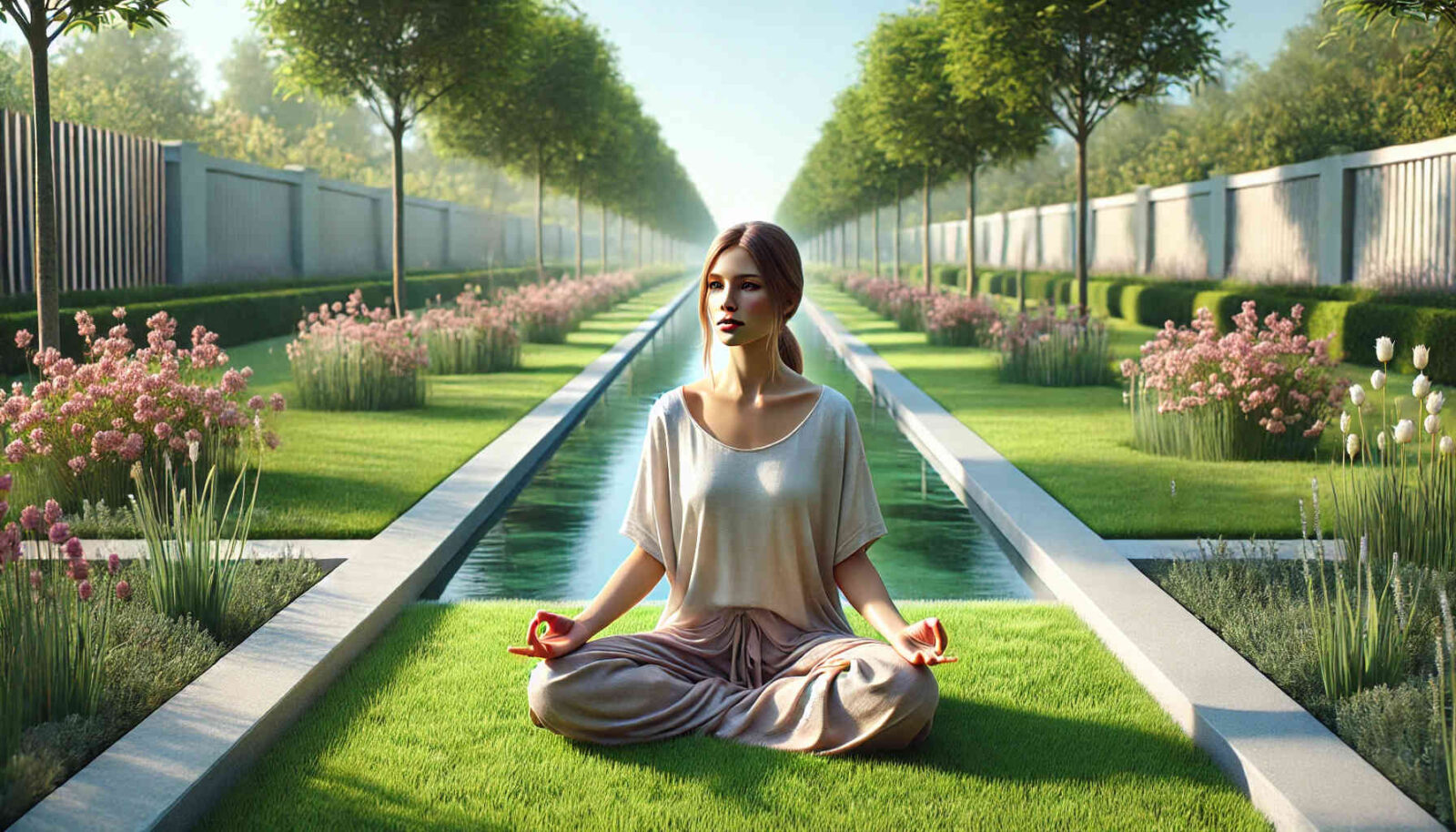
时间:10/31/2026 11/01/2026
地点:星海禅修中心
主讲:净真
打坐参禅
无需造作的本然心境
在禅修中,所谓本然心境,并不是额外创造出来的一种高妙状态,也不是经过强力压制念头后形成的空白感,而是当种种攀缘、对抗、期待与造作逐渐止息之后,心本具的清明、安定与如实自然显露出来的状态。所谓“无需造作”,并不是放任散乱,也不是拒绝用功,而是在正确的观照中,不再以控制、塑造、追求的方式对待当下经验。修行越深入,越会发现真正安稳的心,并非被制造出来,而是当多余的动作停止之后,本来如此的状态自然现前。
一、理解本然心境:它不是制造出来的状态
1.本然不是新得来的东西
本然心境不是修行之后额外获得的产物,而是心在不被妄念、执著与习气遮蔽时,本来具足的状态。
2.造作会遮蔽自然显现
当心不断想要进入某种境界、抓住某种感受、维持某种安静时,这种刻意本身就会成为新的扰动。
3.无需造作不是没有觉知
它并非昏沉、空洞、放空或漫不经心,而是在清楚知道当下的同时,不额外添加控制与评判。
二、为何修行要回归无需造作?
1.刻意用力会制造紧张
一旦总想“修得更好”“进入更深”,心就会产生细微而持续的紧缩,破坏自然安定。
2.追求境界会强化我执
当修行变成“我要得到某种状态”,表面似乎在用功,实则不断巩固“我在修”“我在得”的中心感。
3.自然观照更接近真实
只有当心不急于改变经验,才能真正看见经验本身如何生起、变化与消失。
4.本然状态不能靠强求抵达
越是想抓住清净,越容易远离清净;越是想固定安定,越容易制造波动。
三、无需造作的本然心境有哪些表现?
1.心不再急于介入
念头来了,不急着压;感受来了,不急着取舍;境界变化,也不急着解释与命名。
2.觉知清楚而不紧绷
心并非松散模糊,而是稳定、明白、持续地知道当下,却没有逼迫感。
3.安静不是死寂
这种本然安静不是呆滞不动,而是活泼、开放、清醒而柔和的宁静。
4.经验自然流动
呼吸、感受、念头、情绪都在变化,但心不再执意中断、修正或延长它们,而只是如实观照。
四、如何安住于无需造作的状态?
1.先建立基本正念
无需造作不是一开始就什么都不做,而是先以稳定觉知安住于呼吸、身体或当下经验,使心不再散乱。
2.观察而不操控
对任何现象,都只是知道它正在发生,而不是立刻加上“应该消失”“应该更深”的意志。
3.放下对结果的预设
不预先规定今天应有什么体验,也不要求自己必须达到某种标准,心才有可能真正放松下来。
4.让经验自己展开
修行中最重要的不是主动制造内容,而是给觉知留下空间,使身心真实状态自己显现。
五、无需造作后,心会发生怎样的转变?
1.妄念的力量逐渐减弱
当不再不断与念头纠缠、对抗或跟随,念头会失去原先那种牵引与堆积的力量。
2.执取逐渐松开
不只是对外境的执著减弱,对禅修中的安静、清明、舒适等感受的贪著也会慢慢淡化。
3.觉知变得柔和而稳定
少了造作之后,注意力不再僵硬集中,而是自然持续,既不紧,也不散。
4.当下经验更加透明
一旦解释与投射减少,经验会呈现得更直接、更鲜明,心对当下的把握也会更真实。
六、避免把“无需造作”误解为放逸
1.不是随便散乱
无需造作并不等于任由妄念奔驰,而是有觉知地不加多余干预。
2.不是拒绝用功
真正的不用力,不是懈怠,而是在正见下去除错误的用力方式。
3.不是故意放空自己
刻意追求空白、迟钝或无念,仍然是一种造作,只是形式更加隐蔽。
4.不是否定次第训练
心若极度散乱,仍需借助正念、专注与持续观照来调伏。所谓无需造作,是在正确训练中逐渐显现的自然状态。
总结
无需造作的本然心境,不是修行之外另有所得,而是当控制、追逐、压制与期待逐渐止息之后,心本具的清明与安稳自然显露。真正的禅修,不在于制造一个理想状态,而在于如实观照每一个当下,让多余的动作慢慢止息。当心不再忙于成为别的样子,本然之心便不需召唤,自会现前。
Date: 10/31/2026 11/01/2026
Location: Star Ocean Meditation Center
Teacher: Sara
Sitting Meditation
The Innate State of Mind That Requires No Fabrication
In meditation, the innate state of mind is not a refined condition that must be created, nor a blankness produced by suppressing thought. It is the natural clarity, stability, and suchness of mind that reveal themselves when grasping, resistance, expectation, and fabrication gradually fall away. “Requiring no fabrication” does not mean carelessness or the absence of effort. It means that within correct observation, one no longer treats present experience through control, shaping, or pursuit. The deeper practice becomes, the clearer it is that genuine calm is not manufactured. It appears naturally when unnecessary activity comes to rest.
1. Understanding the Innate State: Not Something Manufactured
1.The innate is not something newly acquired
The innate state of mind is not an additional product gained after practice. It is what remains when the mind is no longer obscured by discursive thought, attachment, and conditioning.
2.Fabrication obscures natural revelation
When the mind keeps trying to enter a certain state, hold onto a certain feeling, or maintain a certain quietness, that very intention becomes a fresh disturbance.
3.Non-fabrication does not mean lack of awareness
It is not dullness, blankness, spacing out, or inattentiveness. It is clear knowing of the present without adding control or judgment.
2. Why Must Practice Return to Non-Fabrication?
1.Deliberate force creates tension
The moment one keeps trying to “do better” or “go deeper,” the mind develops subtle but persistent contraction, which disrupts natural calm.
2.Seeking states strengthens self-grasping
When practice becomes “I must attain something,” it may look like diligence, but in fact it reinforces the sense of “I am practicing” and “I am gaining.”
3.Natural observation is closer to reality
Only when the mind is not rushing to alter experience can it truly see how experience arises, changes, and disappears.
4.The natural state cannot be reached through force
The more one tries to seize purity, the more purity recedes. The more one tries to fix stability, the more fluctuation is created.
3. What Are the Signs of the Innate State That Requires No Fabrication?
1.The mind no longer rushes to interfere
When thoughts arise, there is no urgency to suppress them. When sensations arise, there is no haste to accept or reject them. When states change, there is no rush to explain or label.
2.Awareness is clear without being tense
The mind is not vague or loose. It knows the present steadily, clearly, and continuously, but without pressure.
3.Quiet is not dead stillness
This innate quietness is not lifeless stagnation. It is a living, open, lucid, and gentle stillness.
4.Experience flows naturally
Breath, sensation, thought, and emotion continue to change, but the mind no longer insists on interrupting, correcting, or prolonging them. It simply observes them as they are.
4. How Does One Abide in a State of Non-Fabrication?
1.First establish basic mindfulness
Non-fabrication does not mean doing nothing from the outset. One must first rest awareness steadily on the breath, the body, or present experience so the mind is no longer scattered.
2.Observe without controlling
Toward any phenomenon, simply know that it is occurring, rather than immediately adding the will that it “should disappear” or “should become deeper.”
3.Let go of predetermined outcomes
When one does not insist that today’s meditation must feel a certain way or reach a certain level, the mind has a real chance to relax.
4.Allow experience to unfold by itself
What matters most is not actively producing content, but leaving room for awareness so that the actual state of body and mind can reveal itself.
5. What Transformations Arise When Fabrication Falls Away?
1.The force of discursive thought gradually weakens
When one no longer keeps entangling with, resisting, or following thoughts, they lose much of their former pull and accumulation.
2.Grasping gradually loosens
Not only does attachment to external objects weaken, but attachment to meditative quiet, clarity, and comfort also begins to fade.
3.Awareness becomes gentle and stable
With less fabrication, attention is no longer rigidly forced. It continues naturally, neither tight nor scattered.
4.Present experience becomes more transparent
As interpretation and projection decrease, experience appears more directly and vividly, and awareness of the present becomes more genuine.
6. Avoid Mistaking Non-Fabrication for Carelessness
1.It is not letting the mind wander freely
Non-fabrication does not mean allowing thought to run unchecked. It means refraining from unnecessary interference while remaining aware.
2.It is not a rejection of effort
True non-forcing is not laziness. It is the removal of wrong effort through right understanding.
3.It is not deliberately blanking oneself out
Trying to produce emptiness, dullness, or thoughtlessness is still fabrication, only in a subtler form.
4.It does not deny gradual training
If the mind is deeply restless, mindfulness, collectedness, and sustained observation are still needed. Non-fabrication is a natural state that gradually appears through correct training.
Conclusion
The innate state of mind that requires no fabrication is not something obtained apart from practice. It is what naturally appears when control, pursuit, suppression, and expectation gradually come to rest. Real meditation does not consist in constructing an ideal state, but in observing each present moment as it is and allowing unnecessary activity to cease. When the mind is no longer busy becoming something else, its innate nature does not need to be summoned. It simply appears.