Date: 02/24/2024 02/25/2024
Location: Star Ocean Meditation Center
Teacher: Laura
Dharma Knowledge
An Overview of the Buddha’s Life
The Buddha, known as Siddhartha Gautama, was born around the sixth century BCE in ancient India. He was a prince of the Shakya clan, the son of King Suddhodana, and was raised in a life of privilege and comfort. From birth, Siddhartha was expected to succeed his father and live a prosperous, secure life as a ruler, shielded from hardship and suffering.
As he grew older, Siddhartha began to reflect deeply on the nature of human existence. According to tradition, his encounters with old age, sickness, and death outside the palace walls profoundly unsettled him. These experiences revealed that no amount of wealth, power, or protection could prevent the realities of impermanence and suffering. This realization stirred a deep inner questioning about the true meaning of life.
At the age of twenty-nine, Siddhartha made a momentous decision. He left behind his royal life, his wife, and his young son, renouncing status and comfort to seek a solution to human suffering. This act was not an escape from responsibility, but an expression of a deeper responsibility—to discover a path that could bring liberation not only to himself, but to all beings.
After renouncing worldly life, Siddhartha studied under renowned teachers of his time and quickly mastered advanced meditative states. Although these practices brought mental refinement, he found that they did not fully resolve the problem of suffering and rebirth. He then turned to extreme ascetic practices, subjecting his body to severe deprivation, but eventually realized that self-mortification was also ineffective.
Having abandoned both indulgence and extreme asceticism, Siddhartha adopted the Middle Way. Sitting in deep meditation beneath the Bodhi tree, he carefully observed the workings of the mind and body. Through this profound insight, he awakened to the nature of suffering, its causes, its cessation, and the path leading to liberation. At this moment of awakening, he became known as the Buddha, meaning “the Awakened One.”
After his enlightenment, the Buddha initially hesitated to teach, believing the truth he had realized was subtle and difficult to understand. Out of compassion for others, however, he chose to share his insight. He delivered his first teaching in the Deer Park at Sarnath to five former companions, presenting the fundamental principles of suffering, its origin, its cessation, and the path to freedom.
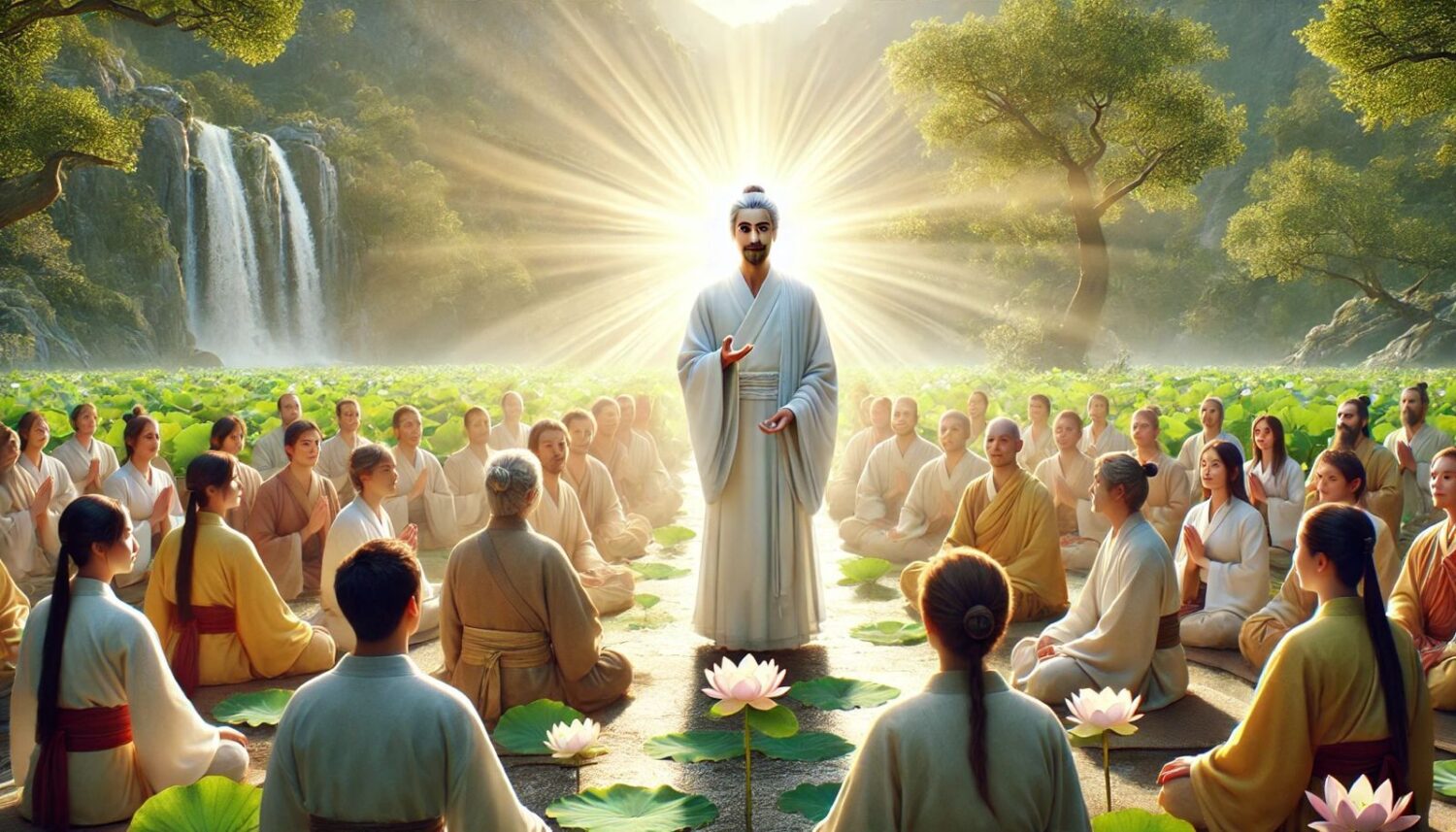
For more than forty years, the Buddha traveled throughout the Ganges region, teaching people from all walks of life—kings and commoners, men and women, scholars and laborers. His teachings emphasized direct observation of experience, ethical conduct, mental cultivation, and wisdom. He encouraged personal understanding rather than blind faith, and transformation through practice rather than reliance on external forces.
In his later years, the Buddha’s body aged, but his clarity and compassion remained undiminished. He repeatedly advised his disciples to rely on the Dharma and their own understanding, rather than on any individual authority. At the age of eighty, the Buddha passed away peacefully in Kushinagar, entering final nirvana. His passing marked not an end, but the beginning of the enduring transmission of his teachings.
The life of the Buddha represents a journey from privilege to awakening, guided by deep concern for human suffering and a commitment to truth. He left behind no claim to divinity, but offered a path that can be understood, tested, and lived. For this reason, the story of the Buddha’s life continues to inspire and guide people across cultures and centuries.