Date: 03/16/2024 03/17/2024
Location: Star Ocean Meditation Center
Teacher: Sara
Dharma Knowledge
The Significance of the First Turning of the Wheel of Dharma
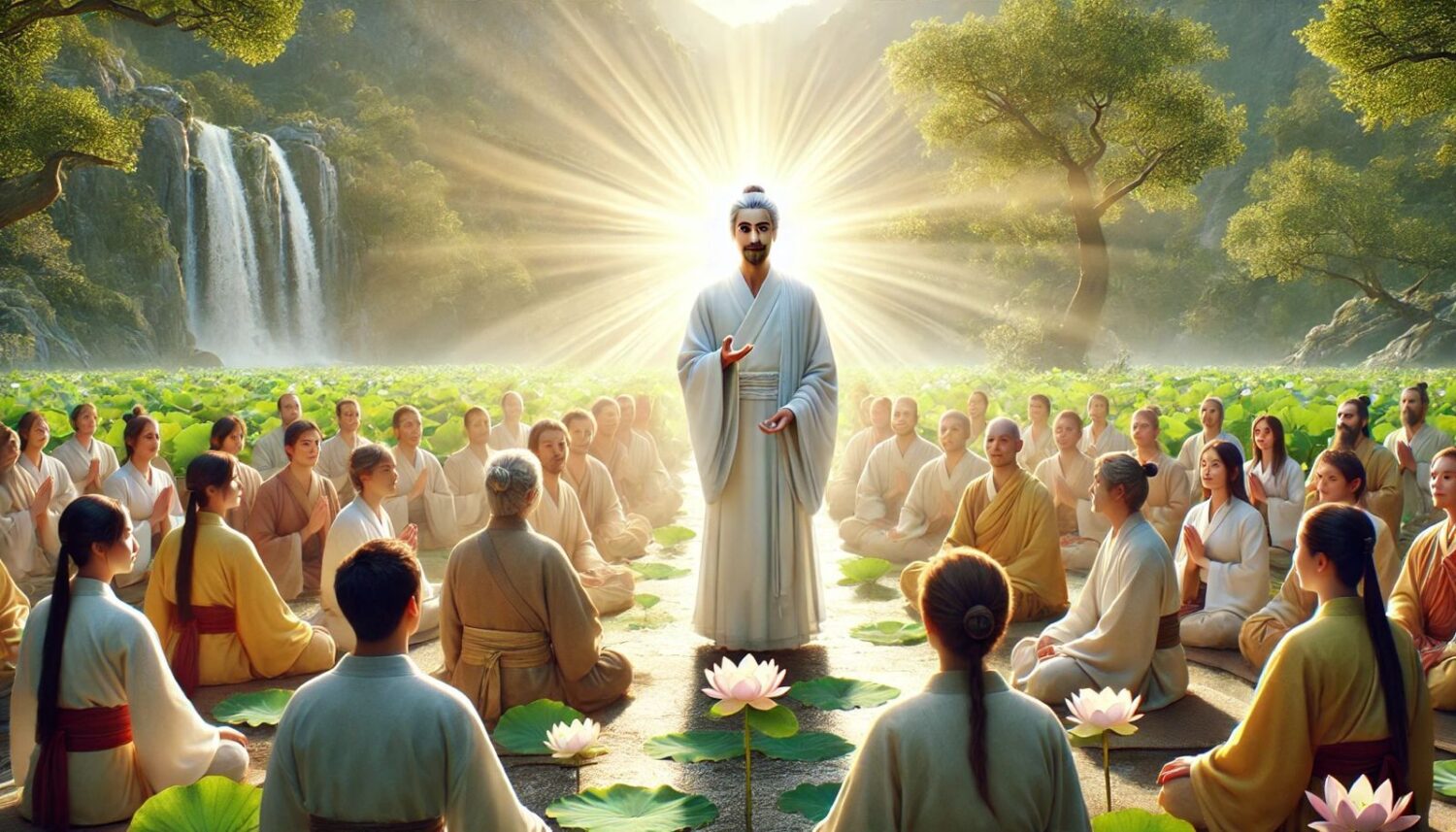
The First Turning of the Wheel of Dharma was not a ceremonial proclamation, but a decisive transformation in which personal awakening became a communicable and verifiable path. Its significance lies not in being the Buddha’s first sermon chronologically, but in establishing a structure through which liberation could move from individual realization to shared methodology.
After awakening, the Buddha faced a fundamental question: not what to teach, but whether teaching was possible at all. What he had realized was not a conceptual system, but a direct insight into experiential structure—how suffering arises, how it is sustained, and how it ceases. If this insight could not be expressed in language and method, it would remain a private fact. The First Turning marked the recognition that this understanding could be articulated and re-realized by others through disciplined practice.
The core of the First Turning is analytical, not doctrinal. It does not present beliefs to be accepted, but a framework for understanding facts. Beginning with suffering is not a value judgment, but an acknowledgment of lived experience. Identifying the causes of suffering is not an appeal to external forces, but an exposition of conditionality. Describing the cessation of suffering is not a promise of comfort, but a causal conclusion. Presenting the path is not a command, but an operational guide. In this moment, the Dharma was established as a complete problem–cause–solution–method structure.
This structure fundamentally distinguishes the Dharma from revelation-based or authority-driven teachings. The First Turning did not require faith in the Buddha as a person, nor acceptance of metaphysical assumptions. It required observation, understanding, and practice. The Buddha did not assert authority as an awakened being, but assumed the role of an analyst, inviting verification rather than submission. This set the anti-dogmatic and non-authoritarian character of the Dharma from its very beginning.
The choice of audience further underscores its methodological nature. The Buddha did not address rulers or elites, but former companions whose training and cognitive readiness made them capable of understanding. This demonstrates that access to the Dharma depends not on social status, but on preparedness of mind. Capacity for comprehension, not identity, defines the entry point.
Structurally, the First Turning clarified that liberation is not the result of a single technique. Ethical conduct, mental stability, and cognitive insight were presented as an integrated system. No isolated practice is sufficient to eliminate the roots of suffering. This integration prevents the Dharma from being reduced to moralism, psychological therapy, or mystical pursuit.
Historically, the First Turning marks the birth of the Dharma as a public teaching. From this point onward, the Dharma no longer depended on the Buddha’s personal presence. It existed as a learnable, revisable, and transmissible framework. Its validity rested not on who taught it, but on whether practice effectively diminished ignorance and attachment. This made monopolization of the Dharma impossible in principle.
The true significance of the First Turning, therefore, is not that the Buddha began to teach, but that the Dharma completed its transition from private insight to shared method, from individual experience to universal structure. It established a foundational principle: liberation is not a mystical event, but an intelligible causal process. This principle underlies all subsequent developments of the Dharma.