Date: 03/29/2025 03/30/2025
Location: Star Ocean Meditation Center
Teacher: Sara
Dharma Knowledge
The Correct Method of Sitting Meditation
In the context of the Dharma, sitting meditation is neither a ritual nor a technique for producing special experiences. It is a disciplined method for training mental stability, clarity, and observability. Without a clear understanding of its purpose, meditation is easily mistaken for relaxation, self-care, or emotional enhancement. The “correct method” therefore refers not to outward form, but to functional alignment with its intended role.
The primary aim of meditation in the Dharma is not trance, bliss, or unusual states, but the cultivation of sustained, stable awareness. Only when the mind can remain present without being pulled by stimuli can impermanence, suffering, and non-self be directly observed. The pursuit of calm, pleasure, or extraordinary sensations already constitutes a new form of attachment.
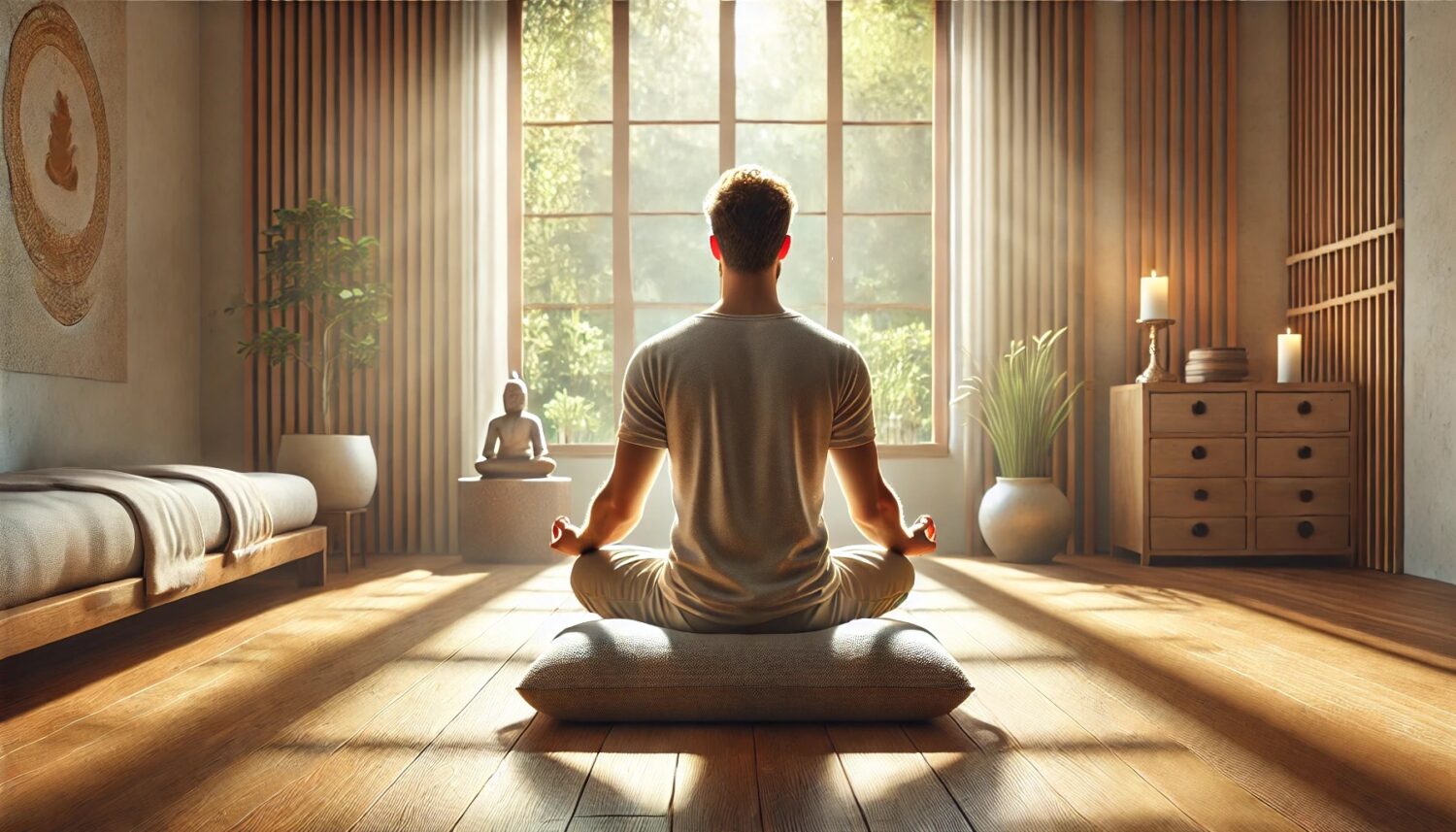
At the bodily level, the guiding principle is stability rather than endurance. Posture serves a single function: allowing the body to remain still for an extended period without significant discomfort. One may sit cross-legged in various forms or sit upright on a chair. What matters is a naturally upright spine and a balanced center of gravity. Striving for difficult postures only diverts attention into bodily struggle.
The head should be upright and relaxed, the chin slightly tucked. Shoulders remain loose, not raised or slumped. Hands rest naturally. The eyes may be gently closed or lightly lowered, without fixation. The body should become “background,” no longer the primary focus of attention.
Breath is often used as an initial object of meditation, but it must not be controlled. The task is not to regulate breathing, but to know it as it is. Awareness of inhalation and exhalation, without interference, is sufficient. The moment one tries to improve the breath, observation is replaced by manipulation, and mental stability is compromised.
Psychologically, the key to meditation is not the absence of thought, but the absence of following thought. Mental activity will arise naturally. Suppression only creates tension. The correct approach is to notice the arising of thoughts, their presence, and their disappearance, without judgment, analysis, or continuation. The content of thoughts is irrelevant; what matters is non-entanglement.
Concentration in this context is not exclusionary focus, but continuity of awareness without scattering. When awareness can repeatedly return to its object—whether breath, bodily sensation, or mental state—the mind develops the capacity to remain settled. This settledness is not rigidity, but alert and adaptable stability.
Regarding duration, shorter and steadier sessions are preferable to prolonged endurance. Beginners may start with twenty to thirty minutes, prioritizing correct orientation over persistence. Duration can increase naturally as stability matures. Pain-based effort does not accelerate progress and often generates aversion.
It is crucial to note that meditation alone does not constitute wisdom. Concentration is a condition, not an end. Without proper understanding, concentration can become a means of avoidance or reinforce subtle self-clinging. Meditation must therefore be guided by right view, serving the investigation of experience rather than the pursuit of comfort.
In summary, the correct method of sitting meditation is simple and unembellished: a stable body, natural breathing, continuous awareness, neutral attitude, no pursuit of experience, and no resistance to disturbance. When these conditions are met, clarity can emerge, and observation becomes possible. Any additional agenda moves meditation away from its place within the Dharma.